Mike Hill & Dr. Natasha Weems | Part 2: Reinvention, Purpose, Success, and Life Beyond the Spotlight
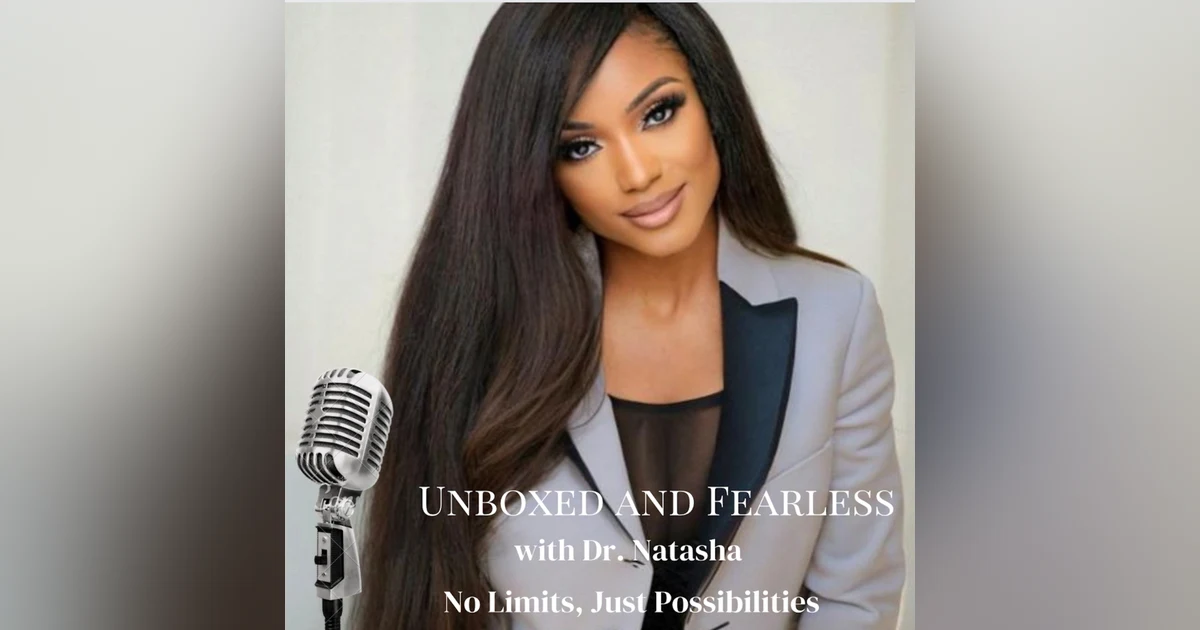


In Part 2 of this exclusive conversation, award-winning broadcaster, author, and entrepreneur Mike Hill joins Dr. Natasha Weems for an even deeper discussion on resilience, reinvention, purpose, relationships, career growth, and building a lasting legacy.Together, Mike Hill and Dr. Natasha Weems explore what it takes to navigate life’s challenges, embrace new opportunities, and remain authentic while evolving personally and professionally.If you’re looking for motivation, leadership, career insight, and real conversations that inspire growth, this episode is for you.Now streaming on:YouTubeSpotifyApple PodcastsAmazon MusiciHeartRadioHosted by:Dr. Natasha Weems, DNP, AGPCNP-BCFollow Dr. Natasha:Instagram: @drnatasha_Follow the Podcast:Instagram: @unboxedandfearlesspodcastSubscribe, follow, share, and leave a review to help us continue bringing you fearless conversations that educate, empower, and inspire.
Mike Hill (0:00): Welcome to the part two of this interview with Mike Hill. I remember this one player came named Wing Dong Ho, and I was just, like, playing around like, my man, Wing Dong Ho takes it down and slams it in. You know, I just, you know, playing around with it instead of being like, Wing Dong Hole takes it in, which I was always trying to do. And when he heard that, he's like, stop the tape. He said, Mike, do you.
Mike Hill (0:22): That's you. That's your voice. So I'm under the mindset that I had to be like a sportscaster. I had to be buttoned up. I had
Speaker 1 (0:28): to be like this. I had to over enunciate everything, and I had to talk like this. And, you know, I was going to be like a broadcaster, and I'm not going to be Mike Hill.
Mike Hill (0:36): And then I realized that Mike Hill's voice is what people really wanna hear because that's authentic. And that not only changed my life when it came to my professional life, but my personal life. Because I realized that no matter what image you gotta put out there, what you feel like you need to do, authenticity will always win. Regardless of people like you or hate you, you being authentic, you're always gonna win. My stepfather only told me he loved me one time.
Mike Hill (1:07): And well, two times. One time my mom was about to leave him. She was about to leave him. We was leaving. And I think it was a manipulation tactic, to be quite honest with you, because I was so young and she had gotten tired of getting beaten.
Mike Hill (1:20): And we're leaving the house and she's like, I'm done, I'm leaving. And she's taking me and I'm there. And he comes in, well, I guess I won't see you ever again. Like I'm 19 years old. I'm like, I don't know what the hell's going on.
Mike Hill (1:32): Like this is the only daddy I know, right? You know, I'll never see you again. And you know, take care of yourself, man. I love you, man. Like, and I'm like crying, right?
Mike Hill (1:41): And we leave. And even that, like, my mom, which was part of my trauma too, my mom like, well, I tried to leave, you was crying. I'm like, I'm 10. Don't know. Like she used that against me when I was an adult.
Mike Hill (1:52): And I'm like, damn, ma. Like, I was 10. I ain't know what the hell was going on. Like, I'm crying because I don't know where we Where gonna gonna then the only other time he ever said he loved me was, I remember there was a PSA, a commercial that came on from the church of Jesus Christ on latter day saints. Have you hugged your child today?
Mike Hill (2:13): And that came on here and, I remember my mom in the other room saying something and I didn't hear everything they were saying, but she said, and all of a sudden it's like, Michael, come here. And I walk in the room, like, give me a hug. Give me a hug. You're like, well, you know, love you. Right?
Unknown Speaker (2:30): I'm like, yeah. Okay. All right. All right. Yeah.
Mike Hill (2:34): And that was it. That's it. So I never saw love. Never saw affection. I never saw like holding hands.
Mike Hill (2:40): I didn't man like, and once again, my environment is not an excuse for what I did, but there are reasons for why I didn't know how. I didn't know how to be a father. I tell people that all the time. I didn't know, I had to learn how to be a good dad. I thought being a good dad was like, okay, I'm gonna make a lot of money, and I'm make sure they got everything they need and everything they do want because I know when I'm a child, man, my dad what I want my parents to be is like, give me a great house, buy me all these toys, buy me all these nice new clothes and everything like that.
Mike Hill (3:11): That's what I want because, well, the love wasn't there. I didn't see my mom love me, don't get me wrong, but I didn't see it from my dad. So I felt like, okay, well, shit. If if I had a better dad that actually provided stuff for me, you ain't gotta tell me love me. Because you got me this the the brand new sneakers, new new clothes, or the brand new toy, whatever, a new car, new whip or whatever, stuff like that.
Mike Hill (3:31): That's what I wanted at that particular time. I didn't even realize I was missing the love until I got older.
Unknown Speaker (3:36): The healthy environment.
Mike Hill (3:37): The healthy environment. Like you said, the affection, just being there and seeing that and letting that seep into me, everything that we go through in our childhood, we take into our adulthood.
Speaker 2 (3:51): That is, that is true. As you transition into fatherhood, how are some ways, because you've identified what could be generational curse, a generational curse, the trauma. What are some ways you show up in fatherhood to prevent that and to break that cycle?
Mike Hill (4:09): I I I tell my daughters all the time, which I love them. I tell them all that, man, that my daughters are my world. My daughters is they like, they're my world. They're the only thing that I can't live without. I can't live without my daughters, man.
Mike Hill (4:24): Like that right there, I can't live without my daughters. I had, something happened to my daughters, man. Please take me off this earth. I ever wanna see anything happen to my daughters. And like I said, I had to learn how to be a good father because for a lot of reasons, well, the things I was telling you about, man, I was just never taught things, but I wanted to provide for them.
Mike Hill (4:45): I always gave them what they needed when it came monetarily, when it came to wanting things and if they needed things. But I had to learn how to be affectionate. I had to learn how to be like, I love them, but how do I love them? I had to learn how to love them. And that was different.
Mike Hill (5:03): I know I had nothing but deep unadulterated, like I will kill you love for my daughters. I will die, lay down on my sword. I will just, man, just torture me before you take a hair off my daughters. I don't care. Don't touch them.
Mike Hill (5:21): But I didn't know how to love them. And there's a difference. You know what I mean? I didn't know, hey, my time is valuable. Me coming to see them, not just having them around me, but actually being, spending time with me.
Mike Hill (5:36): Let's talk, giving them the outlet and the open door that, hey, you can talk to me about anything. You know what I mean? I'm here to listen, you know, hearing them and listening to them. And they're each, they're individuals, they're my daughters, but they're individuals and they're sort of different. So I had to learn how to, okay, this one over here likes this.
Mike Hill (5:57): And she's a little bit more sensitive than this one, but this person wants to be heard. She's quieter, but she's smarter. She's deeper, not smarter, but deeper when it comes to that type of thing. So I had to learn how to interact with them. I was like, man, you know, okay.
Mike Hill (6:11): All right. Girl. Okay. What? That ain't nothing.
Mike Hill (6:14): You know, I had to learn how, okay, yeah, I'm listening to you. Or if I said something, you know, I ain't mean it that way, you know, gaslighting them, you know, you all, had to learn how to say, okay, I am sorry. I shouldn't have said that I made you feel this. And I did the same thing in relationships with women, period. I had to learn how to do that.
Mike Hill (6:31): But my daughters, man, I had to break that generational curse. I had to be everything that I said I was gonna be growing up, which was like, I'm gonna always give them what they want and what they need. But on top of that, when I became a good father is when I started listening and that's what I had to learn how to do. So when I say I had to learn how to be a good father, the main thing wasn't, I wasn't, not that I wasn't there for them, that I was a deadbeat dad, because I've always been in their lives. Definitely.
Mike Hill (6:59): But showing up the way they need me to show up. That's what made me a better father. And to this day, every day, how you guys doing? Love you group texts. We got this text thread called OG Trio.
Mike Hill (7:11): I don't know if my daughter made that up, OG Trio. And this morning, I just wanna say I love you, just have a great week, it's gonna be a great week. Well, my daughter started to text her at this. I said this one, so, and I just saw them last week for mother's day and just wanna surprise my grandmother, but they're my hearts, man. They're my hearts.
Mike Hill (7:29): And I wanna make sure that when they have kids that, hey, they pass it down. So I wanna give them the things that I didn't receive. So now between me and their moms, look, there's no excuse for them to be, not be good parents.
Speaker 2 (7:45): That is one of the most powerful things I've ever experienced in life. It's very powerful, that love between a father and daughter. Mhmm. It's nothing like it. And just experiencing it as a daughter myself, but just to see that bond, that love, that protection, that desire to wanna be a better person, to show up differently, I see that in my own household with my husband and his daughter.
Speaker 2 (8:15): But it's amazing how daughters just have that just soft spot in a in their father's heart
Unknown Speaker (8:25): Yep.
Unknown Speaker (8:25): And that desire to wanna protect. And I I wish it was innate for all men. Yeah. But unfortunately Me Yeah. It's not.
Speaker 2 (8:34): Yeah. And it and it destroys, you know, a young woman's, like, journey and the way she presents and have self respect because the lack of self respect and love from, you know, her father, but it's powerful. It does And I could just see how you're when you watch this, your your emotion and just all the love and that expression of love that, you know, that you were able to portray and just like, convey. It was beautiful.
Mike Hill (9:07): Thank you. It was beautiful. It's, I mean, that's how you get to me. And I hate to reveal any weaknesses or whatever, but that's how you get to me. That I don't even respond a lot of times to trolls on on social media.
Mike Hill (9:19): But if you say something about my daughter, man, I'm jumping in your DMs, letting you know right now, I'm so super protective to them. And now they've moved on, they got boyfriends. And so how I show up for them, because I was their first male figure and I had to realize that like, man, one day, and it also helped me when it came to my, me overcoming the things that I used to do, you know, not only learning, but now I got daughters. Now what I want men to treat my daughters the way I treated some women. I was always a good person, always nice and there and whatnot and whatnot, but I don't want to hurt them in any kind of way.
Mike Hill (9:58): And I don't want any man to hurt them in any kind of way. So now that they're in relationships themselves, I'm like, oh my gosh, I'm on pins and needles because I'm like, God, I'm like, please. And I, you know, I don't really necessarily believe too much in karma, but I'm like, man, that's the only thing that could hurt me. And I've never been hurt before like that ever since that that girl told me at 15 years old that she made it seem like I farted in her mouth or whatever. Like, that's the only time I've ever been really pierced.
Mike Hill (10:26): So now I'm like, oh my gosh, man, if somebody hurts my daughters, that's gonna hurt me. And is it gonna be because of what I've done in the past? And I'm at so I ask God every day, please just protect them, protect them. And I know they gotta go through their circumstances and things like that, man, but I just, I don't, I don't wanna be, I don't, I feel I don't wanna be responsible for that. So please take my sins away from their lives in any kind of way.
Mike Hill (10:53): Put it on me in any I just don't wanna see them hurt at all, man. So
Speaker 2 (10:59): you've gone through this journey of discovery. You've had self reflection. You've dealt with painful experiences. How important is having love and compatibility and a marriage? Because you were previously married to Cynthia
Unknown Speaker (11:22): Mhmm.
Unknown Speaker (11:22): From Rural Housewives.
Mike Hill (11:24): Right. Yeah. Well, I've been married three times. I try. I was married to each of my daughter's mothers.
Mike Hill (11:32): And the one with Cynthia didn't last a long two years. But yeah, it's the reason we got a divorce was the compatibility thing. It was you think you're compatible until you start living together. Because we had a long distance relationship and then all of a sudden you learn, okay, well, I didn't know that about you. And both of us, you know, for so so it was on both parts.
Mike Hill (11:50): So it had nothing to do anything, malicious or or bad or anybody did anything wrong. It was just like, okay, well, things we just didn't know about each other. And I'm not saying we rushed into anything because we didn't, but it's a difference when you actually are around somebody twenty four seven and living in that environment and you living in that space or whatever. And so that's what happened. But, so it's very important.
Mike Hill (12:16): It's very important to have that compatibility, same mindset, to be aligned, to be equally yoked, to be healed, very important to be healed because if you're in a relationship with somebody, not some people. So when you say completely whole, I don't think anybody's ever completely whole because we'll never be 1000% perfect, but you gotta be as whole as you possibly can to the point where somebody isn't supplementing what you're missing. Because then all of a sudden they take that away. They can be 95%. They can do 95% good, but they take away that 15% of what you're missing in your life.
Mike Hill (12:53): And all of a sudden it's like, forget about that 95% that they're giving you. They only care about that 5% that you're not giving them And it could destroy relationships. And it's happened to me before. So if you're not completely healed then, that's why I always say, like, if you're with me, hey, I've gone through therapy. And I might not presently in therapy because, you know, like you go to the therapist, yeah, go to the spurts.
Mike Hill (13:13): But you have to have had some form of therapy to address you and not us, you to find out what's going on with you so that you're not missing anything. So, and the alignment doesn't have to be totally aligned, but you gotta be aligned in certain standpoints of things that are super important for you. And I'm, you know, to this day, I still experience that, you know, like my girlfriend now, like we have things where we're aligned in a lot of ways. And my mindset is one way and her mindset is another, and we discuss it. And we have, you know, sometimes heated discussions about those types of things because it's like, okay, well, is well, I don't think I'm doing anything wrong.
Mike Hill (13:55): There's nothing wrong with it. It's just not the way you think. And so that is something that has to be addressed in relationships.
Speaker 2 (14:03): Because you did previously say that the lack of communication could damage a relationship.
Unknown Speaker (14:09): Absolutely. So
Speaker 2 (14:09): just being able to but you do have to have that compatibility because you can love someone
Unknown Speaker (14:15): Mhmm.
Speaker 2 (14:16): And completely not be in alignment, like you said, evenly yoked and just, like, not having those same goals. Some and and I felt like there's a balance in a relationship. Right?
Unknown Speaker (14:29): Mhmm.
Speaker 2 (14:29): Someone might be stronger financially. Someone might be stronger with prioritizing your your life goals, the the whatever it is.
Unknown Speaker (14:38): Mhmm.
Unknown Speaker (14:39): So there's always balance.
Unknown Speaker (14:41): Right.
Speaker 2 (14:42): Good communication. Mhmm. There's many reasons why, you know, a marriage can fall apart, and people tend not to be able to see what's happening behind closed doors. Mhmm. Like, you can put in all the work every day.
Speaker 2 (14:56): People don't really realize how much work it takes to keep a marriage going, and sometimes they might try to think negatively about you being married previously. I myself have been divorced, and I don't care what, you know? Mhmm. Because you really fight. You put in a good fight, and people don't really see that.
Speaker 2 (15:17): But it is important to also be compatible.
Unknown Speaker (15:21): Absolutely.
Speaker 2 (15:22): And I could understand if you're in a long distance relationship and then connecting and seeing the day to day routine that you previously otherwise would not have. Mhmm. So that's another, you know, eye opener for you.
Mike Hill (15:36): And then dealing with certain things and issues that weren't necessarily an issue outside of relationship before, where it could be work issues. It could be some things like you could be in and not knowing how to deal with it because you've never had to deal with it while you've been in a relationship and how people react to certain things from a professional level. You know what I mean? So personally, yes, living together, the, you know, how you live, space, you know, clutter, all that type of stuff like that. How do you argue with one another?
Mike Hill (16:05): Like, it's okay. Well, you're argue. You're gonna have disagreements, but how do you argue? How low do you go if somebody goes, like, know and I've had to get it out of the mindset that if you go low, I'm a I'm a dig a grave. You know, I'm trying to be the more, like, Michelle Obama approach used to be.
Unknown Speaker (16:20): So wait. I do not argue. Good. And I know that probably Oh
Unknown Speaker (16:26): my gosh. It is one. Oh my gosh. No. No.
Unknown Speaker (16:29): And it it probably sounds surprising.
Unknown Speaker (16:31): Oh, But
Unknown Speaker (16:32): I do not argue.
Unknown Speaker (16:34): Wow. Where does that gene come from? You need to So sell that in
Speaker 2 (16:39): I had to develop that and and realizing through a divorce, but what you you bring in certain skills from your previous relationships, right? You leave horrible things, and then you pull in those healthy, you know, experiences and skills and tools.
Unknown Speaker (16:58): Mhmm.
Speaker 2 (16:59): And I learned that the trauma that I've had in life, I would never want to bring that into a healthy relationship. I do not argue. My husband does not argue.
Unknown Speaker (17:12): Awesome.
Unknown Speaker (17:12): Do we have a disagreement?
Unknown Speaker (17:14): Yeah.
Unknown Speaker (17:14): Absolutely. We're human.
Unknown Speaker (17:15): Oh
Speaker 2 (17:16): my We're going to see things differently. But I can tell you out of ten years, we've had one heated conversation, but we do not argue.
Unknown Speaker (17:25): My god.
Unknown Speaker (17:26): It's possible.
Mike Hill (17:27): My god. I know it's possible. And I, you know, I know it's possible, because I don't believe me, I don't like to argue, I don't like conflict, I don't like I'm a person that I sometimes walk on eggshells because I'm like, oh my gosh, I bring this up and I'm transparent, super transparent. And there might be times I'm like, I wanna say this, but I know where that person's mind is gonna go, and that energy is gonna shift, and there's gonna be something where, you know, that takes me somewhere. And like I said, I'm still working on myself.
Mike Hill (18:01): So I have never put my hands I've never put my hands on a woman or anything like that. But there is that that when you come for me hard, when you come for me and you start talking to me like you're a dude, and you wanna like, just almost like you wanna confident. You wanna buck up and you wanna be my enemy. And I'm like, okay. Yeah.
Mike Hill (18:18): There's certain things that like, this doesn't hurt me. Somebody tapped me like this. But if you tapped me like this a thousand times over and over and over and over and over and and over again, I'm like, okay, stop, stop, stop, stop, stop, stop. You know what I mean? There's a progression because now you irritate me.
Mike Hill (18:37): And then when I go there, then all of a sudden that person, oh, why are you so angry? I'm like, this you need to calm down. Like, how what? So you have gone into this forest, lit a match, threw some gasoline on it, and you wanna call me the arsonist? Like, you're like definitely.
Mike Hill (19:00): You wanna call me the like and so I've had to learn that in those type of situations that, okay, that's exactly what that person wants you to do. So I have had to learn to, like, try and take that approach and not allow I I call I have a name for the person that comes out of me when I'm upset.
Unknown Speaker (19:19): What is that name?
Mike Hill (19:20): I I your family friend. I It's the n word that yeah. That n that n word because that comes out of me. Like, mild mannered, you can ask anybody around me. I don't don't like to yell and scream or whatever.
Mike Hill (19:36): But when you push me to a point, you put me in a corner, like I said, you mess with my daughters or whatnot or my family, my money, or anything like that, or you just keep on pushing me. And I'm like, I'm telling you, please stop this talk. There is a there's that that you and there are only a couple of people that have been able to do that. Like, I have, through therapy, I have been able to bury that N word 20 stories down in a vault with a 10 digit in character combination. Do all that stuff like that.
Mike Hill (20:13): Leave it there. Go back up the floors. And there are certain people in my life that's been able to find that vault. Oh, so bad. Unleash it.
Unknown Speaker (20:26): How do you how do you deal with that? Because there's there has to be a point where you protect your peace. And you can
Unknown Speaker (20:36): I get away from it?
Speaker 2 (20:37): You can cut off people regardless of who they are, and you can only give them a certain access to you.
Unknown Speaker (20:45): I I get it.
Unknown Speaker (20:45): Are you doing that?
Unknown Speaker (20:46): Yeah. I get it. That's Okay. Unhealthy, that's we're not having that. We're having peace.
Mike Hill (20:51): I know. I I know. And and and so the thing is and and sounds ones give way too much, but, like, there are I I know it's people that because he here's a thing.
Unknown Speaker (21:03): Thrive off of dysfunction.
Mike Hill (21:05): Yeah. I know that. I don't I don't I can't thrive off dysfunction. I can't thrive off bad energy. I some do.
Mike Hill (21:11): And I know. And some people do. Some people need it in their lives.
Unknown Speaker (21:14): They do.
Mike Hill (21:14): Some I've been with people who actually need it in their lives. It's almost like you want to argue, and I don't wanna argue with you. You feel that you won't feel That you loved.
Speaker 2 (21:23): Yep. From the dysfunction because that's what they were
Mike Hill (21:26): That that can't that doesn't work for me. And I can't do it. It's it's not I have to protect my peace. I got to a point when after therapy that I protected my peace. So if you've ever heard me breaking up with anybody, I protected my peace.
Mike Hill (21:41): I'll just leave it at at that. And I will go through hell and high water. I will take on when I got divorced the last time, I got dragged because everybody just thought that I did something wrong.
Unknown Speaker (21:52): You're in the public eye.
Mike Hill (21:53): I know. I got Yeah, understand. Unfortunately. I got dragged because everybody just assumed that it was something I did wrong on my no. I was protecting my peace, and you might ask her, she might say she was protecting hers.
Mike Hill (22:06): So I had to protect it. So I would much rather be alone than be in a situation where peace is being disrupted on a continuous basis or something that you just feel like you can't work out. Like I said, if we, and I don't, like you said, I don't wanna argue, but if we're gonna have a disagreement or even if it gets, we gotta learn how to talk to one another. And there are certain ways when people and if I tell you, and this is what I learned from therapy, if I tell you that I don't like when people talk to me a certain way or say certain things to me, please honor that because I'll do the same thing. If you don't like certain things about me that I've gotten used to because that's the way I used to do things.
Mike Hill (22:46): If I choose to be with you, I will have to honor that. And if we can't do that, then we can't be together. I don't care who it is and not just in a romantic relationship. I'm talking about friendly too. I mean, I've gotten to the point where I back in the day, my daughters was going through a period of thing.
Mike Hill (23:01): I'm like, hey, I'm like, you're 18 now And I love you to death and I'll always be here for you. And I will fight for you to the end and I will if you're 18 and you feel like this or whatever, and you still got to bring that to me, I can't have it around me. As much as I love you, my mom told the same thing, as much as I love you, I cannot deal with that because I am once again, I'm not gonna kill myself when it comes to my mental health and keeping things in, but I'm not gonna allow anybody else to do it either.
Unknown Speaker (23:34): You deserve that and you're healing. You're healing.
Unknown Speaker (23:37): Mhmm.
Speaker 2 (23:38): And that's a lifelong journey.
Mike Hill (23:40): Yes.
Speaker 2 (23:40): Everything that you've been through, you are forever healing. You are forever working on yourself. Like, I think people go to the gym and they feel like they're fit, but you don't stop going to the gym. No. And that's how people deal with mental health.
Speaker 2 (23:55): They feel like they go, they feel like they're they have a fix and then but it's a lifelong, and you deserve to set those boundaries.
Unknown Speaker (24:01): Right.
Speaker 2 (24:02): Abs I do it all the time. I mean, I've learned I'm like the master of it. I know how to protect my peace and I take pride in it.
Mike Hill (24:12): Yes. Yes. If it cost me my peace, it's too expensive.
Speaker 2 (24:16): It definitely is. Yep. But let's transition to What's Hype About Health.
Unknown Speaker (24:22): Okay.
Speaker 2 (24:23): I'm so glad that you were able to walk us down that journey of your your beginnings, your humble beginnings, and how you found strength into accessing resources, and how you're maintaining that, and you're setting boundaries. I feel like you've learned you have some, like, really positive tools. I love the way you've, you know, conveyed that love and that relationship that you have for your daughters. Let's talk about health. Mental health is a part of health.
Speaker 2 (24:51): Mhmm. Although people think about physical and eating and exercise and movement, But let's talk about that because within the African American community, there's a high risk of cardiovascular disease. There's a high risk of, you know, knowledge deficits, especially black men being diagnosed with prostate cancer. I just did a conversation well, not just, but recently did a conversation with Richard Lawson because he wanted to utilize his platform to speak about prostate cancer. So many men aren't getting prostate checks and they're so I heard that.
Speaker 2 (25:25): There are so many issues with the knowledge deficits in regards to colonoscopies and prostate exams and people not really knowing a difference. Mhmm. But what are some ways that you think that we can encourage our our people within our community to access the doctor? Because there's about a 24% difference in men not accessing health care opposed to women, and that's only in general. It's even more so with, people of, you know, disparities, diverse backgrounds,
Unknown Speaker (26:02): I just think. And and, you know, like you said, black men, you know, just like we wanna go see mental health, we don't go
Unknown Speaker (26:07): to Is
Unknown Speaker (26:08): Is
Unknown Speaker (26:08): it it trust? Trust? Like, I'm a nurse practitioner. You don't trust me. Would you trust me?
Mike Hill (26:12): But see, also think that's important too. Like, I think you need to go to a black I think you you need to go see a a black doctor because a lot of times it's like, you gotta advocate for yourself first and foremost, regardless of what doctor you go to. But I also believe that you have to go somewhere where you can trust because my mom, my, my mom is 77 years old. She is going to the doctor, even though she needs to go to the doctor a lot because you're like, they're trying to kill me. They don't give a they don't care about us old people.
Mike Hill (26:39): You know, it's like all that, those wives sales you hear. And like, even when it was COVID or whatever, it's like, they don't know what's in my I ain't putting that in my vein or whatever. Stuff like that. I understand that was a pandemic or whatever, but you know, that same person be like, man, you gotta give me, give me some of that blunt. You know what I'm saying?
Mike Hill (26:55): You'll smoke some weed from somebody that you won't even know. You know what I'm saying? Or it, that's the type of thing, the mentality that we have a lot of times in our community. It's like, you won't do this that will save your life because somebody in the government or a doctor is telling you that you need to do it because you heard some old wives tale or some conspiracy theory that they're trying to kill us, which yes, they do have a past. And I can admit that I was in a play called Ms.
Mike Hill (27:22): Evers Boys. So I know exactly, you know, you know what Ms. Evers Boys is about when they gave us syphilis and everything. Yeah, Tuskegee experiment. And so I understand where that comes from that, but we have to get to a point where we can trust the people who are here to help enhance and save our lives.
Mike Hill (27:42): We have got to get to the point to find someone, talk to somebody who has a good doctor, who has had nothing but great experiences with their doctors or nurse practitioners or the physicians or whatever, surgeons and all that. We got so much at our disposal when it comes to like the internet and looking up and doing reviews. I mean, y'all y'all get Google reviews just like, you know, Denny's does or McDonald's does or whatever. You get reviews just like any restaurant does. So do that type of background, but don't be afraid to go and get a checkup.
Mike Hill (28:16): Like, you know, black men, I'm a stand up. So I got a joke about how black men are afraid to go to the doctor because they're afraid of getting the fingers stuck in their butt. Right. And I was like, well, here's some good news. You know, you no longer really have to get your finger stuck in your butt anymore, unless you have like a susceptible being some kind of prostate cancer, whatever.
Mike Hill (28:35): They have blood work for that. And then my joke goes, so if your doctors is still putting his finger in your butt, he ain't checking for cancer. You checking for compatibility. That's just a joke.
Unknown Speaker (28:44): It better be.
Mike Hill (28:45): That's just, that's just a joke, but go get it. So what I was saying, you know, so that, that was part of my, but at the same time, we prostate exams, go get your colonoscopy done when you get a certain age or whatever, man, get checked, especially if your family has a history of it. Go to the, when you feel bad, man, especially if you got health insurance or find ways to, go get free healthcare in some kind of way, some guy, and, and that's also an issue there, but to promote not just physical health, but, not just your, your physical health when it comes to the insides, on the outside too, we have to do a better job of taking care of ourselves because as black people, we may not look old, but on the inside, a lot of old stuff is going on. So you can look like you you you be 50 or 60 years old, look like you're 30, and then all of a sudden you're dead because then people say, oh, he looks so great, looks so healthy because you're not taking care of what's on the inside. And a lot of times, if you're not taking care of what's on the inside, this is not gonna look great.
Mike Hill (29:46): It's not going to show. Like I always say black don't crack, but it will swell. You will get big. You know what I mean? So I say when people ask me about like, I'm 55, I'll be 56 this year.
Mike Hill (29:56): I'm like, okay, well, do you look so young? I'm like, well, happiness, first of all, because I stay away from stressful things, hydration, drinking a lot of water. And I go to the gym. I go to the gym. I have to go to the, and if you don't go to the gym, do some form of exercise, walk, you know, do some pushups, sit ups or whatever, but stay active in some kind of way.
Mike Hill (30:15): Because like you said, we are more susceptible to like, high blood pressure, diabetes, whatever, because of everything. Our diet is really important. So I am starting a campaign, so I'm glad you even asked about this. I'm actually starting a campaign called FittiFifty, F I T T Y F I F T Y. FitiFifty.
Mike Hill (30:34): And it is a campaign to encourage people over the age of 50 to take better care, of their mental, their emotional, and their, emotional health. So your physical, your mental, and your emotional health. And with the fiftyfifty, obviously like going fiftyfifty with somebody, you have a partner that also holds you accountable for something like that. So I'm gonna start this campaign. I was gonna kick this is the first time we're actually talking about it.
Mike Hill (31:02): I'm gonna start this campaign in August on my 50 birthday. Okay. I'm gonna introduce it. So, you're getting exclusive here and, we're gonna push it out there, man. Hopefully it becomes like this big national campaign that everybody jumps on board.
Speaker 2 (31:15): Please, keep me updated so we can continue to push it and support it.
Unknown Speaker (31:19): Well, I appreciate it. I definitely will.
Speaker 2 (31:21): Yeah. So like you said, it's about sometimes it could be the trust factor.
Unknown Speaker (31:27): Mhmm.
Speaker 2 (31:27): Okay? So that's one thing. And then the lack the lack of knowledge. Mhmm. But this campaign can also help encourage that, the accountability partner.
Unknown Speaker (31:36): I like that.
Mike Hill (31:37): Yeah. Yeah. Absolutely. I mean, and then and we'll have resources from people, doctors, and we'll address some of these issues because life doesn't end when you what's old? When people say you're old, like, I I I cringe at it.
Mike Hill (31:52): I'm first of all, I'm happy that I'm as old as I am. I'm blessed every day I live. Like you better hope if you're in your thirties, you better hope that you get to live my age and you better hope that you look like me or look, look, look, look like somebody that is in their fifties that look, you know, that's been taking care of themselves. And I'm not bragging on myself. Don't get me wrong.
Mike Hill (32:09): But somebody that is taking care of themselves, you better hope. And if you in your thirties and you look like we could have gone to high school together, you can't call me old because you look old. You look my age. You know what I mean? You you can't call me you can't even call me unc because you ain't taking care of yourself in your thirties.
Mike Hill (32:26): And if you can't do the things I'm doing physically in your thirties, that's a problem. Might not wanna call me old. Right? So the reason why I'm saying 50, life begins to me at 50 and age is relative, man. It's like, you know, everything that you need, you should know everything that you need to know about life at 50.
Mike Hill (32:44): You should have all the knowledge to be better prepared for these hopefully twenty, thirty, forty years that you got left. Right. So these should be the best years of your life based on the knowledge that you have, but you also have to be emotionally in tune to be ready to deal with everything that's going on and physically ready to deal with it because you want to live your life and be able to get out and enjoy it. So all those things are encompassed, man, to with with with one another. So, I'm I'm I'm I'm I'm grateful to be where I am right now.
Mike Hill (33:17): I'm in mid fifties. And I because I feel like the best twenty, thirty five years to twenty, thirty years of my life of what I have left are gonna be the best years of my life.
Unknown Speaker (33:26): There you go, manifest.
Unknown Speaker (33:27): They will be And do the work. Yep. Do the work. Absolutely.
Speaker 2 (33:31): So if someone's watching this and, you know, they're they're apprehensive about going to the doctor or accessing mental health, what would you say to them right now?
Mike Hill (33:43): Wake up because if you don't, one day you won't. Simple as that. Wake up because if you don't, one day you won't. Man, I'm telling you, you your mental health has a lot to do with your physical and your your emotional being. Like I said, whether you do it yourself or life takes you out, or if you your mental health has something to do with how you eat, all of that is is so important to take care of this.
Mike Hill (34:17): The brain, you just talked about manifesting. Speaking, you know, it has to start here and it comes out of your mouth. But if it's here, everything else goes to your body because you have the mindset. You have the the the the the the fortitude, the encouragement, the the the knowledge to take care of yourself, to make sure that you're living that best life, to make sure that you're getting up and you got the, the courage or whatever you wanna call it or the the the foresight to go out there and and make your life better. It starts right here, but you gotta condition this.
Mike Hill (34:48): Just like you said, in going to the gym, I can get a bicep. I can be a skinny dude and go get a bicep. I go do all my arm curls for the next three months and get the that that muscle. This muscle needs work too.
Unknown Speaker (34:59): There you go.
Mike Hill (35:00): That muscle needs the most work because without this muscle, guess what? This ain't gonna grow because I need this in order for me to have the discipline, the encouragement, the mindset to go in there and say, I'm about to take care of this. That starts here. And people don't understand that. So when it comes to your life, when it comes to your job, when it comes to your family, like, everything everything starts here, so take care of that.
Mike Hill (35:28): And then going to the doctor, man, it's like, god, okay, I can have the great mind and the mindset, but if you ain't gonna check to see what's going on with you, because you might have a pre what do you call those? Pre something predisposed conditions?
Unknown Speaker (35:42): Conditions.
Mike Hill (35:43): Yeah. Something's a con you you ain't getting checked up or Yeah. We know how, unfortunately, cancer still runs ravenous throughout everybody's community or whatever. So if you ain't going to get checked up because, you you got this little mole here and everything, oh, this doesn't bother me or whatever, but you need to go get checked up because that mole becomes stage four cancer all of a sudden.
Unknown Speaker (36:04): Oh, yeah.
Mike Hill (36:05): You got the all those things, man. It's just important. So please wake up because if you don't, one day you won't.
Speaker 2 (36:13): That's exactly what we're trying to encourage. We're trying to encourage the mindset, changing the mindset, especially within the communist community. So just, like, building that, enhancing the education in regards to the chronic conditions. And like you said, there's predisposed factors that you could have, but get you can get genetic testing. People don't think about that, especially if there's, like, seizure disorders, anything like that.
Speaker 2 (36:39): There's so much technology out now Mhmm. That people can access, but they don't even know the questions to ask to help advocate for themselves. Mhmm. So it's important to have these conversations, and stress is also a number one, one of the high killers in health because that's one of the ones that silent people don't see. Mhmm.
Speaker 2 (37:00): And it and it elevates that cortisol level, which kinda just plummets everything else.
Mike Hill (37:07): Cortisol kills you and everything. Like, even your gut, everything.
Unknown Speaker (37:11): It oh.
Unknown Speaker (37:12): Oh my god.
Speaker 2 (37:13): Gut health is a completely different conversation because people don't realize, and obviously, all of the chemicals that are in the food. So you have to be intentional about how you're treating your body, how you're showing up for yourself, going to get your annual exams, being intentional. Absolutely. So changing your mindset. So I'm glad that you're able to help push that Mhmm.
Speaker 2 (37:36): That message out, and you're gonna do it on a, you know, a broader level even in August. So we're looking forward to that too.
Unknown Speaker (37:44): Awesome.
Speaker 2 (37:44): But before we let you go Mhmm. We're gonna do something fun, but I have to ask you a little bit about your journey and your career. I want to know, did you have, like, a mentor in your career that was, like, a life changer for you or just opened the doors for you
Unknown Speaker (38:00): Yep.
Speaker 2 (38:00): That completely changed your life. I can't let you leave here without asking you that.
Mike Hill (38:05): Oh, yeah. Had had two that I can think of. I had, this guy named Michael Hill. He he happened to have my same name. He was a a broadcaster, worked at a local ABC affiliate when I was in Alabama.
Mike Hill (38:18): And I was I knew I wanted to be on television, but I know what capacity I wanted to be an actor. And I see him on the news, and his name was Michael Hill, and he was a Black man. And I'm like, wow, what's that? Who is he? And then ironically, I ended up my first wife is his niece.
Unknown Speaker (38:37): Didn't know when I first met her at all. Yep. When I met her, she's like, oh, I got an uncle named Michael. I'm like, okay, his last name's Hill too. I'm like, okay.
Mike Hill (38:43): And it still didn't put two and two together. And like, yeah, he's a, I'm like, what? The guy that was in Birmingham? Yeah. Because he was in Hartford at the time.
Mike Hill (38:50): Like, wow. So I had no idea. So he became an integral part of my life. And even at a young age when I was in Alabama and still learning how to put sentences together because I could not enunciate everything. Coming from New York to Alabama, I had to learn how to speak all over again.
Mike Hill (39:05): He was encouraging and said that, yeah, if you put your mind to it, you can do it. So he was one. And, there was a guy named Bruce Cunningham in, in Baltimore, my first internship when I was in the military. And, he is the one that helped me to discover my voice, because he just, he was a white dude, but he was like so cool. And he, he always gave me opportunities to write, to anchor positive feedback.
Mike Hill (39:33): He told me what I needed to hear, not what I wanted to hear. But I remember one time when I was, which changed my whole life and perspective, and I know I wouldn't be the broadcaster I am today without that moment. I was we do these tapes that we do sitting at the anchor desk, just practicing around or whatever, and I would show it to him. And one day when I was doing the tap, was just playing around, you know, just playing like and I remember it was The US playing the China basketball, the Chinese basketball team. And I remember this one player came named Wing Dong Ho.
Mike Hill (40:05): And I was just like playing around like, my man Wing Dong Ho takes it down and slams it in. You know, I just, you know, playing around with it instead of being like Wing Dong Ho takes it in, which I was always trying to do. And when he heard that, he's like, stop the tape. He said, Mike, do you, that's you. That's your voice.
Mike Hill (40:24): So I'm under the mindset that I had to be like a sportscaster. Had to be buttoned up. I had
Speaker 1 (40:29): to be like this. I had to over enunciate everything. And I had to talk like this. And, you know, I was going to be like the broadcaster and I'm not going to be Mike Hill.
Mike Hill (40:38): And then I realized that Mike Hill's voice is what people really wanna hear because that's authentic. And that not only changed my life when it came to my professional life, but my personal life, because I realized that no matter what, no matter what image you gotta put out there, what you feel like you need to do, authenticity will always win. Regardless of people like you, I hate you. You being authentic, You're always going to win. They can say, I don't like that, but he real.
Mike Hill (41:09): He's real. He's real. One thing about me is like, I may come across sometimes as buttoned up or whatever, man. But one thing, you know, I'm real. Everything I say is real.
Mike Hill (41:20): I ain't gonna lie to you. I ain't gonna bullshit. I'm not gonna do any of that stuff like that. I am going to be totally real. And I learned that people like people are authentic.
Mike Hill (41:28): So I'm not hiding behind no image or nothing like that. I can't do it. That ain't me. That ain't what Mike, and I don't wanna use myself in third person. But that's not what Mike wants to do.
Mike Hill (41:39): Mike gotta be real.
Speaker 2 (41:40): And on your journey in the that sector, right, broadcasting entertainment? Mhmm. Have you ever admired someone and then once you've met them, you had a bad experience?
Mike Hill (41:54): Yeah. I mean, several several people that a lot of people wouldn't know. I remember there was a, what was was a golfer? Damn. So Jack, Jack Nicholas.
Mike Hill (42:09): He just he he wasn't that nice. And growing up before Tiger Woods You
Unknown Speaker (42:14): admired him.
Mike Hill (42:15): I I liked him as a girl. Highly of him. I thought highly of him. Yeah. There have been people but, you know, for the most part, most guys have been super, I will tell you this one story about Reggie Jackson.
Mike Hill (42:26): Me and Reggie became cool, but Reggie Jackson was a baseball player for the Yankees back in the day. I grew up in the, you know, when I was in the Bronx, Yankee state and right across the street from my house. So my, my apartment diehard Yankee fan, Reggie Jackson, number 44. Love Mr. Ottobbe.
Mike Hill (42:41): That was my guy. I love this guy. And I finally got a chance to meet him. Like he was my childhood idol. Finally got a chance to meet him when I was a broadcaster.
Mike Hill (42:51): The Yankees were playing a mess in the world series. I'm covering the world series and Reggie Jackson's over by the dugout. And I walk up to him and I'm like, I don't even call him Reggie. I'm like, Mr. Jackson, I'm a broadcaster, blah, blah, blah.
Mike Hill (43:05): I'm like, man, I just want to let you know that you were my childhood idol. It's such a pleasure to meet you. And he looks at me, he's like, I know it's your pleasure to meet me. But that was Reggie. That's Reggie.
Mike Hill (43:16): Reggie's the cockiest guy you'll ever meet. But he eventually shook my hand, but it just like threw me off for a second. Like, oh my gosh, hold on a second. He threw me off. So yeah, I mean, I I've run into some, some, some, some dicks along the way.
Mike Hill (43:32): But ironically, the ones that were, they became cool with me. Keyshawn Johnson was one of those people too. First met Keyshawn in Dallas. He had just signed the Cowboys. I'm leaving Dallas.
Mike Hill (43:42): I'm about to go to, I'm about to go to ESPN. I just got a job at ESPN and I knew I was my last week there. It was a training camp in a mini camp. And Keyshawn was the new receiver for the Cowboys. You know Keyshawn, right?
Mike Hill (43:55): So Keyshawn, I come up to Keyshawn and I'm like, hey man, I'm Mike Hill and I extend my hand. He's like, he looked at me, he's like, I ain't gotta shake your hand. And I was like, you know what? And I'll never offer it again. As that, that was me being a little cocky, whatever.
Mike Hill (44:08): I said, I'll never offer it, but it was offsetting. And I was like, okay. But then we started talking and now Keyshawn, one of my boys, you know what I'm saying? So I I I just I I I think you're gonna run into some people, man, that kind of disappoint you in life, but then there are gonna be people that surprise you. So I I I choose to think about the people who have actually given me more of a pleasant experience than than I first thought than the people who weren't so kind.
Unknown Speaker (44:34): Love that. And so how was your journey at ESPN?
Mike Hill (44:38): It was that was emotional. So that was that was that was there'll be days I'd go in there, I'd be physically sick. Even though I look at ESPN and I know I wouldn't be in a position I am right now without ESPN, I wouldn't have that name for myself. So I'm, I'm, I'm grateful, thankful for that. It gave me a platform.
Mike Hill (44:57): It put me on the national map, for a lot of people to see. But I think there was so many things that I looked at that could have been there that because of a lot of the atmosphere and the politics involved in working there that wouldn't allow me to grow. And I like to grow and I feel like I'm, if I'm being, any kind of, any kind of thing that's, that's kind of holding, stunting my growth, I get mad at it, you know what I mean? Because I wanna I wanna move forward and I that's I'm such an, like I was saying, I I don't feel like I'm successful in me. I I wanna continue to move.
Unknown Speaker (45:37): That felt like a glass ceiling.
Mike Hill (45:38): I felt like a it felt exactly like a glass ceiling. You know what it felt like? It felt like living in a mansion, this great mansion that is beautiful. You got all the amenities on inside. You got your your maid, you got your butler, you got people taking care of you.
Mike Hill (45:51): You don't have to worry for anything. The house is clean. It's a $15,000,000 house and you're living inside, but you can never go outside. You can look out and look at the other people who live in the in the house and look at them play in the front yard and have a lot of fun and do a lot of the things that you want to do. But you are felt like in that, looking at that window that is serene, that has not one spot on it and looking at what other people can do that you wanna do.
Mike Hill (46:19): So even though I'm living there and I work for this company and it's great to work for this company, there were things that were to me in a sense not fair and to a lot of other people that weren't fair where people, because they were favored, got to do that you didn't do. And, but once again, me being there allowed me to have access to other things too. So I'm I'm I'm grateful for it.
Unknown Speaker (46:45): Thank you for that transparency. No problem. I saw you work your way through those Yeah. Yeah, man. It's it's That experience
Mike Hill (46:54): to It took me a long time to get there because I was bitter for a long time at the ESPN because of, you know, like I said, for the same things, you know. There are opportunities that I could have gotten in Hollywood from ESPN because of my name was growing or whatever. And they would wouldn't let me do it, but they let other people do it, the same things I was trying to do. And I just didn't feel like it was fair. I was told, we were told as a group like, hey, you know what, we're gonna treat you guys, fairly, but we're not gonna treat you equally.
Mike Hill (47:25): They told us that. Wow. That's what, yep, told us that. And so once again, by the time I was, it was time for me, my last year at ESPN, God was telling me it was time to move. God was telling me, and you know, actually I just did a podcast with my girlfriend and we was talking about pivoting.
Mike Hill (47:44): And sometimes when it's time to pivot, God will put you in an uncomfortable situation. And I was uncomfortable. Even though it was ESPN, you know, my exposure was raising. I was making okay, decent money. And I just felt like I'm not growing.
Mike Hill (48:00): And I was frustrated and Fox had just started saying that they were gonna hire people. And they brought me in, which I didn't even know was, I was, I just happened to be in LA. My agent said, Hey, why don't you meet with Fox? They're doing something different. They're doing something new.
Mike Hill (48:19): And just go over there and meet with them or whatever. It's like, I ain't, okay. I ain't never heard of Fox doing an FS1. I had never heard of the cable network they were trying to build. And I said, okay, well he said, yeah, be student and booted.
Mike Hill (48:31): It's an interview. I'm like interview, what's going on? So I go in and when I tell you the executives on all the executives were excited to see me And I'm at ESPN and the executives, the, the, the, I remember, I remember it was, very vividly, there was a high up executive who was the president of network. I'm on air. I've been on air for like eight, nine years.
Mike Hill (48:55): And he looked down, he didn't know my name. And I'm on air. I'm one of your anchors. He didn't know my name. He looked down at my name badge and my first name is James.
Mike Hill (49:06): And on your name badge, it has your first name. He said, Hey James, how's it going? And I knew he didn't So know who I when I come to Fox and all these, I'm talking about the president of the company and all the executives are in there and like Mike, hey man, blah, blah, blah. And I still don't know what's going on. Hey, we're doing this.
Mike Hill (49:26): We got this new cable station. We want to compete with ESPN. We're to do this. We're going to make sports fun again. We're going to do this one.
Mike Hill (49:35): We need personality driven people. We want people to be themselves. I And felt like I was being held back at ESPN. I felt like at one time I lost my voice and it took me a while to get back because of some of the things I went through at ESPN. And they were telling me they want me to be me because I had a radio show and on the radio show I was really me.
Mike Hill (49:57): They said, we want that guy. Wow. And I'm like, I wanna do that on television. And they say, you have an opportunity to do that here. Problem was my contract wasn't nearly up at ESPN.
Mike Hill (50:07): I still had a year and a half on my contract. So when I tell you I went there in January '20 what did I get here? '20 what's the year? 2014? I went there in January 2014.
Mike Hill (50:20): From January 2014 until the day I left, I was physically sick going to ESPN because now I had something that I wanted to do that I wanted to be with that I couldn't do because my contract. Yeah. And I'm like, oh my gosh, I'm sick and they're hiring, I'm starting to see Fox hire people and they wanted to hire me. They wanted me. They wanted they wanted they want they want to make me a face and I couldn't go.
Mike Hill (50:47): And I'm and I'm telling my agent, I'm like, man, should I just break my contract or try but if they say no, is ESPN gonna hold it against me and make it seem, oh, you're trying to leave and all that type of stuff like that. So this is how God works. This is how God works. January 2014, Meevil Fox, physically sick. My contract's not up with ESPN until July 2015.
Mike Hill (51:12): So once again, a year and a half of my contract, the reason why I didn't go and say anything. Right. Or try and get out of the contract and go to, to Fox because my contract's not up. And I felt like if I tried that, then it was gonna hold it against me or try and make my life more miserable. May 2014.
Mike Hill (51:28): So five months after I meet with Fox and I'm physically sick going to work every day, I get a call from the talent department at ESPN. Hey, can you meet with the head of production tomorrow? Blah, blah, blah. We need to talk to you about something. Well, okay.
Mike Hill (51:49): Oh, it's odd. Just had a good review at ESPN. Everything is going squirmingly. As a matter of fact, there was this executive there that was like, hey man, there's a possibility that I want you to front this show that's gonna be in LA. So everything is going great.
Mike Hill (52:02): I'm not thinking anything's wrong at all. I'm like, wow. So damn, are they gonna talk to me about going to LA? I'm like, okay, well that'd be better than being here. Because you know, like I'm miserable here.
Mike Hill (52:12): I've just gone through a divorce and all that stuff too. So I go home and I call my agent. I'm like, hey, his name was Evan at the time. I said, Evan, they wanna meet with me in production tomorrow. You have any idea what it's about?
Mike Hill (52:26): He's like, hold on, me make a couple of phone calls. Makes a couple of phone calls and he calls me back about thirty minutes later. He says, tomorrow's gonna be your last day. What? He said, yeah, they're gonna let you go.
Unknown Speaker (52:41): Like, what do mean? Let me go like, yeah, they're firing you. Like, for what? What did I do? I didn't do anything wrong.
Unknown Speaker (52:49): I haven't I haven't I just got a great review. Everything's what do mean firing me? What do you mean? Letting me go? And I'm thinking in my head, I'm like, well, my contract's not up.
Mike Hill (52:58): My contract's not up until July of next year. So I still got a year and two months left on my contract. What are you talking about? What's going on? He's like, yeah, I don't know.
Mike Hill (53:07): We'll get more details tomorrow. So, okay, fine. Fox had already basically hired all their people. They're about to launch their network in about a month. They had hired all their people.
Mike Hill (53:18): So I missed that. I felt I missed out on that opportunity. Man, I'm like, okay, what's happening? I'm thinking did I say something online? Did somebody is that I'm being accused of?
Mike Hill (53:30): I have no idea. So mentally I'm going through it. That was the longest, like, night of my life. I get up the next morning, I go in and the talent person who I love to death, lady named Lori Orlando, she was so sweet. She's like, Mike, I'm so sorry.
Mike Hill (53:45): But I'm like, well, I'm like, what is going on, Lori? What's happening? She's like, it's just a decision. So I go in and I remember sitting with the head of production and he's like, well, you know, things like this kind of happen. We have to make hard decisions and you know, you're doing a lot of radio, but you're not able to do a lot of television for us, whatever.
Mike Hill (54:01): And you're making this much money, all this type of stuff. So we're gonna let you go. And I'm like, in my mind, I'm like, well, how come y'all didn't tell me this months ago? Because I could've you know, if you
Unknown Speaker (54:11): Made another move.
Mike Hill (54:12): Made another move. You know how he he's like, well, you know, we, you know, we want to give you an you know, blah blah blah. He's like I said, and I tell him I couldn't have made another move. He's like, well, how come you didn't come to us? He he then he asked me, how come you didn't come to us until you had this opportunity?
Mike Hill (54:25): I'm like, well, because my contract's up in a year and a half. I didn't think y'all was going to let me out of my contract. I'm like my contract, not like my contract. I still got a year and a half left on year and two months left on my contract. So I didn't think y'all was going to let me out to go to the competitor cause everything was going well.
Mike Hill (54:40): Like, who does that? And he's like, he's not even hearing me when I'm saying this. And he's like, yeah, things like this happen. And they and then eventually I keep saying like, wow, man, I still got a year or two months left on my, my contract's not up until 2015. And then finally he says, hey, you keep saying your contract's not up in, not up until 2015.
Mike Hill (55:01): What do you mean by that? And then that's when I first realized that they thought my contract was up in July 2014. Oh. They made a mistake on the date. They thought they would let me go two months before my contract was up.
Mike Hill (55:17): They were letting me go a year and two months before my contract was up. And then I was like, yeah, my contract's not up for another year and two months. And then all of a sudden I started hearing paper. And they look in the look on their faces is like, oh my gosh, they made this mistake because now they, I got a guaranteed contract. So they got to pay me regardless if I work or not.
Mike Hill (55:39): And it's like, oh, I guess it's too late to change it. I'm like, nah, I'm done. Now, once you tell me I'm done with you, I'm done. I'm not coming back. I said, okay, I walked out that the door, my head held high.
Mike Hill (55:52): I told you all of this to tell you this, this is how God works. Remember how I got that job two hours after getting out of the military? I told you Fox was hiring everybody and whatnot. I got on a plane the next day and went to LA. And I said, just get me a meeting with Fox.
Mike Hill (56:13): Went in there, talked to Fox. They gave me an audition on the spot and they created a role for me at Fox. Wow. Even though they had hired all their people, it was going to be like, okay, you'll do this. You'll be the utility man because you're versatile.
Mike Hill (56:27): Cause I had done every show at ESPN and they hired me. So not only did I get money from ESPN that they owed me, because I didn't break my contract. Right. I got money to take care of my daughter's college now. Like her college is taken care of with the money I had to get.
Mike Hill (56:43): You know what I mean? Took care of my daughter's college, but now I get to go to my dream job. And I went through the, once again, that torture. That's why I tell people all the time, you know, sometimes you got to go through things to get where you want to go and your burdens turn into your blessings if you learn the lesson. And I just waited on God.
Mike Hill (57:05): So once again, I gotten out of that contract or what if they would have come to me three months and Fox was still hiring and say, Hey, know, we're going to let you out of your contract or whatever. And I would just go on to Fox. I wouldn't gotten over $200,000 worth of 300, almost $300,000 you know, just scot free. Not I had to work out a deal where I got money on a dollar to sign a contract with somebody else, but I got that money. You know what I'm saying?
Mike Hill (57:29): And that's how God works. So it worked out for my benefit. So what I thought was a detriment for me
Unknown Speaker (57:36): It was favor.
Mike Hill (57:37): It was favor. Was favor. And that is the grace of God, man. And so when people ask me, I said, I know there's a God. Like you said, that's favor.
Mike Hill (57:49): Yeah. Two hours after getting in the military and I know it, that's favor. A day after getting fired from ESPN, getting to go do your dream job. Oh, plus, let's give you let's give you this fix 6 figure severance package here for your journey at in in LA to get you started. That's favor.
Mike Hill (58:08): It is. So who am I to worry about anything in my life as long as, once again, to bring it back around to the mental health aspect of everything, when it comes to my mental health, I am more, in a great position of calmness because I know my God is good. I know that there is a God and I know that he will always take care of me. And I know no matter what I'm going through, he will never put more on me than I can handle. I know that.
Unknown Speaker (58:41): That testimony is powerful.
Unknown Speaker (58:43): Yeah. That's that's why you get tested. Gotta you gotta get tested to get your testimony.
Speaker 2 (58:48): Okay. We are going to wrap up soon, but I want to go through a fun round.
Unknown Speaker (58:56): Okay.
Unknown Speaker (58:58): Alright. Before that, because sometimes we move through the conversation, I wanted to know, you know, about your current new I don't know, is it new love? Your current Yeah. Mean, we've been way.
Unknown Speaker (59:13): Yeah. We've been together for about a year. So I guess Okay. Is it still new, I guess? Yeah.
Unknown Speaker (59:18): Yeah. Tell me about that.
Mike Hill (59:20): It's it's it's good, man. It's it's it's really, it's enlightening. We are, you talking about equally yoked and kind of like aligned on a lot of ways. And we think a lot, we have a lot of fun. It's the most fun I've ever had in a relationship, the most fun.
Mike Hill (59:36): And I'm in my fifties. She's silly like me. We get along with each other for the most part, you know, we love each other. And it was quick. So our relationship, meet on a Fri a Thursday and we're together on Monday.
Mike Hill (59:51): That's how quickly we jumped into it, seriously. And I, and I'm not a person that jumps into relationships like that, believe me. But I think when you get a certain age, kind know what you want and know what you don't want.
Unknown Speaker (1:00:00): You definitely know what you want.
Mike Hill (1:00:01): I would say the problem with it is like, we're still learning each other. Definitely. So as you grow and you're in a relationship, it's like, oh, oh wow, this pops up. Because we jumped in it so early. So when it jumps up, okay, how do we deal with it?
Mike Hill (1:00:16): Fortunately, we've been able to deal with a lot of stuff, but we've, you know, we've hit, you know, rocky patches. I ain't gonna lie. Like I said, I'm very forthcoming about that type of stuff like that. But luckily our love has been strong enough to kinda overcome all that. At the end of the day, just want her to be happy.
Mike Hill (1:00:33): At the end of the day, I know she just wants me to be happy. And, as long as there's peace, as long as there's joy, as long as there's growth, as long as there's communication, That's that's still that's still things we're kind of working out sometimes, communication, how to communicate and stuff like that. But we're we're figuring it out. So it's it's it's been a joy and I'm I'm I'm I'm happy and and proud to be with her.
Unknown Speaker (1:00:56): Okay. Beautiful couple.
Unknown Speaker (1:00:57): Well, thank you. Appreciate it.
Speaker 2 (1:00:59): So let's do the fun round. Okay. Sports or therapy? You can only talk about one for the rest of your life.
Unknown Speaker (1:01:05): Therapy.
Speaker 2 (1:01:07): If your life were a sports broadcast right now, what would the commentator be saying about this chapter?
Unknown Speaker (1:01:14): Oh, wow. Oh, wow.
Unknown Speaker (1:01:16): In your voice. Okay.
Unknown Speaker (1:01:19): In in my commentator's voice? Yeah. Oh my god. Okay. That's on the spot.
Unknown Speaker (1:01:22): Okay. Yeah. Wow. Look at my man, Mike Hill. Boy, he's got the mindset.
Mike Hill (1:01:31): He's got the attitude. He's got the desire. He's got the passion to grow to continue to be great at everything that he possibly can be. This is a man that has learned all of his lessons, that is still growing, that is still caring, but it ain't over yet. Watch and see what he has left for you in store.
Mike Hill (1:01:53): Just stick around. Stay tuned. Get your popcorn ready because it's coming your way. Yay. Okay.
Unknown Speaker (1:01:58): Yeah. Okay.
Speaker 2 (1:02:00): Stay tuned. What is one thing your daughters have taught you that ESPN or any other production company producer could ever?
Mike Hill (1:02:10): Wow. How to listen? How to how to truly listen, you know, like I said, just listening and hearing them and not just what I wanna hear or what I feel like is is being said, but hearing their insides. So yeah. And and I I try to incorporate that with other people in my life now.
Unknown Speaker (1:02:31): Okay.
Unknown Speaker (1:02:31): That's a And good
Unknown Speaker (1:02:32): what song is on repeat when you need a reset mentally?
Mike Hill (1:02:39): You don't know about Jay Z.
Unknown Speaker (1:02:41): Sing it.
Unknown Speaker (1:02:42): You don't know. It's like, I will not Yep. Yep. Yep. Yep.
Unknown Speaker (1:02:48): Yep. That's my mentality. I will not lose. Yep.
Speaker 2 (1:02:51): If you could sit courtside with any three people, living or not, who are you bringing?
Mike Hill (1:02:57): Oh, courtside with three people living or not. Oh, wow. One would be president Obama, because he's a sports fan and I'm gonna get some knowledge from him. The other, depending on what game we're going to, it will probably, it would be, wow, that's a good question. I bring my grandmother.
Unknown Speaker (1:03:23): Oh, okay.
Unknown Speaker (1:03:25): I just wanna be around my grandmother. Aw. I just miss my grandmother so much, man.
Unknown Speaker (1:03:29): That's beautiful.
Mike Hill (1:03:29): So if I could bring her back in any capacity, I don't care if it's we could go skydiving. I just just wanna be around my grandmother, man. I miss her so much. And then that's a really good question.
Unknown Speaker (1:03:41): You get one more. One more. Courtside.
Mike Hill (1:03:44): Courtside. Courtside. So Obama, my grandmother, and since we're gonna be young, I think maybe Spike Lee now, because I'm a Knicks fan. Okay. So I gotta have somebody that that's that's as big of Yeah.
Unknown Speaker (1:03:57): A Knicks fan as I So if he's I'm a Knicks guy, and he's a Knicks guy. So yeah.
Speaker 2 (1:04:03): What is something people assume about you because of what they have seen on the screen that could not be more wrong?
Mike Hill (1:04:12): Oh, that I'm super buttoned up. That I'm super that I'm, like, I'm I'm too serious. Really? Yeah. I mean, like, if you see me, like, people that see me on television for the most part, they know that I I like to have fun on television, but still they just feel like, oh, he's a broadcaster.
Mike Hill (1:04:28): He's so suit like, even now, like, I I I'm trying to act or whatever and they still give me these roles about, like, being a teacher or or a professor or a cop or somebody like, oh, I wanna play a thug, man. I'm like, I am You're a thug. Yeah. I wanna play a thug. I'm
Unknown Speaker (1:04:44): I don't I don't see thug, but that would be fun to watch.
Unknown Speaker (1:04:49): I am not I'm not a thug, but I got I I got a little bit in me. Don't let the light skin fool you, you know. What did Dre say? I'm light skinned, but I'm still a dark, you know what I'm saying? Okay.
Mike Hill (1:05:00): I got a little bit of it in me. So, like, that's I am I am probably just as laid back and relaxed as anybody out there, man. I I like to have fun.
Unknown Speaker (1:05:10): I like that. Yeah. And Mike Hill in three words, but you cannot use the word broadcaster.
Unknown Speaker (1:05:17): Okay. Compassionate, loving, and compassionate, loving, and giving.
Unknown Speaker (1:05:30): Ding. Ding. Ding.
Unknown Speaker (1:05:31): Yeah.
Speaker 2 (1:05:33): What about a woman is an absolute deal breaker? No filter. First thing that comes to your mind.
Unknown Speaker (1:05:40): Can't smoke.
Unknown Speaker (1:05:41): Okay. Yep. Cigarettes or anything?
Unknown Speaker (1:05:43): Well, cigarettes. You can smoke a little every now and then, partake, You know, for medicinal purposes or whatever, you know, together and all this stuff like that.
Unknown Speaker (1:05:52): But cigarettes is complete.
Unknown Speaker (1:05:53): Yep. Cigarettes. No. Yeah. If you and if you smoke weed every day, I can't do that either.
Unknown Speaker (1:05:57): I just mm-mm.
Speaker 2 (1:05:58): Last one. You are a veteran and Emmy winner, a best selling author, a father, a husband previously.
Unknown Speaker (1:06:06): Mhmm.
Speaker 2 (1:06:06): And what is one thing that you still want to do that nobody knows about you?
Unknown Speaker (1:06:12): Accomplish? To accomplish?
Unknown Speaker (1:06:14): Is it acting?
Mike Hill (1:06:15): No. I've been know that. Okay. I've I've been in several things, acting and stand up. Oh, what is it one thing I want to do that people don't know about?
Mike Hill (1:06:24): Oh, I wanna own a a community center for Oh, okay. Yeah. I wanna I wanna build a community center in in in honor of my grandmother. So I wanna go back to Alabama, to Bessemer, and I wanna go buy my old block, the entire And I wanna build a community center for kids to go to learn, not basketball and sports and all that type of stuff like that, but going there to, a learning center for like STEM and things like that, skills, how to be a broadcaster, you Oh, that's nice. There could be some sports elements to it, but yeah, more so a safe space for them to go to understand that even though you came from this environment, this environment doesn't have to hold you.
Mike Hill (1:07:07): Or you can do something to make this environment better.
Unknown Speaker (1:07:09): Oh, that's beautiful. Well, thank you for playing the fun round.
Unknown Speaker (1:07:13): Well, thank you for having me. I appreciate that. I was like
Speaker 2 (1:07:15): So we're wrapping up. I want you to look at the camera and tell people that you're on Unboxing Fearless with doctor Natasha. And, you know, they can tune in, catch the episode, whatever it is that you feel comfortable saying.
Mike Hill (1:07:29): Okay. Hey, what's up, y'all? My name is Mike broadcaster, comedian. You know who do it all. You are watching Unboxed and okay.
Mike Hill (1:07:38): I'm sorry. Unboxed and Fearless. Unbox okay. Hey, what's up y'all? This is Mike Hill, broadcaster extraordinaire, stand up, actor, you know, do it all out here.
Mike Hill (1:07:47): I'm rocking with Unboxed and Fearless with Doctor. Natasha. I had such a great time. Make sure you check it out. Not just me, but check out all the episodes because she got something to say.
Mike Hill (1:07:56): And she gonna make some people cry. She almost tried to make me cry, but I held on. I had some thug tears, but I held on. Watch it. Check it out.
Unknown Speaker (1:08:05): I don't mean to laugh through your segment. Thank you so much.
Unknown Speaker (1:08:10): Okay. Thank
Speaker 2 (1:08:14): you so much for being here. The conversation was amazing. I'm so happy that you're at this point in life and on your journey that you've really just had so much self love, self awareness, reflection, and you're healing. Yes. So that's a beautiful journey.
Speaker 2 (1:08:31): But not only to discuss your journey, but your authenticity, your transparency, and the fact that you could possibly help someone that's watching this episode. And even if we can touch just one person's life, prevent one suicide, That's our purpose.
Unknown Speaker (1:08:49): Absolutely. Absolutely. Thank you for having me. Appreciate it. Thank you for what you're doing.
Speaker 2 (1:08:52): So until next time, catch us on Unboxed and Fearless.


