Mike Hill & Dr. Natasha Weems | Part 1 Resilience, Reinvention, and the Power of Purpose
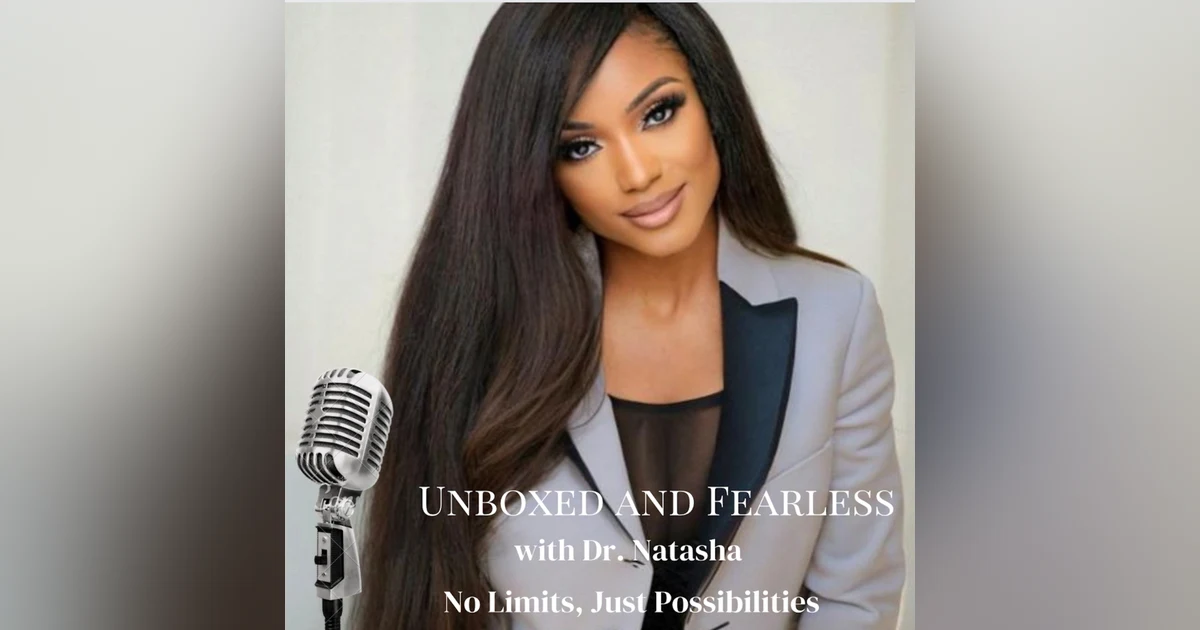


Award-winning broadcaster, author, and entrepreneur Mike Hill joins Dr. Natasha for an authentic conversation about resilience, purpose, faith, career reinvention, and life beyond the spotlight.
From navigating success in sports broadcasting and television to embracing personal growth and new opportunities, Mike shares lessons learned through triumphs and challenges. This conversation is filled with honest insight, inspiration, and practical wisdom for anyone pursuing purpose while overcoming life’s obstacles.
Watch and listen on all major streaming platforms.
Available on:
YouTube
Spotify
Apple Podcasts
Amazon Music
iHeartRadio
Hosted by:
Dr. Natasha Weems, DNP, AGPCNP-BC
Follow Dr. Natasha:
Instagram: @drnatasha_
Follow the Podcast:
Instagram: @unboxedandfearlesspodcast
Subscribe, follow, share, and leave a review to help us continue bringing you fearless conversations that educate, empower, and inspire.
Guest (0:00): I was putting on a mask for so long that it was actually killing me. People had told me because they kind of heard about my life story, about certain of the things that I've gone through in my life. And they're like, you need to write a book. And I've always put it off because I'm like, no man, I'm not. Who am I?
Guest (0:12): Nobody's gonna read this book. But then it came to a point where I had to write the book because there was so much that was inside of me. So much hurt, so much pressure, so much trauma, anger, sadness, depression that I had suppressed for so long that if I didn't release, that I really feel like it would have killed me. And that's why I say if I hadn't written a book, would be dead by now. Because I'll tell you, I was at a point in my life where I was the most successful.
Guest (0:35): And I was in five star hotels, traveling with teams and making the most money I've ever made in my life. All of this is wonderful. And I'd be in these five star hotels at night by myself and crying. I'm like, what in the hell is wrong with me? Why am I crying?
Guest (0:49): I could hear a song, a memory, somebody could say something and it wasn't something that would hurt me, but it could be something that reminded me of something. And I would just start balling like a girl.
Doctor Natasha (1:02): Hi, I am Doctor. Natasha and we are back here at Unboxed and Fearless. I'm a nurse practitioner, board certified and founder of Pearl Health Foundation. I am here to amplify voices, but to also show authenticity Mhmm. Because there's more that comes to, you know, people within the media and entertainment sector.
Doctor Natasha (1:26): We wanna know how it feels behind the scenes, behind the mic, behind the camera. So speaking about those journeys, speaking about those encounters and that resilience on the journey is what's key. So let me tell you about our guest. We have a special guest here today. So he's lived an incredible journey in an entertainment sector, sports anchor, but Emmy awarded broadcaster.
Doctor Natasha (1:55): And it's been an amazing journey just reading about all the things that he's accomplished, so I'm really excited to speak to him today. But he's also been on ESPN and Fox Sports. So we're excited to have this conversation. So stay tuned with Unboxing Fearless. Alright.
Doctor Natasha (2:16): So first of all, we like to have a more insight about who you are as a human being. So we always get people that have, like, an incredible journey in their career field, obviously, or broadcasting, but it's really important for us to connect with people at their core because this is Unboxing Fearless. Right. So we want people to step outside of the box, but also feel inspired when they see these conversations. So we amplify voices within the community, but also talk about that journey, the resilience.
Unknown Speaker (2:53): Yeah.
Doctor Natasha (2:53): So I wanna know about you. Before all of the success on your journey Yeah. You you were born in The Bronx. Yeah. You were then transitioned to Alabama, then obviously other places throughout your journey.
Doctor Natasha (3:08): But tell us a little bit about that, your journey of becoming the man that you are today.
Guest (3:14): Yeah. Well, first of all, thanks for having me. I appreciate it. Yeah. I'm I'm the underdog.
Guest (3:19): I mean, people look at me and they think that I was born with a silver spoon in my mouth or whatever because of the success that I've had. And I'm still learning, I'm still growing, and I'm still building, but I am really the kid that should not be here. Before I was, when I wrote my book, I was gonna name it, I should not be here. And it basically just plain and simple, because if you look at my background and you look at where I came from, like you said, I was born in New York and I'm moving at a early age and raised in Alabama, we just didn't see a lot of people that had that type of success. So where was that gonna come from?
Guest (3:52): You think about my background when it came to my mom seeing abuse with her, when it came to my stepfather, my stepfather being a hitman, finding that out later in life, an alcoholic, drugs, my best friend being killed in a drive by shooting, just everything that was around me in Bessemer, Alabama just did not promote me being successful. And so that's why one of the reasons why when I go back and talk to kids, I'm like, doesn't necessarily matter the, the, the environment that you're around, but it's the environment that you create and what's inside of you that matters. So, yeah, like I said, the underdog that kind of, overcame a lot of obstacles, kept on fighting, kept on believing myself. And luckily enough for me, I had people in my corner who pushed and prodded me and allowed me to see the things that at the time I could not see for myself.
Doctor Natasha (4:44): Wow. That's interesting because we met at a Father's Day brunch. Yeah. And let me tell you, you were kind, you're respectful, so I can appreciate that. Thank you.
Doctor Natasha (4:52): But what when I was researching you and preparing for this interview, I was surprised. I didn't know that you were a vet. Yeah. You know? So tell me about serving for the military as the air force veteran.
Guest (5:06): Well, I didn't go into the military thinking, I'm gonna save the country. I'm gonna be this big hero or whatever. I went into the military because I wanted money for school and I knew that at that particular time, if I would've gone to college, I would've been like a lot of my friends who would've gone for a year, maybe pledged a fraternity and come back home without a degree and then gotten a job at a local place somewhere in Alabama and just kind of written it out. And that's not what I wanted for myself. So I went into the military and just luckily enough, I had enough discipline inside of me to stay in there for six years, to really work it out.
Guest (5:39): And I, I will say the military was a big part of the person I am today. It made me, you know, when it came to communication, when it came to teamwork, when it came to being a disciplined person, being on time, that's why I'm so apologetic for being on, not being fifteen minutes late today running behind traffic, but I did call, you know what I mean? So I'm that person that I believe and I understand that people's time is valuable, so is mine. And I never want to take away that time because time is money. But it's something that really gave me the blueprint for who I am today.
Guest (6:14): And so I'm very, very thankful for that military time that I was, that I spent.
Doctor Natasha (6:19): I think it's interesting because I'm a military spouse, and I just wanna know, would you encourage or recommend a younger individual to enter the military in retrospect, what you've experienced, how it allowed you probably opportunities to travel the world, or just, you know, being in environments you would have never been afforded the opportunity. What's your thought process? Because you know the climate of of Yeah. Politically where we're at today.
Guest (6:48): Yeah. And that's a double edged sword that we have right now. If I had a kid, no, I wouldn't say go into the military because it's so unstable with everything that's happening in this country and the people who are in charge, you know, I don't trust the administration and that's just my personal belief right there. So if had I a kid that was thinking about doing it or somebody that would ask me that question, I would say, if you have run out of options, all of your options, then that is an option for you to go into. And also the the depending on your situation, like I told you about my situation and where I was at the particular time and my mindset, and I knew that I didn't have the discipline to kinda stay in school at that particular time.
Guest (7:27): So if I did tell somebody to go into the military, a, I would say make sure you get a guaranteed job because that's one thing they don't tell you about. You think you're gonna go into a military thinking that, okay, well, I wanna be this, this, and that, and I'm gonna go into this career field. Well, yeah, not always. And I, and you got a husband that's in the military and he can tell you the same thing. But then secondly, just make sure that you get out everything that they expect that you for you to put in, you know, and go in with the mindset of not being disciplined, the discipline that they give you, but have your own discipline, self discipline to set your goals, and to achieve them with the best of your ability by using the government, for, you know, your your own personal gain.
Guest (8:07): So, like I said, I I I think it's a double edged sword. I wouldn't suggest anybody doing it, a young man doing it, a young woman doing it right now because of the climate, But it is an option, but I would say make that one of your last options.
Doctor Natasha (8:21): Got it. It's always the interesting response question and response because So being in that professionally and personally, I've encountered people that entered the military not only because of, like, access to education and, you know, resources, but because they had such a traumatic, you know, childhood or environment or upbringing, would you say that was another reason?
Guest (8:50): Yeah. I mean, you see a lot you see all type of people in in the military, obviously. You know, you come around, you you meet people whose backgrounds and people's parents were rich and they just say, hey, you know, you're gonna serve this country. And there are people that come in because they see what's going on in the world and they wanna fight against the Russians or whatever and stuff like that. But then you also see people come in because they want money for school.
Guest (9:10): And then you see people come in because they just don't once again have those options. So, yeah, I mean, it's it's it's a plethora of people, a hodgepodge of, people from around this country that get get together in the military and you just gotta find your, your, your, your lane there. So, it's just, it's, it's interesting, how, the country has gone when it comes to the military and like, especially right now and not to try and get too political, but with Donald Trump being in the office and calling it the department of war instead of the department of defense, it just seems like it's just too unstable, for anything. And I just don't want to I want people to go in there and get the right education and serve the country. Don't get me wrong.
Guest (9:54): I do believe in this country and serving the country. What I fought for is what I want, the country to be. But at the same time, I also don't trust the people who are right now in charge of this country to do the right thing when it comes to the men and women in our military.
Doctor Natasha (10:12): Personally, I would like to see military, have more respect. I think that there's a lot of sacrifice that goes into, you know, making that that transition, especially if you have, you know, people that you're responsible for, children and family, and that's a big decision to make. But I would like to see the component of respect there. I think what are your thoughts
Guest (10:38): about Oh my gosh. I mean, was when I went into the military, I got I went into the military in the eighties. And when I was in the military, was almost like a badge of dishonor to go into the military. It was like, oh, you didn't go to college? You in the military?
Guest (10:49): Like, ugh, it kinda looked down on you. And that all changed on 09/11/2001. That changed. I don't know. It was like a light switch went off for people or whatever.
Guest (10:59): And then all of a sudden, that's the first time I ever heard somebody tell me, thank you for your service in 2001. And I was already six years out of the military, you know, as a veteran. The whole time I was in, I could be in uniform, nobody would say anything. They'd kind of look down on you, especially if you weren't an officer, you had never gone to the military. I was told, as a matter of fact, when I was in the military and I wanted to be a broadcaster, I was told by somebody that I would never hire you because you don't have a degree, that you're in the military.
Guest (11:26): It's like, they look down on you. And now it's like, when you tell somebody you're in the military, you were in the military as a veteran, you get the respect, you know, there.
Doctor Natasha (11:34): So you mentioned that you you wanted to go into broadcasting even while in the military.
Unknown Speaker (11:39): Absolutely. So
Doctor Natasha (11:39): you you knew that early Yep. Walk me through that in real time. Like, why how you know, you're in the military. How did that come about? Why what inspired you?
Guest (11:50): So all this is pieced together because that's one of the reasons I said, if you go into the military, actually say you want a a guaranteed job and go in getting the job that you say you wanna go into? Because I knew I wanted to be in broadcasting when I was 18 years old. Because I was a journal I was in journalism when I was in high school. I knew I was gonna play sports because I wasn't that great, but I wanted to kind of stay in it in some kind of way or do news. And, so when I went into the military, went in with the recruiter saying I wanted to go into communications.
Guest (12:17): I wanna go into broadcasting. I was like, okay, yeah, we'll put you in communications. Well, communications in the military is a huge field. So they put me in a field of communications, but not necessarily broadcasting. So I became a radio tele radio communications analyst specialist, which had nothing to do with television, radio, anything like that.
Guest (12:36): I was given support. I got a top secret clearance, but I was given support to spy planes and that has nothing to do with television. So I actually had to cross over my last three years in the military because I was going to school at the particular time at the same time I was in the military and I had an internship and they knew about this. So when I was in NSA, they wanted to start a broadcast instead of doing the boring briefings, to the joint chiefs of staff, CIA, FBI, the president, and all the other people who had intel, they wanted to do a actual newscast. And so they knew I was in school doing it, and they said, well, we want you to be our anchor.
Guest (13:15): So I was doing what Tom Brokaw back in the day was doing Peter Jennings, all those old school guys were doing, but I was doing it in a classified setting that nobody could see outside of the people who had those clearances. So the day I got out of the military is the day I got my first job in broadcasting. I discharged from the military. My first sergeant said, so what are you gonna do with your life? And I'm like, I don't know.
Guest (13:38): Seriously, had, I, I know I had applied for all these jobs, whatever, but I only had like two interviews I was thinking, okay, well, I guess I'm just gonna go live with my brother for a while. I was married at the time and just didn't know. And so I, I was actually, that's the first time that kind of like a little minor depression hit me because now I'm out here by myself because I bet on everything for broadcasting. I could have gone into the private sector because I had a top secret clearance making like $8,095,000 a year, $8,595,000 dollars a year as a 24 year old back in 1994, which was good money at the particular time. But I wanted to be in broadcasting.
Guest (14:19): So I bet on it and sent out all these tapes. And once again, like I said, I got two callbacks and one of them happened to be in Hagerstown, Maryland. And that was like a month before I got discharged and I didn't hear anything. But the day that I got out of the military, two hours after I got out of the military, after that first sergeant asked me, what am I gonna do with the rest of my life? And I got depressed.
Guest (14:38): I got a phone call from a guy named Bob Boringesser at WHAG TV in Hagerstown, Maryland, asking me if I wanted the job and I couldn't have been happier. So, and, and, and it goes to show, like, I I at that particular time, like I said, I could have taken a job that was making up to $95,000 a year, and I turned all that down. Once again, being married at the time for something that was my passion, for something that I really wanted to do, for something that I knew that I could be good at and the money would come come. So when I got the job at WHAG TV, in Hagerstown, Maryland, I was making less than $7 an hour. Yes.
Guest (15:15): Less than $7 but I was happy. I was happy to do it because it was my passion. And I knew eventually it wasn't about the money at that time. I had to sacrifice a lot of things, but it was about my passion and it was about my energy and it was about my mindset that I was going to be good at it and that the money would come. And soon the money did come and it worked out for me.
Doctor Natasha (15:39): Wow. So moving fast forward throughout your journey, when did you feel like I made it? Like, which platform did you start working at that
Guest (15:50): you I still felt don't feel like I made it. I I don't I don't feel like I made it. I I don't feel like I'm I don't feel people who say I'm successful and this is just my mindset, people like, oh, you're so successful. I'm not successful. I don't feel success I feel like I've had a lot success, but I don't feel successful because success to me being successful is living up to your full potential.
Guest (16:10): And I feel like I'm at about 55% right now. I feel like there's burning desire, and it's not greed. And so I don't want anybody to get me wrong. I'm not appreciative of what I've been able to achieve and what I've gained and what I've earned and all that type of stuff like that. But at the same time, I also feel like I'm still so much, there's so much unfulfilledness that's still inside of me that there's a burning desire for me to get there because I don't have, I, I, even though I've started a legacy, I wanna build more on that legacy.
Guest (16:39): I wanna have inheritance that I can pass down to my kids' kids' kids. I wanna be able to have the financial stability that I never, if, if I don't work for the next ten years, to me, all of that works. I wanna be able to produce shows, which I'm doing now. I wanna be in front of the camera. I wanna, I wanna go from talent to Titan.
Guest (16:56): That's my era that I'm in right now. So I don't feel successful. I feel like I've had success and I'm happy, but I ain't nowhere near content. Nowhere.
Doctor Natasha (17:08): Okay. Because I think those are different. And success means, you know, it it depends on the a person's perspective.
Unknown Speaker (17:18): Mhmm.
Doctor Natasha (17:18): Right? And so it could be success in family or success in, you know, your mental health and and what you've overcome in life. You know, it's just like so
Guest (17:29): So from you mean from a personal perspective or profession? In
Doctor Natasha (17:32): general you could still have some sense of success, although you have not met your your lifelong goals or have met the financial goals that you want at the end of the day, but just to, you know, embrace what you've accomplished.
Unknown Speaker (17:49): Okay. Well, I appreciate that. Thank you. Thank you for that touching. So this is something So hard on yourself.
Guest (17:54): I'm getting a lesson right now. Feel I feel and I do put a lot of pressure on myself because I feel like, you know, like I said, I'm the, I'm still that underdog. I still feel like, you know, I, I gotta work hard and that's just my mindset. And sometimes that could be detrimental to a lot of people because you don't sit back and smell the roses, so to speak, or you don't sit back and like appreciate, but I, but I've also learned to appreciate some of the smaller things and really know that I'm blessed. So from a professional standpoint, yeah, I mean, going, getting, being at a network for the last twenty years, I mean, I've, I've had a network job, and which is hard to do.
Guest (18:30): Like only the top, maybe 2% of my industry, gets to work at a network. And I've been working at a network consistently for the last twenty, it's twenty two years. I've been in the top 10 market for the last twenty five years, you know? So that's successful being on a Netflix show, being on ESPN, the highest you can go when it comes to a sports cast, have my own shows or whatever, that's all success. And I know that, okay, I made a name for myself, but I'm, I'm just kind of, I'm not greedy, but I'm like, I, I'll reach for more from a personal standpoint, though, I'll tell you when I know I made it, when I became a man.
Guest (19:12): And I didn't become a man until I was in my forties. So a lot of people look at that and they say, well, when you're 21, you're a male, you got a penis, you're a man. Nah. I had to learn that becoming a man is putting away childish things. That's why first Corinthians 13 is my favorite scripture.
Guest (19:31): You know, when I was a child, thought as a child, understood as a child, spoke as a child. But when I became a man, I put away childish things. So once I was able to put away some a lot of the childish things I'm still childish in some sense. But once I was able to put away those childish things and feel like I'm stepping into my manhood, that's when I knew, okay, I'm here to make a difference for people. And that even crosses over into the professional side of things, because now I wanna do things on the professional side when it comes to broadcasting and using my platform to teach other people how to become better men.
Guest (20:07): So there you have it.
Unknown Speaker (20:09): So
Unknown Speaker (20:10): If that answers your question.
Doctor Natasha (20:11): For me, in my opinion, that's very successful. When you can reach back into your community and help and empower others. You're a black man in the entertainment sector, and you've reached these positions that are very difficult to feel, so many barriers that you were able to hurdle over. So and not to say that you didn't encounter any, I'm just saying that you stood strong, you're a positive representation for men that want to pursue that career, and I think that's pretty successful.
Unknown Speaker (20:47): Thank you. Oh, thank you. Thank you. Thank you.
Doctor Natasha (20:49): So I'm not trying to go there, but many times when people have a history of trauma, it's very difficult.
Guest (20:58): Yeah. And I agree with you, and I appreciate you saying that, And thank you. And like I said, it's not lost on me that and how much I do appreciate what I've achieved and what I've accomplished and the successes that I've had. And I think you're right, that because of the trauma, because of where I came from, you know, if I have a dream of being back in Bessemer, Alabama, I lose my mind because I'm like, I can't go back. I can't go back.
Guest (21:21): I can't live that way. And I never want my kids or their kids to ever live in the conditions that I lived in. It wasn't terrible, don't get me wrong, it wasn't rat infested or, you know, cockroaches all over, we did have, you know, mice and roaches, you know, here and there, but I just can't go back. And it's like, that's why I work so hard. And that's why I'm like, okay, I'm thankful for what I have and it's clean and whatnot, but man, I gotta build so much that if somebody tries to take it away from me, take something away from me, I still have this big mountain that I'm living on and I'm still able to get back.
Guest (21:57): So that's where I am. So you're right. I think part of it is the trauma of knowing of where I came from and how far I've come. And now that I've come this far, man, I just don't wanna look back. I just wanna continue to move forward because I feel like there's still a mountain to climb.
Doctor Natasha (22:11): I understand that. Yeah. And I understand that on your journey and you're a spiritual man, that God has equipped you with everything that you needed on a journey Yeah. Which is how you were able to get into some of those rooms.
Unknown Speaker (22:26): Absolutely.
Doctor Natasha (22:27): That otherwise you would not been able to.
Unknown Speaker (22:29): It's all God.
Doctor Natasha (22:30): That is when you told me you had the job opportunity hours after the military, that for me sounded like divine intervention.
Unknown Speaker (22:40): Absolutely. It's all God.
Doctor Natasha (22:42): So he showed up and is continuously showing up and equipping you with everything that you need on your journey. That is amazing. But let's talk about your transition
Unknown Speaker (22:54): Mhmm.
Doctor Natasha (22:55): Throughout life and some of the trauma that you did experience. I was, reviewing the book, The Open Mic.
Unknown Speaker (23:05): Mhmm.
Doctor Natasha (23:05): And let's start with the level of vulnerability it takes to write a book about your life?
Guest (23:13): Well, I had to be vulnerable because, I was putting on a mask for so long that it was actually killing me. I was, when I first started to write the book, people had told me because they, they can't, they kind of heard about my life story, about certain things that I've gone through in my life. And they're like, you need to write, you need to write a book. And I've always put it off because I'm like, nah man, I'm not, who am I? You know, once again, being humble, nobody's gonna read this book.
Guest (23:43): You know, I'm not the A list, C list celebrity or whatever, I'm just somebody that's on television. So who's gonna read it? But then it came to a point where I had to write the book because there was so much that was inside of me, so much hurt, so much disdain, so much pressure, so much trauma, anger, sadness, depression that I had suppressed for so long that if I didn't release, that I really feel like it would've killed me. And that's why I say, if I hadn't written a book, I would be dead by now. Because I'll tell you, I was at a point in my life where I was the most successful, you know, I was the most successful Doctor.
Guest (24:19): Natasha. I was, here and I was in five star hotels, traveling with teams and things like that. And I'm like making the most money I've ever made in my life. And, you know, just bought this house and everything's great. And all of this is wonderful.
Guest (24:34): And I'd be in these five star hotels at night by myself and crying. I'm like, what in the hell is wrong with me? Why am I crying? I could hear a song, a memory, somebody could say something, and it wasn't something that would hurt me, but it could be something that reminded me of something. And I would just start balling like a girl.
Unknown Speaker (24:54): And I was like, you know what I'm saying? You know, but it was like, and I was wondering, I'm like, man, am I losing testosterone? What's going on? Am my, am my breast getting bigger? I'm like, oh, I'm like, what's going on?
Guest (25:03): I'm like doubting myself. And I heard a voice and it was the voice of God. Once again, God said, you need to write, you need to write this book. And so I started off with a little outline. I'm like, I pick it up, throw, you know, throw a page here and everything like, and it kept coming, kept coming, kept coming, pressure kept coming.
Guest (25:22): And I kept feeling like I'm going die, man. I'm like losing control. I'm out of control. Right. Soon as I would write, felt like precious.
Guest (25:31): Every time I would write some and then sooner or later, I couldn't stop writing. It it felt like I don't know if you've ever had a vice on you that like, like a pulled muscle and it just like continues to gnaw at you. That's what that pulled muscle felt like, but it was on my brain and on my heart and on my emotions. I just felt constantly like something was pulling on me. But when I wrote, I just felt the relief, the pressure being relieved and I couldn't stop.
Guest (25:58): And the tears will come out as I was writing. And then I realized, man, this is my first form of therapy I've ever had in my life, writing this book. I'm letting go of things that have been on my mind for over forty years, in some cases, some over thirty, forty years in some cases. And this is the first time I'm able to express it and let it go and actually talk about it and put it to the center. Even though I'm not talking to anybody, I'm just putting it on paper.
Guest (26:25): And I wrote that book. And once again, it saved my life. And if it wasn't for that, man, I wouldn't have understood that. And then if it wasn't for the therapy after that, because I always say that the book was my surgery that I needed, but the therapy afterwards is the checkups, self care is the making sure that every year you go and you make sure that you continue to make sure that suture is healing correctly. You know what I mean?
Guest (26:50): Because you can start your healing process and you can, you can put something on the wound, but you still gotta continue to check the wound. You still gotta continue to check the bandages and change the bandages and things like that. And that's what I was able to do. And once again, that is my journey in that book. And the reason why I'm able to hear to talk to you today about anything that goes on in my mental health and be honest about it and be transparent about it.
Guest (27:14): Because before I was just like any other black man or any man, man, I ain't telling all these people my business. I'm gonna take it to God, take it to God, take it to Jesus, man up, Don't show your emotions. Don't cry. I do all those things. And I was that man.
Guest (27:27): I was that alpha male. And now I'm like, man, you know, if I feel like crying, I'm a cry. If I feel, if I, if it feels like I need to cry, I'm a cry because I'm not gonna hold it in because I'm not gonna kill myself or anybody.
Doctor Natasha (27:39): And it's okay. So I'm I'm happy that you were met with that therapeutic process, and you had that connection with God, and and that was a part of your purpose. You were supposed to write that book. You were supposed to write your story, and you never know how that could have impacted another person's life when reading that or encountering that. So that's I too had a similar experience.
Doctor Natasha (28:03): So when I'm hearing you say that to me, I'm just having a moment right now, but that's how I started my writing experience. So it was just, you know, God will show up, and and and that was supposed to be a part of your therapy, but you didn't know that you needed it.
Guest (28:21): I Like you didn't had no idea. And to your point, it was like my mindset changed from like, it doesn't matter how many people read it, but who reads it? You know what I'm saying? Because it's like, okay, this is, this book is not just for me, but it's for anybody else. And so when you read my book, it's the life lessons.
Guest (28:40): I'm very, very vulnerable. Like I sent it to people in the business and they're like, you can't put this out because it can ruin your career because of some of the things that I shared in that book. Why would you put that out there? And I'm like, well, have to now. I can't keep this to myself.
Guest (28:55): I mean, it's like, why would God tell me to put this out there and not share this? I'm not looking for sales. I don't care about New York Times bestsellers list. I'm looking for souls that need to be saved. I'm looking to try and help that next young black man that was told to man up, that was told that, hey, if you got issues with one chick, go get three more.
Guest (29:17): I'm, I'm talking to that young man that like, you know what, you ain't a man unless you got three or four women at the same time, even if you're married. I'm talking to that young man that was like, you know what? And who cares if you got kids, can't take care of them. You ain't gotta take care of them. You know what I mean?
Guest (29:32): I'm talking to that young man that like feels like when the world is against him, when the world is down on him, when the world is putting him down for whatever reason that he does have hope, that he does have desire, that he can do anything that he puts his mind to no matter what environment he comes out of. I'm talking to that young man that experienced domestic violence and saw that and saw that the father figures that was supposed to be in his life for the male figures that was supposed to be in his life were, weren't men at all, weren't men at all. And despite that, you can still have a better life for not only you, but for the people around you, because what people need to understand about mental health and therapy is like, it's not just for you, but it's about the people around you because yes, what your actions are doing, they're affecting your life, but your actions are also affecting a lot of people around you and you don't realize the pain and the hurt that you're causing them.
Doctor Natasha (30:25): That is very true. And when God was able to connect and speak to you, you were able to minister because people don't understand. People think that ministry is only behind the pool pit.
Unknown Speaker (30:40): Mhmm.
Doctor Natasha (30:41): But you minister through your book, through the pages, through the writing, and through your pain.
Unknown Speaker (30:47): Yep.
Doctor Natasha (30:48): And so I think people need to realize that, like, that might be a purpose. That might be, you know, on your journey to minister. And it's about connecting with the souls, connecting with people that need that to save them from suicidal or homicidal ideation.
Unknown Speaker (31:05): Yeah. Absolutely.
Doctor Natasha (31:06): You you never know what space people are in because they sit with depression and silence, especially in our communities. Let's talk about stigmas.
Unknown Speaker (31:16): Mhmm.
Doctor Natasha (31:17): What are some stigmas that you would want to highlight that people need to understand that you can get over and through this to access resources and services within a community to help you through those dark spaces in life and access mental health.
Guest (31:36): Yeah, the stigmas are just what I was talking about, especially in our community. Like, you know, especially for black men, like you can't don't cry, don't be a punk, don't be a simp, you know, that type of thing. You know, don't man up. I always say, keep people like, keep on saying man up. You say it enough, it's gonna be man down eventually.
Guest (31:54): You know, you're gonna be six feet down. So, what we need to overcome is the stigmas and the reason why I'm very vocal about that. And I'm happy that it's changing a little bit because you're starting to hear more and more people talk about mental health and how therapy is important to them. And not just black men, but you're seeing that in our community where it was like, okay, we're going to get therapists because we we like I said, we're the first people to say, take it to God. Take it to God.
Guest (32:18): Well, okay, take it to God, but how's God helping you? You think God's gonna snap his finger and all of a sudden you're gonna go from being depressed to, like, having this positive outlook on life sometimes? God puts people here on this earth, just like, you know, God, send me some food. I'm hungry. I'm starving, God.
Guest (32:34): Send me some food. You think all of a sudden you're to go in the kitchen and your your pantry's going to be full of, like, chicken and and and all kind of rice and beans and everything like that. No, or you just going to be able to go to grocery stores. So if you, even if you want to, if you say, God, I'm hungry, I need some food and you ain't got no money and you go to the grocery store. What they going give it to you for free?
Guest (32:56): No, probably not. But what God will do is send somebody there. Like, you know what? God told me to give you this $100. God told me to here, here's a donation or whatever.
Guest (33:05): So God puts people here on this earth to help you. So we will do that when it comes to our physical, when we hurting like you hurt your knee, you go to the hospital and still a lot of black men still don't want to go to the hospital because we want to tough it out even then. We hurt our knee, but when it hurts you enough, you'll eventually go to the hospital, get an MRI x-ray to find out what's going on and have a proper treatment plan. How come we don't do that for our minds and our hearts and our emotions? Because we were taught not to, because we were taught by our ancestors not to share our business.
Guest (33:36): We were taught by our male ancestors not to cry, to show that type of emotion because you're not being a man. And it's more important, I will say this right now, to help us get over that stigma, for black men, it's more important for black women, our queens, our women who are in our lives, our mothers, our sisters, our female friends to tell us it is okay for us to not be okay. It's okay for us to show emotions every now and then. Now there's a difference between being a crybaby, you know, because people are crybaby and just whine all the time and just complain about life all the time and venting or letting something, letting some steam off, you know, because if you cry all the time and you don't have a solution and people are telling you about your solution, you just want to whine all the time. People get tired of that.
Guest (34:27): But if I come to you like, Doctor. Natasha, I'm just not feeling good today. I'm not having a good day. I'm just like, no matter what, just want to cry just, and then I cry. It's important for women to be like, you know what?
Guest (34:38): It's okay. You're being a man by doing this, you know, let it go, let it go and not say, oh, look at this punk ass doing this and blah, blah, blah. Talk, because guess what we're going to do? We're going to shrivel right back up and we're to check out and we're to shut down. And we shut down, we're going to continue to let that build up, that toxicity inside of us.
Guest (34:58): And it's going to become, you know, toxicity is going, you know, it's going spill out on you male toxic, you know, and then all of a sudden we're going to take it out on the people that are around us because we weren't able to let it go. So in order for us to be able to get over those stigmas, we have to be okay with not being okay. And the people around us have to understand that, hey, everyone's human and we got to be there for one another. And we got to be able to talk and be able to talk it out and use the resources that God provides for us in order for us to get better.
Doctor Natasha (35:30): I agree. And unfortunately, men have been conditioned to be the person to provide that support, to have that, you know, provide the relief and not being told that it's okay to feel vulnerable or to know that you need that love and that compassion and that empathy and, you know, to feel safe.
Unknown Speaker (35:56): Mhmm.
Doctor Natasha (35:56): So a question for you is, you mentioned that it's important for the woman in your life to say those words to you so you can feel safe.
Unknown Speaker (36:09): Yeah.
Doctor Natasha (36:10): How can a woman show up for you in that way beyond those words to make you feel vulnerable enough to say, I'm safe. I know that this is the person I can confide in. Now, you did mention that there are certain words and certain behaviors that should be shown because I think women watching this
Unknown Speaker (36:32): Mhmm.
Doctor Natasha (36:32): They could learn from this. How do you show up for your man to make them feel that way, to embrace them?
Guest (36:40): Is it The same what you do for your your girlfriends in in a sense. And and I understand we're we're still men, so we're masculine, so it's gonna take a lot more to get it out of us because you're gonna come in, baby, you okay? You know, I'm good, you know. Are you sure? Like, I wanted you to know that if you're not, it's okay for you to talk to me.
Guest (36:58): Just tell me what's going on. Like, I'm here for you. I love you. I care about you. You can tell me anything.
Guest (37:05): If you wanna cry, you can cry. Just let us know it's okay. Just because we might have one of those days we break down and we'd be like, nah, girl, I'm all good, I'm good. But it only matters when it actually happens. Let him know it's a safe space.
Guest (37:19): But then when you give him that safe space, or if he gives, he takes that safe space, don't bring it back up. Oh, please don't, please do not like, let us have an argument. So when it's we're in that mindset of compassion, right, and your compassion, and you feel that compassion for your significant other, your man, right? And he decides to take you up on your offer to be vulnerable in that space. When he is vulnerable in that space, man, that should just be between you and him and God.
Guest (37:54): And y'all take care of that. And if it needs to go to some mental health expert or somebody else, then you do that. But that's between y'all. You don't run to your girlfriend, girl, you know what he did and let us hear about that. You let us hear about that or we have that argument where we're not in that space of compassion and then you throw it in our face, never again shut down.
Guest (38:14): It's happened to me Oh, many yeah.
Doctor Natasha (38:16): That's a that's a very easy way to destroy the trust
Unknown Speaker (38:20): Absolutely.
Unknown Speaker (38:21): In a relationship.
Guest (38:22): Yep. It yep. And and and if you do it in the beginning, if you, I remember one time, well, the, the, the first time I ever told a woman I loved her. First time I was 15 years old, I didn't know what love was, but I felt it. I felt love.
Guest (38:37): Like, that's the first time I actually felt love. Like, I'm like, oh my gosh, this is so oh, wow. I never felt this way. I'm 15, but I'm you know, this is no. Like, oh my gosh, this woman is gorgeous.
Guest (38:49): She's beautiful. Man, I was in the car with her. We had a wonderful time. She was a senior. I'm a sophomore in high school.
Guest (38:55): Oh my gosh. She's gorgeous. She's the best looking girl in high school. And I have her as a sophomore. I'm the man.
Guest (39:02): I'm walking around the football stadium with this girl. We're walking, holding hands. We go out. We drink some wine coolers back in the day. We're kissing.
Guest (39:11): Luther Vandross is playing on the radio. This is the perfect setting. I think the moon was out. I don't know if it was, but in my mind it was. It was a full moon and it was just perfect.
Guest (39:21): I looked at her. She was in the driver's seat because I couldn't drive at the top. I just looked at her, she looked at me and I just said with everything as I felt it, I said, I love you. Just like that, felt it. And this girl looked at me like, let's go.
Guest (39:44): And I still didn't get it. I'm like, oh, that's not the reaction I kind of expected. Like, when I've seen it in the movies, I've seen when a man tells this woman he loves her, they embrace, they kiss, we're going to get married, this is going to be great, we're going to have three kids, we're to live in this house, everything's man, I had everything planned out in my mind. That's the way it was because I was that pure. That was that pure innocent love that I had.
Guest (40:08): And she gave me that look that I still see to this day that I couldn't get past for thirty years. I couldn't get past for thirty years. And on top of that, the reason why, another reason I couldn't get past it because we left, didn't hear from her that weekend, and I'm still not thinking anything's wrong. Just thinking, okay, well, didn't, maybe she don't love me back yet, but she will. She's gonna love me.
Guest (40:32): And I remember getting to school, it was a Friday, got to school on that Monday. And I remember this woman named Karen West, not yeah, Karen West came up to me, girl, she said, you and so and so still I won't say her name. She said, you and so and so still together? I'm like, yeah. And she gave me this little like, okay.
Guest (40:49): Like, so she knew something I didn't know. And I'm walking down the hall in school on this Monday, and I'm like, once again, I'm sophomore that got senior, so I'm a man, right? So people know about this. And I'm walking down the hall, and I'm seeing people just look at me, like, shush, shush, and laughing and stuff like that. I'm like, what the fuck's going on?
Guest (41:10): Because they know something I don't know. And then the next period, go to class, come out, walking down the hallway again, and I walk around the corner and I see my girlfriend holding hands with another dude and people laughing at me. And when I tell you the effect that had on me for thirty years, for thirty, until I addressed it, until I addressed it. Yeah. Until I got into therapy because I could not love somebody.
Guest (41:42): Until I started writing that book, until I wrote about it in the book, because I didn't realize it was affecting me. Because when you go to therapy, they're like, when's the first time that you felt this way? You know? So there was a block that I had that I really couldn't really fall in love with anybody because I couldn't trust them. Not that I didn't love them, but I couldn't fall in love, but I couldn't trust them.
Guest (42:03): And so some of the things I used to do, and I'm not making excuses for anything, but some of the things I used to do in a relationship was because I'm like, I'm gonna get you before you get me because I couldn't get past that moment. And I know women will look at this and say, well, that happened when you was 15 years old. We'd had our heart broke 20 times before we was 20. Once again, you asked me about a man. We're so tough, but if you get inside, and this is the reason why we are so tough, because our emotions are way more fragile.
Guest (42:35): Our emotions are, you get inside of our emotions and you hurt us, oh my gosh, you might as well kill us because it's hard for us to get over that. And then we become killers. We become killers. A lot of us become killers unless you have the tools to deal with it. Unless you have the therapy or unless you have somebody to talk to because unlike women, we can't go and talk to anybody else.
Unknown Speaker (42:57): I couldn't go and talk to somebody else. I couldn't go to my friends and say, man, that girl hurt me. I'm hurt. I would cry. I was crying.
Unknown Speaker (43:04): I'm like, oh my god. I was embarrassed. But my boy might what the hell is wrong with you, man? Man up. Yeah.
Unknown Speaker (43:09): Go get another one, bro. Oh, she did you stupid ass blah blah blah blah blah And all this type of stuff like that. That's what you hear. Yeah. I didn't have somebody that could come to me and like, man, how do you feel?
Guest (43:20): I know you hurting, man, I know that hurt. And not laugh at me, oh, I know that hurt, dog. You know what I'm saying? I didn't have it. And when you're an adult, you don't have that.
Guest (43:29): As men, a lot of times we don't have that. Now I have it now, because I have, I have my family, and I have my, I have my circle, my community of brothers that I know, AKA you've done the work and I've done the work, I can come to you, you feel bad, you wanna you you you're depressed about something or whatever, you lost a job or whatever, you can come and talk to me about it. Before we couldn't do that, you know? So that's the hard part. That's the hard I know it's a long drawn out answer, That but it
Unknown Speaker (43:54): trauma for you.
Unknown Speaker (43:56): Yeah.
Doctor Natasha (43:56): Yeah. So it just, and men do deal with emotions and that trauma so much more differently. Women have a lot of emotional intelligence and we process our emotions and our hurt and our pain so much differently. Yes. So there's a a a big difference, but no one can, you know, undermine how you perceive that to be and how it impacted your life and your journey, your love life, your trust, like, as you can see.
Unknown Speaker (44:26): Yeah.
Doctor Natasha (44:26): But I'm glad that you were able to tap into mental health.
Unknown Speaker (44:30): Mhmm.
Doctor Natasha (44:31): And that was a part of your therapy journey.
Guest (44:34): Yeah. It it changed me. It it it made me a different person. You get the tools and you don't react the same way. There's a reason why people run the drugs and alcohol.
Guest (44:44): It's like something, man, I need it because I feel I'm hurting.
Unknown Speaker (44:48): Self medicating.
Guest (44:48): It's self medication. And I tell people all the time, and once again, it's no excuse because you're still responsible for your actions. So I still take full accountability for everything. That's what I want people to understand. I take full accountability for every single thing I've ever done in my life, for every mistake that I made.
Guest (45:06): But I made mistakes just like everybody else, but there was a reason for it. And I'm not trying to shift the blame, but it was something that I needed to address a long time ago, but I just didn't know. Just like if you get on drugs, alcohol, there's a there's resources that can help you avoid that or get off of that or whatever. But if you don't use those resources or if you don't know about those resources or people don't make those things available to you, as a matter of fact, there are more people that will tell you about rehab and resources on how to get off drugs and how to stop gambling and all that type of stuff like that. But they don't have resources about how to stop messing around because of your traumas or whatever.
Guest (45:41): And just, and it ain't just about being a dog. That's what people got to understand. Like, I'm, I'm totally a different person than I was, and I didn't cheat on everybody I was with and all that type of stuff like that. So that whole rhetoric and that narrative, if you want to know, read the book or whatever, whatnot, but people hear about certain things that I address before, because I was trying to help people because I wrote the book and I put that out there and I happened to put it on a platform that was like, just kind of garbage or whatever. And the mindset of certain people that look at that stuff kind of went there and took it there or whatever, and gave me this kind of, title that, okay, that sticks.
Guest (46:16): But at the same time, I know who I am, but there is a reason why, and it's not just because, oh, all men are dogs and y'all can't help yourself. You know, well, some people are just greedy like that. Some women do the same thing, but at the same time, there is a reason why for the most part, you ask the question, and this is the main question that a lot of women want to ask you, your female friends ask you. What's that fee? What's that question that female friends ask you when they're talking about relationships and stuff like that?
Unknown Speaker (46:43): Why do men what? Cheat. Why do men cheat? Why do why? And then when you give them a reason of why it could actually be the case.
Guest (46:52): Oh, that ain't no excuse. Nobody's making an excuse. You asked me the reason why, and I'm telling you, it could be, yeah, some people can be greedy. Some people ain't getting some at home. You know what I mean?
Guest (47:02): Some people could be depressed and then run to that or, you know, it just, or they are to chase. It's a lot of different reasons out there, but no matter what you try and tell somebody it's never good enough. And I'm not saying there's ever a good enough excuse because you shouldn't do it. But once you realize it as an adult, of the way you've been taught, the way I was taught growing up or whatever, Hey man, you know, this is what you need to do. Go get this.
Guest (47:26): And once again, the traumas that affect that and your mindset behind the reasons you do it or whatever. Once people kind of understand that people, hopefully they will give you grace and understand, Hey, well, you need to go get some help for that. Stop doing that. You got a friend of yours, you you as a as a female, you got a male friend of yours that you know is doing that. Hey, why are you doing that?
Guest (47:45): You know, you got a good woman. Well, why what makes you do that? And if you need to do it, when you can go get some help, here's how you can go get some Because maybe this man hasn't expressed his emotions to that woman about what was going on or whatever and why he's doing this. And once again, it ain't just about the art of trying to get new vagina or whatever. Sometimes it's just about, hey man, I'm hurting.
Guest (48:08): I ain't getting no attention at home just like women sometimes. You know, you hear about women. Women like, oh, I'm not getting oh, he doesn't tell me he loves me anymore. He's not showing me affection. He's not showing me that's trauma.
Guest (48:19): It is. That's that's trauma that y'all are dealing with. And that and once again, there's no excuse, but this is this this is what people when you talk about women, this is what happens. And it could be the same thing for men. You know, I'm not getting something at home, not feeling loved, but it also goes back to something else, just like it goes back something else for for a woman.
Guest (48:37): A woman wants to feel love. Why do you want to feel love? Because there was something that was missing probably early on. You need that. And I know it's a long drawn about answering.
Guest (48:45): And once again, not making the excuses. I want people to understand that we take full accountability for that, but people need to understand you have to give grace to people that's trying to give, give, get help.
Doctor Natasha (48:55): I want to understand your perspective, your journey, your mindset, what you had to process, what you had to go through. So the the first step is identifying it. Yeah. There's people out here fifty, sixty, that haven't identified due to the trauma that they were exposed to is one of the reasons why they're showing up the way that they are in their marriages or in their relationships. And trauma can show up in so many different forms.
Doctor Natasha (49:29): And so someone could possibly minimalize what you experienced, but people have committed suicide from heartbreak. Especially when you're so young and you can't really understand it and you can't really express your feelings about what you're feeling, the pain. And so you can't minimalize that because there has been some really poor outcomes based on how people really dealt
Guest (49:58): with
Doctor Natasha (49:58): it.
Guest (49:59): Right. Because like you said, they don't have that outlet. They don't have anybody they feel like they can talk to. You know, you hear about people in the trans community or gay people, whatever they, this, because they don't feel like they can talk to anybody. They don't feel like people understand them, so they commit suicide.
Guest (50:12): It could be the same thing for a lot of men, you know, you notice the statistics for a lot of black men right now. We are killing ourselves at an astronomical, amount of rate because we deal with so much pressure in this world. Being a black man, being just, you know, disenfranchised or, or, or being, being put down by society or this and that, and not feeling like we have that outlet to talk to anybody and we build that all up. And guess what? Once again, that becomes the depression that makes us feel like, man, I just got to let it go.
Guest (50:41): I got to get rid of this. These demons are killing me. This trauma is killing me, literally killing me. And I can't take it anymore. My heart can't take it anymore because I don't have an outlet for it.
Guest (50:50): So we got to find ways to ensure and continue to encourage our black men and black men period, that we have an outlet. We have somebody that can listen to you when you're going through what you're going through. So this is what I've gone through. And I've never, since I've been on this mental health journey, haven't backed away from it. Like I said, when I wrote the book and I went on that TV show and all that type of stuff like that, and it backfired, all they heard was like, he cheated.
Guest (51:19): They didn't hear about where I am now and what I've done and what I have the work I put in. They just like, oh, once a cheater, always a cheater. Like, nah, man. Like, so that's like, if you look at your uncle and he's an alcoholic or whatever, and he's trying to help himself, boy, he was an alcoholic early in his life in his twenties. And then after the age of 30 and he's 60 years old now, and he's been alcohol free.
Guest (51:39): Oh, so once alcohol, understand once alcohol, always alcohol, you can go back, but give people grace. And sometimes you got to look at where they are now and where they're trying to go instead of what they did before. And I, but I also understand that the traumas that you have for yourself and the harm that it inflicts on certain people can also be traumatic for the people who aren't even in that person's life. Meaning if they hear that, oh, Mike cheated or whatever, or a man cheated or whatever, they have a disdain for that man that's cheating, even if they're not cheating on them or anybody that they know, because they have been hurt by somebody that cheated. Yep.
Guest (52:26): Their, their husband, their boyfriend, their, their dad, you know, somebody that pain hurt that woman. And so I had to learn, okay, I got to give that person grace because I'm like, well, you don't even know me. Why are you judging me? Why are you going? Well, I understand the word cheat or whatever.
Guest (52:44): I hate It
Unknown Speaker (52:46): could be a trigger.
Guest (52:47): It could be a trigger for a lot of people and it just, and it goes off. I'm like, damn, I could've you know, I've seen people who have done heinous crimes get more
Unknown Speaker (52:59): Grace.
Guest (53:00): Grace than, somebody who admitted that they they've done some things in the past when it came to, you know, fidelity. I really have. I mean, I see people praising some men who have beaten women, so to speak. And I know there's there's a lot of, you know, vigil when it comes to that as well. But sometimes if like still dancing and stuff like that and still enjoying, but okay.
Guest (53:25): But when you see somebody that is trying to live a better and walk a better life, having admitted to made those mistakes. And by the way, nobody knew about those mistakes that I made until I said it. I came out once again, trying to help other people wanting to help, but that's my path, that's my purpose. And I get that. And if once again, if I get a bigger platform, to, I want to continue elevate that and not hold that back or not be transparent, because I want to help and reach as many young men as I possibly can so that they don't make the same mistakes that I made.
Doctor Natasha (54:01): And that's important, especially when you talk about the suicide rates. So black men, their rates are escalating at alarming rates because they're the range between twenty five and forty four, there's been a significant increase in suicides. And I don't think people are really understanding that or acknowledging that or highlighting that. But there I was at an event recently, and a person, a psychologist, spoke about 988. And no one knew what that was.
Doctor Natasha (54:34): And that's our national hotline for suicide intervention and crisis. So anyone listening to this podcast, we have to, you know, encourage them 988 if they're in any type of crisis, if they're feeling depressed, if they're feeling like suicide suicidal, that that is a resource that they can actually utilize. But I don't think, you know, we're doing a pretty a good job at getting that out there because not many people are aware of it. Have you ever heard of
Guest (55:04): never know, what's crazy is, like, the only time you ever hear people even talking about it, say, you don't see PSAs out there, you'll see it at the end of a TV show if somebody in that TV show has committed suicide in a fictional way. Yeah. Like if you or someone else is having issues with having suicidal thoughts, please call the suicide prevention somebody. But I never heard that number before in my life.
Doctor Natasha (55:25): I see. And so I feel like, yeah, the the country isn't doing a really good job at, you know, promoting this.
Unknown Speaker (55:32): The country isn't doing a good job when it comes to mental health, period. They're not promoting anything.
Unknown Speaker (55:35): That is very true.
Unknown Speaker (55:36): You're not.
Doctor Natasha (55:37): That is very true. And, you know, being in these spaces, being in on platforms where you can utilize your platform to highlight these these discussions, I think that's necessary. So just as you say it, like, you feel like you're on assignment. Yeah. So continue on that journey.
Doctor Natasha (55:54): Have that, you know, that faith to continue on that journey to touch and reach as many people as you can.
Unknown Speaker (56:00): Thank you. I will. Definitely. Appreciate it.
Unknown Speaker (56:03): So let's talk about your mom.
Unknown Speaker (56:06): Mhmm.
Doctor Natasha (56:07): So you were you witnessed domestic violence within the household. Can you tell me how was that on your transition in terms of, like because it shaped how you you, you know, you dealt with masculinity and how a man supposed to show up in a relationship. So I'm sure that was very devastating season in your life.
Guest (56:28): Oh yeah, I mean, like, it's it's my first ever memory of my life is hearing my mom scream. Like the furthest memory I can think of when I was being a baby, like not, maybe like three, four years old, I don't know. I just hear this. That's the first thing I can think of when I was, I remember just like seeing bits and pieces of this old house that we lived in. And that's the only thing.
Guest (56:56): But in that house, in that moment, the only memory I remember is my mom screaming, screaming my name and coming into the bedroom and being snatched back out and me, me crying. Like, and to this day I just hear, you know, you hit a, and then you hear my mom crying or whatever and stuff like that. It's just, yeah. And it's, it's tough. It really is.
Guest (57:22): And luckily it, it, it, it, never luckily it never had that kind of effect when, you know, you talk about the traumas and things you see or whatever to make me wanna do anything when it came to it, it had the opposite effect. I could never put my hands on a woman. You'll never hear a woman say I ever put my hands on them or whatever, because I'm not that person, I can't do it. The only good advice that my biological father ever told me was like, a woman takes you to that point, take a walk. Now I've gotten upset, I've gotten mad, I scream and yell and stuff like that.
Guest (57:57): And I'm trying to even control that because I don't even want that type of stuff to come out. And it's, and, and it's difficult. And I've, through therapy, I've learned that people that push you to that point when you don't wanna go there or whatever, you gotta get away from them because it doesn't make you a good person. But my mom is the toughest person that I know. The things that she's had to overcome, the things that I've seen her go through, even at an older age, seeing her lying on the floor in a pool of blood because her husband stabbed her in the back, spent thirty days in the hospital.
Guest (58:37): Yeah, it just made me wanna be a better man. Like I just, I don't know. I think a lot of things that I saw, and I say this all the time, I was never taught anything positive by any of the men in my life, male role models. I never had any positive male role models, my biological father, my stepfather. I know they loved and cared, they, I guess they did the best that they could, but I just never learned anything positive from them.
Guest (59:03): But I learned what not to be. And luckily I had a mother and a grandmother who raised me and made me the man that I am today, but also the person I am today, and gave me the mindset that that is not what you're supposed to do. And to hear the hurt in my mother's voice and to see the hurt on my mother's face and the bruises and things like that, I could, I can't, that's not a man. That's why I hate men that put their hands on women. Like, I could see, and I've intervened before with people I just don't even know.
Guest (59:37): In Vegas, I remember doing this. I'm like, I just I will I want to kill that man because I can't stand when a man puts his hands on a woman. I've done it several times. So it's had an effect on me, but it's made me realize that, hey, no matter what a woman puts me through or how much she's trying to push me or whatever, man, don't ever raise your hand to a woman in a violent manner. Take a walk.
Guest (1:00:05): That sound, like I said, the only good So advice that my biological father ever gave
Doctor Natasha (1:00:09): it sounds like you've had just layers and layers and layers of traumatic experiences throughout your life. And unfortunately, like you said, that can create impaired coping mechanisms. And so you dealt with a little bit of that trauma in a way that you didn't realize you were doing based on how you were showing up in relationships. So I could understand, like, having to go through that, you know, young, it shapes just, like, your realities, how you trust, how you, you know, develop relationships. Like, all of that is just, like, the building blocks.
Doctor Natasha (1:00:46): That's your foundation, and to have that exposure to such violent situations, we can understand, right
Unknown Speaker (1:00:55): Mhmm.
Doctor Natasha (1:00:55): How your mindset was.
Guest (1:00:58): Well, like I said, luckily for me, when it came to the violence, I never was a violent person, never wanted to be a violent person, and because my mom, my grandmother lived. But the point that you're making was I never saw love in my house. I never saw like love. I never saw like a tender moment between, never my biological father, my mom, whenever I was too young when they broke up and when my stepfather raised me from the age of four. And I never saw, like, a love and tender moment.
Guest (1:01:27): I never heard my mom and my dad say I love you to one another. They would say love you on the way out. Love you. Love you. Love you.
Unknown Speaker (1:01:35): You. But nothing like coming in like, you know, I love you. You know, I never I never felt that.
Unknown Speaker (1:01:41): From health to Hollywood, these are conversations that inspire, empower, and transform. I'm doctor Natasha Wings, and this is Unboxed and Fearless. Stay tuned for part two.


