Bernard “Focus” Edwards Jr.: Legacy, Pressure & Purpose | The Resilience Series | Unboxed Conversations Part 1
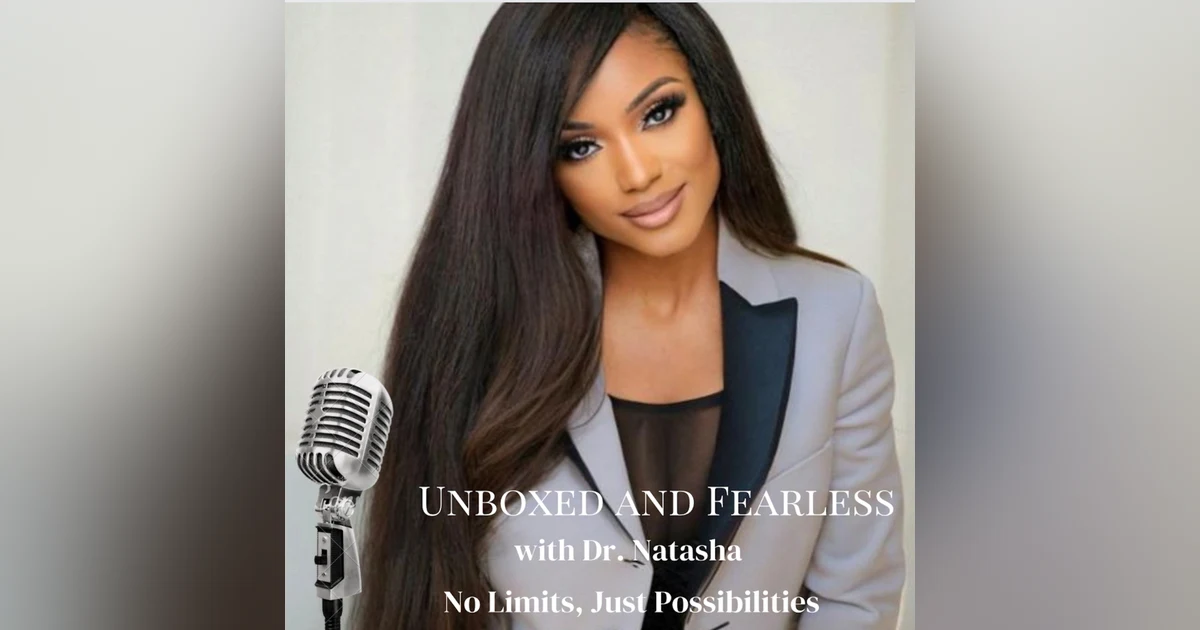


On this powerful episode of Unboxed & Fearless, I sit down with 5x Grammy Award-winning producer Bernard “Focus” Edwards Jr., the son of music icon Bernard Edwards of CHIC, for an honest conversation about legacy, pressure, resilience, mental health, and the realities behind the music.From working with Dr. Dre, Beyoncé, Eminem, Kendrick Lamar, and 50 Cent, to navigating personal loss and finding purpose beyond the spotlight, Focus shares the side of success few people ever get to see.This is not just a conversation about music.It’s a conversation about identity, healing, fatherhood, resilience, and what it means to keep going when life gets hard.Watch, listen, and share with someone who needs this message.Interested in sponsoring Unboxed & Fearless?Our audience includes entrepreneurs, healthcare professionals, creatives, nonprofit leaders, parents, advocates, and professionals seeking inspiration and personal growth. Sponsorship opportunities include podcast episodes, social media campaigns, newsletter placement, red carpet coverage, live events, and brand integrations.Interested in becoming a guest?We’re always looking for impactful voices, thought leaders, entertainers, athletes, advocates, entrepreneurs, and changemakers.Connect with us:Instagram: @drnatasha_Podcast: @unboxedandfearlesspodcastWebsite: www.drnatashathenp.com#UnboxedAndFearless #BernardEdwardsJr #Focus #GrammyWinner #MentalHealthAwareness #ResilienceSeries #PodcastInterview #MusicIndustry #TheHypeMagazine #FromHealthToHollywood
Focus (0:00): There's nothing weak about being transparent. There's nothing weak about being weak. It's only weak if you sit in it. There's strength when you operate in weakness. And if you have the proper anger in your faith, you're the strongest person on the planet because now you already know what makes you weak, and you've beat that.
Focus (0:15): And I've done that daily. I do that every day. I beat my own mind telling me I can't do something. That's a weakness. But I'd get up and I do something and whatever that something is.
Focus (0:24): And if I beat it and I did it that day, what's next? What's next on the plate? What's next on the agenda? What's my next goal? As men, walk it off.
Focus (0:32): You'd be alright. That can't be the conversation anymore. What's wrong? Let's talk. And talking, it can't be a thing that's just marred with machismo and ego and pride.
Focus (0:41): Humanity has to come first.
Natasha Wings (0:46): Welcome to Unboxed and Fearless. I am your host, doctor Natasha Wings. I'm a nurse practitioner, board certified, and a media correspondent. Podcast, those two. But today, I wanna take you on a journey because we have these conversations on purpose and with intention, but it's about speaking about resilience and mental health and what's your God given purpose.
Natasha Wings (1:10): Right? So I want to let you know that we have a special guest today, and he is a five time Grammy award winning music producer. So this is exciting. We're here for a treat. We're not only gonna speak about the music, we're going to speak about his legacy, his resilience, his his journey.
Natasha Wings (1:30): So let's introduce legendary Focus, music producer. How are you doing today?
Unknown Speaker (1:38): I'm good. I'm glad. How are you?
Natasha Wings (1:40): So I want to get deep into, like, your journey because there's so much, you know, on the journey of producing and being in the music industry. But who are you? Let's talk about what that looked like as you are the son of Bernard Edwards Yes. And he was the cofounder of Chic. Yes.
Natasha Wings (2:03): So it seems like you've been around the entertainment industry for some time now. Tell us about that.
Focus (2:08): Yes, ma'am. I'm a kid that wants to be like his father still to this day. You know, as long as I can remember, that man was my idol, and I say it all the time, and he was my biggest rival. He didn't want me to be in the music industry, so we butt heads, with that, because I kinda put my head down and ran face first into the industry. And, it was definitely a point of to molt with us, you know?
Focus (2:44): But I just wanted to be like him, and I wanted to prove to him that I could do it and not fall into the pits of what the industry had to offer, be it drugs, you know, be it, you know, any kind of addictions and things like that. I was just like, man, I just wanna make music, you know. So I'm just a I'm just a kid that really wanted to be like his father.
Natasha Wings (3:05): Why do you think he did not want you to go in that direction and be in the music industry?
Focus (3:10): Oh, a thousand percent because of just what I said. Like, there's so many things that come with the industry industry side of things. It's not the music. It's the industry side. You know?
Focus (3:19): A lot of people that that try to keep up with the speed of the industry will be addicted to something, you know, and and I'm I'm not judging anybody, you know, and I don't I don't know what their vices are, but sometimes their vices start to outweigh the love or the passion for the music. And, that's why there were so many, unsung stories and unsung heroes because they they get snuffed out too early, you know. So, you know, my dad didn't want me to have to deal with that.
Natasha Wings (3:54): Yeah. I mean, obviously, unless you're under a rock, we've seen so many instances where people are going into the industry at such a young age that they lose sight of, like, the journey of Right. What their objectives were and and just being under the wrong leadership. Right? Yeah.
Unknown Speaker (4:13): I could understand that. But so are you from you're from New York. You've later transitioned to California.
Unknown Speaker (4:22): Right.
Unknown Speaker (4:22): Tell me about that. How did you transition from New York to California?
Focus (4:26): I was in New York. I was in Manhattan, if I'm not mistaken. And there was a store called Sam Ash where you can go and play the instruments there. And I was, just kinda playing with, some of the instruments in the, the store, and I was making beats. And a cat heard me.
Focus (4:46): His name was Demack, from New Rochelle. And he heard me and he was like, yo, man, you know, I like what you do. Why don't you come through the crib and let's see what we can come up with? And we started working together for a little minute. And some of the music that we did, he shopped it out here in Los Angeles.
Focus (5:06): So my first real stint out here was late ninety one, early ninety two. And, it was with him and these couple of records that we had, you know, and, that was my first taste of Los Angeles. But even then, I was going back and forth. I didn't come out here firmly until about '93.
Natasha Wings (5:27): So okay. So let's back up. So Sure. What so one day did you just wake up and say, I just I wanna try out these beats? Like, what sparked that interest?
Focus (5:38): Oh, of course. Like I said, I just entertainment. Just I just wanted to be like my father. So I never stopped making music. I was making it as long as I could remember.
Focus (5:47): I used to steal his equipment and make, you know, tracks at home. So, but once it it got to the point where I was about, you know, 16, 17, 18, around there, I was producing for at that time, they were grown men. You know what I'm saying? They were they're in their twenties, and I'm I'm still a teen, but I'm I'm producing with them and and, really trying to make a go at it. So it's it was just nothing.
Focus (6:13): It was it was what I was born to do. That's what it felt like.
Natasha Wings (6:17): How was your environment growing up? Like, do you feel like you were born in the inner city? Did you feel like you had a life style where you were afforded different opportunities that maybe the average person was not?
Focus (6:29): Of course. It started off in the inner city. I mean, you know, we were I was born in Manhattan. I was raised in, Brooklyn for a little while, The Bronx, Jersey, and then my dad came into money. And so most of my growing up in school and childhood was Stanford, Connecticut, and it was in in a very good part of Stanford, Connecticut.
Focus (6:52): We were in North Stanford, my dad made sure that he afforded the life that he wanted for us and that he didn't have. So, yes, my my childhood was amazing. You know, my mother was a stay at home mother, you know, and she was a very loving mother. I'm the oldest of six, so she had her hands full. And she even, my cousin, one of my closest cousins, first cousin, he'd he'd stayed with us as well.
Focus (7:19): So she was raising seven kids and, you know, dad was out working. So, yeah, life was life wasn't hard. Let's just say that. Yeah.
Natasha Wings (7:28): So you being from, I guess, having an experience of both sides
Unknown Speaker (7:33): Yeah.
Natasha Wings (7:34): Being in a space where you're at, how do you feel like you're able to give back to people for maybe the underserved community or maybe in environments that they don't have the same resources? Are you able to, I guess you would say, put people on?
Focus (7:51): I wish it was that easy. This this day and age is not like it was when I was coming up. So putting people on is not like the same thing. Like in, you know, a lot of these kids are looking for, the bag as they call it. They're looking for that money.
Focus (8:08): They're looking for that prestige. They want that out the gate. What I try to do to give back is make myself available, make myself tangible. I don't hide behind the velvet rope, per se. So if they hit me up on, my social medias, I I tend to respond.
Focus (8:28): You know what I'm saying? And it really is me. It's not someone working my social media for me. And if they want to call me or they want to really talk, like, I'm I'm here. I try to do what people do for the money.
Focus (8:41): I do it with knowledge. Like, I'm just going to give you what I got. And if if you want to roll with me or if you want me to help mentor you or you want, you know, just to have that conduit or that connection, I try to be that.
Natasha Wings (8:55): That's interesting that you said that because I've heard that the work ethic and the expectations have changed over the years
Unknown Speaker (9:02): Thousand percent.
Natasha Wings (9:03): And people are able to kinda go into, like, that stardom through TikTok, and that can go viral, and people can get, you know, found on social media, and it's just not the same anymore.
Unknown Speaker (9:15): At all.
Natasha Wings (9:16): What do you think about that? Like, do you think that that's that's a pro or a con or it can be multifaceted? Maybe you lose a stage that you definitely need to develop
Unknown Speaker (9:33): Yeah.
Natasha Wings (9:33): And be able to, you know, have a mature mindset and be able to have longevity in the entertainment industry.
Focus (9:39): Amen. I think that without being judgmental, I'm not gonna pros or cons it. I'm just going to say that times change. And when times change, if you don't change with them, you get left behind. So you have to adapt.
Focus (9:54): I think that even with times changing with the industry, it's not just changing within the industry, but the listeners are changing. Everything is changing at the same time. So even these kids becoming stars on TikToks, it shows how different consumption is. Like, even we used to put out music videos and they had to come out on the music video channels. Now everything is a channel.
Focus (10:17): Every social media is a channel. You can do it any way you want to. You can be as silly as you want to. You can be as serious as you want to. You can.
Focus (10:25): You are your now you are your industry and that's what you're pumping to your consumers. It's way different. It's way different.
Natasha Wings (10:34): I definitely think it's different. I I I feel like there are some benefits obviously, because it just it encourages creators to, you know, to step outside of that that comfort zone and then understand that there is a possibility that they can be discovered instead of feeling like it's so far from reality, from previously. I think, like, when you looked at all the artists coming out, you just felt like it wasn't tangible. Was something that was, you know, a dream possibly. But now I think that with social media, people are able to reach out to a focus or, you know, an artist or go on a live and converse with someone that otherwise you would have never been able to cross paths with.
Natasha Wings (11:21): Let's be real.
Unknown Speaker (11:22): Oh,
Natasha Wings (11:22): yeah. Social media has drastically changed
Unknown Speaker (11:25): Right.
Natasha Wings (11:26): The way that people are able to be found and connect and have those opportunities.
Unknown Speaker (11:32): Yeah. Gotcha.
Natasha Wings (11:33): But I can respect people that create their own opportunities as well instead of waiting for people to hook them up or put them on or Right. You know? So I can appreciate that because that's hard work. It's boldness. You have to be courageous.
Natasha Wings (11:48): So
Unknown Speaker (11:48): Persistent. Yeah.
Natasha Wings (11:50): Oh, that's that's a lot of it. Like, you can pray about it. You can hope. You can dream. But just actually putting in the work, getting started, being consistent, showing up, It's not easy.
Focus (12:03): No. It isn't. And the thing about it is, like, they're doing everyone's competing with each other and competing with themselves because they now if they go viral, they look for that moment. That's the marker now. And if you don't hit it, you start to spend crazy trying to hit that.
Focus (12:20): It's way different. A whole career can, you know, back in my day would be maybe two, three years. A whole career can be a month now. And these kids have to keep up with a month full of content and keep my attention and make sure that they're hitting that marker every time. The burnout is real now.
Focus (12:41): It's very real.
Unknown Speaker (12:42): Wow. I didn't think about it like that.
Unknown Speaker (12:44): Yeah.
Natasha Wings (12:45): So let's talk about women in the industry.
Unknown Speaker (12:49): Sure.
Natasha Wings (12:50): What what do you think about the women that are currently out in hip hop and in the industry? Do you feel like, they're showing leadership? Do you think that what do you think the wave is now in terms of visibility and and what direction they're going in?
Focus (13:10): There is an essence of leadership, but the integrity of the leadership is that question? We don't have very many, spokespeople for the majority. There's a lot of the minority speaking louder than the majority. So, and it's unfortunate. It's a male dominated industry.
Focus (13:41): It's a male dominated world, but it's a male dominated industry. And they basically made this marker that if you want to be seen, you have to be all the way seen. You gotta be naked. You gotta be, you know, saying the things that appeal to me as a man, or when you really look at the business of it, men don't buy records. They just don't, they'll buy what is selling at the moment to get what it is they're trying to get, be it a woman, be it money, be it prestige, whatever.
Focus (14:13): But men don't go out buying records unless they're DJs, unless that's their, you know, their thing. But now even so, people aren't buying records. So it really feels like a lot of these records that are being pushed in our faces, be it female, be it male, it's agenda driven, and it's a dark agenda. I'm again not going to be judgmental, but I will say that I would love to see the resurface of a Lauryn Hill, the resurface of a queen Latifah, you know, I believe that God didn't make a mistake when he created the woman. And they're the most precious and the most perfectly imperfect being that God has created, you know, where it's our job to help protect.
Focus (15:07): But everybody's so strong minded and strong willed and they think that they're doing it the right way and they're just, you know.
Natasha Wings (15:18): Well, women, in general have found barriers in the entertainment and media industry. And I find that many times they feel like, especially Black women, aren't protected. What are what are ways that you think that that can happen where we can provide more protection of women in the industry? Because they are often pushed to sell sexuality because that's what drives the numbers. That's what drives the attention.
Unknown Speaker (15:52): How can we
Focus (15:54): Well, it's a it's a two sided coin on that one. I think that at the end of the day, again, being strong minded and strong willed, and you have to set those boundaries and understand that your career might not go as fast as you want it. If you don't show skin, you might have to stand on the side. That's a slow burn, you know? I do believe you're right that there needs to be more protection, but you can't protect something that's kicking and screaming.
Focus (16:17): They have to stop kicking and screaming. We have to start providing the protection from the door. I believe that. You're absolutely correct. But I think that there's so much resentment on both sides now that it's even hard for everybody just to have a conversation.
Focus (16:33): It always comes in as a debate, and it shouldn't be a debate. I think the first thing on the table should be a great conversation, a real life changing conversation. Because what you're doing right now, just even asking me this, we're not yelling at each other. You can make your point. I can make my point.
Focus (16:52): Nobody's talking over each other, but they do them in such groups where it just becomes debate. And somebody has to look wrong and somebody has to be right and somebody has to be a victim and somebody has to be a victimizer and some it doesn't have to be that. There's a way to get to a solution.
Natasha Wings (17:08): So being in those spaces, when you're faced with those conversations, what are the biggest concerns? Why are people why is there so much tension?
Focus (17:21): Because there's nothing better to any marketplace than divide. Because when you get a group of people that start to think, no, that's wrong. Now we get to boycott. Now we get to turn around and turn our vision elsewhere. But when you divide and you say, no, that person's wrong.
Focus (17:44): And we're gonna cater all these songs and all this marketing towards that guy is wrong. Men ain't this and this ain't about and then now you have a group of women, and it's women they cater to. You have a group of women now singing this song, and they're pushing this narrative, and they're doing this. Then you do the same thing on the other side. Women are this and that, blah, blah, blah.
Focus (18:05): Now you got men singing these songs and this, and you keep them divided because now I know how to deal with those markets. No, one's talking about love. No, one's talking about unity. They don't even push that narrative. This isn't fake.
Focus (18:22): Like, this is if you look up these these top 40 songs, show me a song where it's about real love, not sex, and we can have that conversation.
Natasha Wings (18:32): But but look at where you're at in life. Sure. Right? So you're in a position to encourage that.
Unknown Speaker (18:39): Of
Natasha Wings (18:39): course. It takes one person. One person to start those conversations. Right? Right?
Unknown Speaker (18:44): To To start start the the conversation. Conversation. Yes.
Natasha Wings (18:45): Or people to actually see or hear that encounter this information and say, I wanna be the change. Like, you don't have to follow the crowd.
Unknown Speaker (18:55): Amen.
Natasha Wings (18:56): So how how can we right, how can we be responsible or say that we seek what's going on, we seek the direction, especially politically, but we're not gonna go there, okay? But I wanna encourage people to step outside of the box. That's the name of the podcast. Step out so you don't have to be boxed in. So you don't have to dress a certain way.
Natasha Wings (19:23): You don't have to behave a certain way. You can show up in a room with confidence like God sent you there, like you are God's child, that you are loved. I want to instill that confidence. I'm I come from the inner city. Do you know me?
Natasha Wings (19:37): Yes, ma'am. So I grew up. I had humble beginnings, but that doesn't mean that I have to be subjected to the barriers that I was facing.
Unknown Speaker (19:46): Amen.
Unknown Speaker (19:46): I don't have to.
Unknown Speaker (19:47): Right.
Natasha Wings (19:48): But I had a father in my life. I had parents that showed me the direction and still all of that strength and that positive mindset and the word.
Unknown Speaker (19:59): Yes, ma'am.
Natasha Wings (20:00): So what are some ways that we can be encouraging like you're saying like you're saying? You don't have to follow the crowd.
Focus (20:09): Everything that you're saying is based on a choice now. One thing that you didn't mention was having the word. A lot of people don't have anchor and faith or their anchor and faith has been shifted or now the world is becoming their quote unquote God. So you're right. It takes one person to say these things, but then all of a sudden you standing on your soapbox.
Focus (20:33): Now you get marked as all you're a preacher or you're, they have to be willing to listen. We can talk all day long, but they have to be willing to listen. And I think that the more the conversation strikes up with some of the bigger names, then there'll be more apropos to listen. I'm still a small name, but the bigger names, if you heard, you know, a doctor Dre having this kind of conversation, of course, they're gonna be like, oh, well, maybe we need to rethink something. You know, it's unfortunate, but that's how the world is.
Natasha Wings (21:07): That's an interesting perspective. I must say that I've encountered conversations or people speaking in public that did not have the fame, but the message resonated with me.
Unknown Speaker (21:21): Yes.
Natasha Wings (21:22): And it made me think about the subject or whatever it was differently.
Unknown Speaker (21:28): Yes, ma'am.
Natasha Wings (21:28): Because you only know what you know. Right? Yes, ma'am. So you, you know, you can't go to France and just speak French. Like, you just only know what you know.
Natasha Wings (21:35): But being in different rooms, being in in different circles, definitely opens your mind. So It's still based around
Focus (21:43): your choice, though. It's based around your choice and you're making a choice to learn. You wanna listen. You wanna be better. You wanna you know?
Natasha Wings (21:51): That's true. So let's talk a little bit about your music. Right? So I'm always the serious person. So let's talk about your music because you've worked with some of the greatest names in the world.
Natasha Wings (22:07): We can't say in the industry because in the world. So we have doctor Dre.
Unknown Speaker (22:12): Yes.
Unknown Speaker (22:12): We have Beyonce. We have Eminem. I'm from Dre.
Unknown Speaker (22:16): Okay. There you go.
Unknown Speaker (22:16): And then we have Kendrick Lamar.
Unknown Speaker (22:18): Mhmm.
Natasha Wings (22:19): So tell me, how was it being in that, you know, on that journey and working with some of the greatest names in the world?
Focus (22:27): Well, shout out to everybody that believed in me enough to let me be part of their journey. It was a blessing. It still is a blessing. It's a blessing to wake up and still do what I do in the industry, you know? I never take it for granted.
Focus (22:43): But being in those rooms, once I started working with Dre, Dre instilled something in me from jump and told me, man, you know, at this level of the game, you should be working with things that make your your movement and your sound better. You shouldn't just be working with anybody. You now have to pick and choose what's going to make sense in your career. This is how you start to build a career. After that happened.
Focus (23:12): I'm like, oh man, like it's, I didn't know that it was going to take off the way it did. You know, I, I worked with Destiny's Child when Beyonce was doing her album. That was because of Kim Burst that got me on that album. It was the people that I knew that I had great rapport rapport with, because I was just honest I'm just humbled to be able to do this. So I built some great relationships and just to get in on, you know, some of the records that I did, man, that was all blessing.
Focus (23:41): All a blessing.
Natasha Wings (23:42): What's something that you really could respect about doctor Dre that other people might not even know about him? Like, I think, like, he probably has the impeccable work ethic. But for you, you know him firsthand. So
Focus (23:58): Well, Dre's work ethic is is astronomical. I mean, the man doesn't have to make music and he makes it daily. So but I think one of the greatest things about him is when he says he has love for you, he shows it. It's, it's not fake. It's not, something that you have to question, you know, when he rocks with you.
Focus (24:24): And, you know, for me to have known him for twenty six years, he could have easily turned his back. He could have easily just been like, you know, you don't have it or whatever. He's always been a positive reinforcement, even if he has to use a forceful hand, because sometimes it's just it's a little slow to register. You know what I'm saying? But, you know, I just think he's a he's a good person.
Focus (24:49): He's a great person. He has a great heart.
Natasha Wings (24:52): What are some other people that you've encountered on your journey in the industry, like, that really made you feel like you wanted to go even harder, like motivated?
Focus (25:06): And honestly, there's nobody outside of Dre that has made me want to go harder in my career. You know, it's, there's two things that I look at daily, when it comes down to doing what I do and it's Dre and it's my kids. And that's it. That's that's what shifts my whole world. Like, if if I feel like and, you know, I don't feel like getting up in the morning or I don't feel like getting out of bed or whatever, and that happens.
Focus (25:31): You know what I'm saying? And I'm I try my best to be there for a lot of people and that could be mentally draining, physically draining, emotionally draining, especially spiritually draining. So, you know, but when I look at the fact that I have children that love me and respect me, I don't ever want to lose that respect. I don't want to ever mar that love. So I try my best to show up the best way I know how.
Focus (25:55): And like I said, Drea is my big bro. That's my mentor and I don't ever want to let him down. So I try to show up the best way I know how daily.
Natasha Wings (26:03): I can respect that. Amen. So speaking about mental health, I am a nurse practitioner, and a part of the podcast is to highlight, you know, any challenges or things that within a community that we can highlight even more to to especially support men Yeah. That have difficulty, you know, understanding that you can be in a space of, like, vulnerability and and love. How do you feel about that?
Natasha Wings (26:34): Like, how would you encourage men, all men, black men
Unknown Speaker (26:39): Mhmm.
Natasha Wings (26:39): To be in that space and understand to how to approach, like having those conversations about mental health.
Focus (26:47): That's funny. I mean, like I said, I try to make myself as tangible and approachable as possible. I do whenever I'm asked to do some speaking engagements or, you know, in person or on zoom, I speak transparent as possible. And I guess I, I don't think anybody in their interviews goes as, as deep as I do. Just because society keeps telling us that transparency is a weakness.
Focus (27:20): There's nothing weak about being transparent. There's nothing weak about being weak. It's only weak if you sit in it. There's strength when you operate in weakness. And if you have the proper anger in your faith, you're the strongest person on the planet because now you already know what makes you weak and you've beat that.
Focus (27:40): And I've done that daily. I do that every day. I beat my own mind telling me I can't do something. That's a weakness. But I'd get up and I do something and whatever that something is.
Focus (27:52): And if I beat it and I did it that day, what's next? What's next on the plate? What's next on the agenda? What's my next goal? I think just showing them by example is the best thing that I can do.
Focus (28:05): Because like I said before, they have to be willing to change. They have to be willing to listen. And a lot of men it's deeply entrenched in us as men walk it off, walk it off. You'd be all right. That's that can't be the conversation anymore.
Focus (28:21): What's wrong? Let's talk and talking can't be. It can't be a thing that's just marred with machismo and ego and pride. Humanity has to come first. And I think everybody's trying to be superhuman.
Natasha Wings (28:39): Especially due to social media. Just trying to put on a facade Amen. But not showing up with authenticity
Unknown Speaker (28:48): Amen. So First.


