Bernard “Focus” Edwards Jr.: Grief, Growth & Breakthrough | Unboxed Conversations Part 2
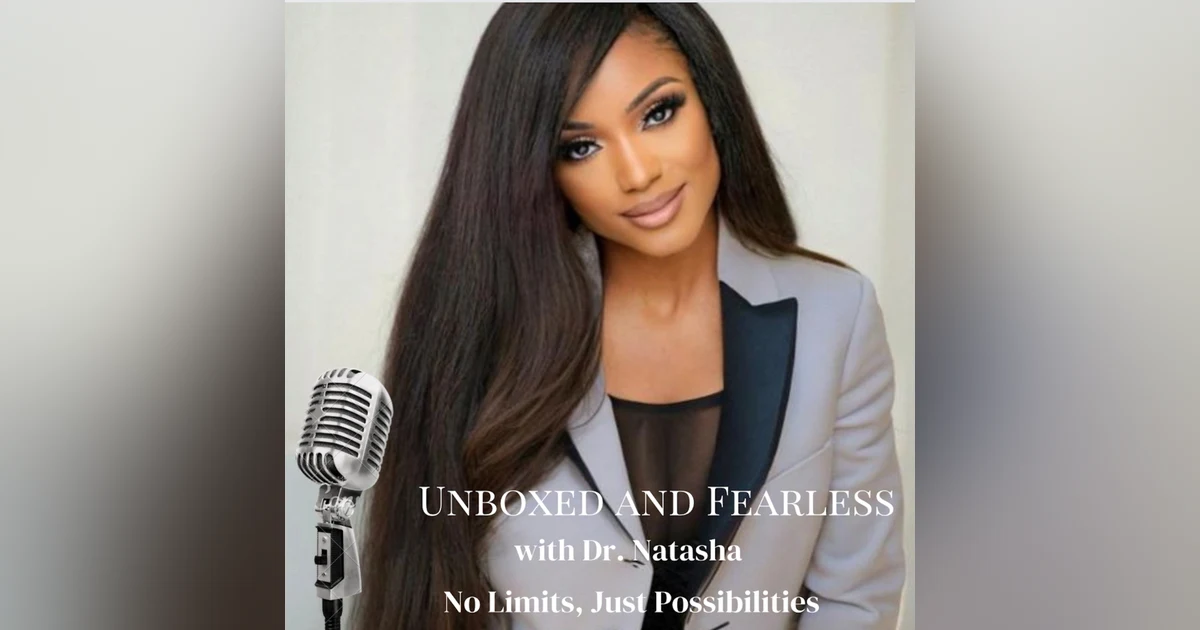


Success does not eliminate struggle.In Part 2 of this powerful conversation, Dr. Natasha Weems, DNP, AGPCNP-BC, Board-Certified Nurse Practitioner, Media Host, Author, and Founder of the Pearl Health Foundation, sits down with 5x Grammy Award-winning producer Bernard “Focus” Edwards Jr. for an intimate discussion about resilience, healing, mental wellness, and personal growth.Known for producing music for Dr. Dre, Beyoncé, Eminem, Kendrick Lamar, 50 Cent, and other industry icons, Focus shares lessons learned through grief, adversity, relationships, and self-discovery.Together, Dr. Natasha and Focus explore the importance of mental health, vulnerability, purpose, and the courage required to continue moving forward despite life’s greatest challenges.This conversation goes beyond music and celebrity. It is a powerful reminder that healing, growth, and breakthrough are possible for all of us.Whether you are an entrepreneur, creative, healthcare professional, parent, advocate, or someone navigating your own journey, this episode offers inspiration and practical wisdom for building resilience.Interested in sponsoring Unboxed & Fearless?Our audience includes healthcare professionals, entrepreneurs, business leaders, nonprofit organizations, families, advocates, creatives, and individuals committed to personal and professional growth.Sponsorship opportunities include podcast advertising, branded content, social media campaigns, event coverage, speaking engagements, and strategic partnerships.Interested in becoming a future guest?We welcome conversations with entertainers, athletes, authors, healthcare professionals, entrepreneurs, advocates, public figures, and changemakers making a positive impact in the world.Connect with us:Host: Dr. Natasha Weems, DNP, AGPCNP-BCInstagram: @drnatasha_Podcast: @unboxedandfearlesspodcastWebsite: www.drnatashathenp.comFrom Health to Hollywood, Fearlessly.
Unknown Speaker (0:00): Welcome
Doctor Natasha (0:04): back to Unboxed and Fearless with your host, nurse practitioner, media correspondent, Doctor. Natasha. This is part two of our conversation. If you missed part one, make sure you go back and watch. We're picking right back up where we left off.
Doctor Natasha (0:21): Thank you for tuning in. You know one thing, I went to South Africa and after being in the community, doing interviews, and speaking about one of the reasons why I was there, and when I mentioned mental health being one of them, what stands out is someone said to me, I'm glad you're here to speak about that, because men don't feel safe with their women, with their with their partners to talk about mental health. Like, they don't feel safe to cry. They don't feel safe to discuss the load that they're carrying.
Unknown Speaker (0:56): Yeah. Yeah. Yeah.
Doctor Natasha (0:59): And so that's global. I can say that's global. How can women show up in a way that men would be receptive to, so they feel safe enough to unload that emotional, And I'm not gonna say baggage because I don't think it's baggage. It's just their emotional load.
Unknown Speaker (1:34): That's a deep question. It goes back to the conversation. One thing about me, I don't like being ignored. I'm an intent listener. If there is a person in my life, I make sure that they're heard and I listen intently, not just with my ears, but with my heart.
Unknown Speaker (2:06): I make sure that you understand that it's important to me just as it is to you. If I express myself back to you and somehow it gets turned back into you, you didn't hear me. You were listening to retort. That's not a safe space. If I express displeasure in something and I'm I speak like this.
Unknown Speaker (2:36): I don't like to raise my voice. But if I express displeasure in something and somehow you feel attacked, that's not a safe space to express myself. And every time a man says something to a woman for some reason, it has to be a victim and a victimizer instead of two people just conversing. That narrative has to change. It has to change for anything to feel safe, even for both parties.
Unknown Speaker (3:08): It shouldn't feel like no man should take advantage of a fact. Like, if you do have a woman that listens, don't take advantage of it. So it's a it's a two way street all the time.
Doctor Natasha (3:20): So you find that many times unloading those emotions, the lack of feeling safe is normally met by confrontation, and it shouldn't be. So then a man wouldn't feel like inclined to easily open up.
Unknown Speaker (3:41): Thousand percent. I mean, you you can find that online. Because now men are speaking up, but they're speaking up on their platforms. Like, see, I told her this is how I felt and look what she did and blah blah blah. Like, it can't be the point pointing fingers thing.
Unknown Speaker (3:54): You're not gonna get anywhere. Because now she's gonna get defensive and you're gonna stay defensive and no one's going anywhere. But if it is a conversation, a true conversation like, sweetheart, every time I bring up something, you have something to bring up back at me. So let's finish what you have to bring it all up, put it all on the table, and let's deal with it. And then I need my turn.
Doctor Natasha (4:18): So listening is key.
Unknown Speaker (4:20): It's the most important communication and listening.
Doctor Natasha (4:23): That's true.
Unknown Speaker (4:24): Period.
Doctor Natasha (4:25): You want everything heard. Got it. So let's talk about the stigma. So people that are watching this, we all come from different walks of life. People sometimes don't understand the culture and how African Americans are raised to be more stoic and more based on spirituality.
Doctor Natasha (4:48): Can you talk about some of the stigmas the community in terms of why it wasn't spoken about in early days. And I think there's a trend now where people are feeling more safe to bring that to their platforms.
Unknown Speaker (5:04): Yeah. I mean, we we're I'm a seventies baby. And even then, you know, you get up, you walk it off, but then think about our parents were forties, fifties, sixties babies. Even before that, you know, they're closer to the the slaves. Think about how the slaves had to deal with their pains, and they had to hold in their emotions.
Unknown Speaker (5:30): Who were they expressing themselves to? Telling the next person that's going through the same exact thing what you're going through wasn't a thing. So you had to figure out how to get through it. So that just became the seed that planted everybody after it, and it just went with it. Now we're finally getting to a point where we're calling it mental health.
Unknown Speaker (5:52): But before it's like, you're a You need therapy. You're crazy. It there was never a nice name for needing help mentally or emotionally. There never was. So now that we're doing that, you know, a lot of people are creeping out from behind the curtain, but it's gonna take time.
Unknown Speaker (6:13): It doesn't feel natural. It doesn't feel natural to tell my homeboy, yeah, today, I'm you know, I don't think I have the bandwidth for it and him understanding. But now these conversations exist, you know? So this is, this is since the dawning of time, everybody was, you know, grit your teeth and bear it. It's both sides, you know?
Doctor Natasha (6:37): Wow. That's interesting. I you know, everything that you go through in life, sometimes people can manage those emotions and sometimes it becomes even more difficult based on what you're experiencing, right? Because I think people filter information, emotions differently, you know, you perceive things differently. But for me, when I'm encouraging people to be a little more in tune with those emotions and having those conversations about mental health, I just think about my own journey.
Doctor Natasha (7:08): Right. And for me, being a healthcare provider, I just felt like I'm the person that provides solutions. So how am I supposed to be the patient? So I personally tell people I had my own challenges with, you know, accessing mental health. So it's so important for me to encourage it.
Unknown Speaker (7:28): Yeah.
Doctor Natasha (7:28): Not preach, but encourage it, right? Because you definitely, I think, can understand, like, being on a journey if you personally experienced it or had any type of grief or loss, right?
Unknown Speaker (7:40): Yeah. Yeah.
Doctor Natasha (7:41): So for you, you have had a a very powerful moment, where you've had to be resilient because you've had a great loss in your life.
Unknown Speaker (7:53): Yes, ma'am. Yeah. 2020, I lost my son. I lost my second born, my namesake. And during that time, just to be further, with my transparency, my wife of ten years at that time didn't wanna be married anymore.
Unknown Speaker (8:14): So grieving loss in death and then grieving loss in love, and then she took, my my three kids that we had together. So I just kinda was planted, you know, and and I was in a very bad place. I wanted to take my life. I was in the worst place I ever felt in my life, and it all happened in success succession. And then, you know, even so, I grew up a Jehovah's Witness and, you know, the the the punishment of what I was doing at that time, because I was really trying to numb myself.
Unknown Speaker (9:01): And I was smoking and drinking, and, I couldn't talk to my family. I haven't spoken to them in some years. So all of that was lost. All of that was 2020 and 2021 and 2022. And I just started finding ways to not stay in the dark because I knew the dark was a bad place, especially having thoughts of taking your own life.
Unknown Speaker (9:31): So there are ways that you have you have to do a lot of work with this. I, I did get a therapist. I always shot her out, doctor April. She was my saving grace. You know, a friend of mine put me on to her and she helped me understand that it wasn't me, so much deserving what I was going through, but I had to learn and use these tools to navigate what I was going through and to learn how to navigate the days started getting brighter, you know, the dark started getting lighter.
Unknown Speaker (10:07): And I was like, okay, cool. This life isn't mine to take. I have to live for my kids. I have to you know what I'm saying? So I started started living again.
Unknown Speaker (10:16): And and I'm in the best place that I've ever been in my life. Even with all of that, I think that, all that manure, I would say a different word, but I won't. But all that manure on this plant, I'm bearing the fruit now.
Doctor Natasha (10:32): Wow. So one of the key ingredients for you was accessing mental health.
Unknown Speaker (10:39): Oh, amen. If I didn't have my therapist, I don't know where I'd be right now.
Doctor Natasha (10:43): What were some other ways that you think that helped you through that time?
Unknown Speaker (10:50): Oh, I had a I have a great support system, and it's very small, but I have a great support system. Like, you know, one of my best friends, I was talking to him on the way here, when everybody was kinda when it felt like everybody was kinda turning their back, he was like, bro, I ain't going nowhere. You know, I'm not going anywhere. Going into work, when I lost my son, Dre being my big brother was like, bro, I'm sorry, but I just can't let you go home. Like, he saw me going through the worst and he was like, nah.
Unknown Speaker (11:30): Come on, let's work. Let's do you know what I'm saying? That's how men deal with this. Like, nah, what can we do? What can we do to get you out of it?
Unknown Speaker (11:37): My brother's at the ICU was locked in with me. And I have some amazing queens in my life. Like, I have most of my village is just amazing women, And they really locked in with me on the nurturing side to make sure I just didn't tank out. So, if I didn't have my circle, I don't know where I'd be.
Doctor Natasha (11:59): So I just think it takes a certain level of strength, mental strength. But I also learned recently that so many people don't know, like when they're in a space of suicidal or homicidal ideation, that there's different resources they could tap into. But if they also, like, have a plan, right, or are in crisis, there's a pound $9.08 8.
Unknown Speaker (12:27): There you go.
Doctor Natasha (12:28): I was in a room full of educated people and maybe just a handful of people were aware of that resource. And so I think that, you know, whenever we have the opportunity to say 988, you know? So the veteran community, they have their own number, but they also can access that, but it's always something that I I just say. But just thinking about that moment in your life, that season in your life, and how you got through it, you know, that's something that can be encouraging for others. But what's hype about health?
Doctor Natasha (13:11): Right? That's a segment where we talk about all things, health and wellness, mental health, and it sounds like you're very compassionate about mental health, especially your journey and what you've been through and your resilience. Right now, if there's someone watching this and they too are trying to heal, and and that's the best way you can just put it, like,
Unknown Speaker (13:37): regardless That's of what it is.
Doctor Natasha (13:39): The grief, you know, some people have impaired coping mechanisms and and not just, you know, ready to heal. But what would you say to them? Because you know how it feels being in that space, and they might have just walked home from the funeral, you know, like Right. What are your words? How what do you think would be impactful for them to hear to help them heal?
Unknown Speaker (14:05): This is all honesty. Sometimes they don't need to hear anything. They just might need to see someone present. I didn't wanna hear anything. You couldn't tell me anything when I buried my son.
Unknown Speaker (14:22): What were you gonna tell me? Is this gonna be okay? You know? I know how you feel. What do what am I going to be receptive in that moment?
Unknown Speaker (14:36): It's okay to cry. It's okay to purge. It's okay to be upset. It's okay to question everything. It's okay to question nothing.
Unknown Speaker (14:47): It's okay to close yourself away for a day or so. It's okay to grieve. It's not weak. Don't sit in it. When you need help, reach for help.
Unknown Speaker (15:01): Don't sit in it. You're not going to be able to get out of it by yourself. All the condolences in the world did not teach me that. You can't get through anything by yourself. There's a reason why we're all here.
Unknown Speaker (15:16): We're here for each other, but you're going to have to do it in your time. There's nothing wrong with crying. There's nothing wrong with grieving. Do that. Give it its proper time and its proper respect.
Unknown Speaker (15:29): There's a reason why we grieve, but don't sit in it.
Doctor Natasha (15:33): That's beautiful. Just like to take those I like to mentally digest things and just
Unknown Speaker (15:40): let Yes. It sit there. Yes.
Doctor Natasha (15:43): For me, for you too, like, being in the music industry, I like to think and I know that music can be a source and a resource Yes. Especially as it pertains to mental health.
Unknown Speaker (15:59): Yes.
Doctor Natasha (16:00): Because mental health, we can face our pain, our happiness. Like, music is so dynamic.
Unknown Speaker (16:08): Right.
Doctor Natasha (16:08): What what's your thought in terms of music being healing or being just there for you as a resource in your seasons of life?
Unknown Speaker (16:16): Music is spiritual. Of course, it's going to do that. Music evokes emotion. It was used for worship. It was used in all big celebrations.
Unknown Speaker (16:25): It's used for everything. There's a reason why it does that. And the proper sounds, the proper ways to digest positive music is always going to resonate. It always will. You have to make the choice for it not to resonate.
Unknown Speaker (16:44): And I think that there are a lot of people that are now learning that there are certain kilohertz that feel better to the body, sound bathing. They're they're real therapeutic things that change people's lives, you know? So I love when people say music saved my life, but that's what it does. It's a universal language and so is love. And both of them have everything to do with one another.
Doctor Natasha (17:10): Wow. Over the years, I've seen people go through pain and regardless of what it was, you know, I've always seen that as a resource, like
Unknown Speaker (17:21): Yeah.
Doctor Natasha (17:21): Let me turn on my gospel or let me turn on my slow song or, you know, so whatever it is that they turn it turn to. So also, tell me about health and wellness. It's important, especially being in our communities where hypertension is really high, you know, cardiovascular disease, diabetes. So it's always important just to spread that awareness and encourage people to live a healthier lifestyle or just, like, one step at a time. Like, we're not asking you to be vegan.
Doctor Natasha (17:49): We're just saying, like, at least try to modify some of those lifestyle modifications even if it's decreasing the carbohydrate intake. Exercise at least thirty minutes a day. But as long as you change your mindset, I think that that's the first step. Right? So
Unknown Speaker (18:04): I think, yeah, that's that's literally it. That's it. I think the only thing that I would jump in there and say is a self care day. If you, if you need a day, if you need two days, if you need to take a week off a month or something, you do want to, the same way you exercise your body and you exercise your insides with your nutrition, you want to exercise your spirit and you exercise your mental. So I make sure that I zone out.
Unknown Speaker (18:31): I don't need to be zoned in all the time and I'm going to take my time and, you know, be it if I need to go get a massage, if I need to go away and just disappear and be by some water. So it doesn't feel like everything is everything all the time. Sometimes everything isn't everything and you get away from it. You can look at it from the outside in and go, okay, I can reattack it this way. And I love the fact that you brought up mindset.
Unknown Speaker (18:59): Because like I was saying earlier, you have to want to change. You have to want to listen. You have to want to learn. You have to it's mindset That changes everything. If you're stuck in your stoic ways, then nothing's going to change.
Doctor Natasha (19:14): Especially in the world now. I just feel like sometimes it can be so overstimulating. Yeah. Yeah. It could be just me.
Unknown Speaker (19:22): No. No. It's everybody.
Doctor Natasha (19:23): On social media at a timeline. It's just it's overstimulating. So I like that, you did highlight self care. It needs to be highlighted. It's underrated.
Doctor Natasha (19:35): Yes.
Unknown Speaker (19:36): Thousand percent. Think about trying to take a phone away from a teenager right now.
Unknown Speaker (19:41): It's a war.
Unknown Speaker (19:42): It's a war.
Unknown Speaker (19:42): You threw a bomb.
Unknown Speaker (19:43): Exactly. But then it's it something like that if I said, you know what, to my kids and and and they've been gracious enough. My, my youngest kids are 16, 14, and 12. And I'm like, okay, guys, I've let you have it for four days. Give me a whole day without phones.
Unknown Speaker (20:02): And my kids will do it. There's some reluctancy, but they don't, they're not upset because they know that I'm gonna occupy their time. You know? So if you give them time, maybe you can get their time. You know what I'm saying?
Unknown Speaker (20:15): It's mindset. I love I love the fact you brought that up. That's big.
Doctor Natasha (20:19): So we're gonna do a fun segment where I ask you some questions.
Unknown Speaker (20:23): Cool. Because we ain't been fun yet. Just do it.
Unknown Speaker (20:28): Let's do it. Let's do it. Let's Alright. First record you produced that made you say, I've got it.
Unknown Speaker (20:38): Yes. By Beyonce. And I've done other records, but that one changed my life. Yeah.
Unknown Speaker (20:45): Love it. And I love that one that far.
Unknown Speaker (20:47): Thank you.
Doctor Natasha (20:48): One artist on your bucket list you have not worked with yet.
Unknown Speaker (20:52): I've worked with everybody that I wanted to work with. The only person that I didn't get to work with is dead, and that's Biggie Smalls.
Unknown Speaker (20:58): Come on. Someone alive.
Unknown Speaker (21:01): There's the thing about it is I work with Dre and 10 times out of 10, I've already worked with him. You know, we've done things with, every well known rapper, singer, whatever, like, I've worked with the top of the top.
Doctor Natasha (21:20): Okay. Okay. Now, beats or bars, which comes first for you?
Unknown Speaker (21:25): Beats.
Doctor Natasha (21:27): One record in your catalog you wish got more credit.
Unknown Speaker (21:31): Black Magic that I did with Little Brother. That song was a powerful record. That was about Well, they're talking about black excellence, but Little Brother didn't make an album for nine or ten years, and this was their reunion album. And I just wish it it would've got more fanfare.
Unknown Speaker (21:51): That's fair.
Unknown Speaker (21:52): Yeah.
Doctor Natasha (21:52): If your life was a soundtrack, what song is playing right now?
Unknown Speaker (21:59): Venus de Milo by Prince. Yeah. That's a beautiful instrumental that I love. I play it pretty much every day.
Doctor Natasha (22:07): What does that do for you?
Unknown Speaker (22:09): It grounds me. It keeps my feet on the ground. Anytime the world feels like a whirlwind and I feel like I'm being picked up and going into a dishevelment, it grounds me. It quiets the noise.
Doctor Natasha (22:23): Nice. Detroit or New York, who wins the production battle?
Unknown Speaker (22:31): That's not fair. That's not fair. Because my I mean, one of my mentors, DJ Premier, my brothers, P Rock, Clark Kent, and I got too many in New York, but Dilla. Who wins? That's not fair.
Unknown Speaker (22:55): Yes. Who wins in the production New
Unknown Speaker (22:58): York. I'm sorry. I gotta go I gotta go home. I have no choice. I got Q tip over there.
Unknown Speaker (23:03): I got yeah. Yep. Yep.
Doctor Natasha (23:04): What is one thing people assume about you that is completely wrong?
Unknown Speaker (23:12): That I'm rich. They think I'm rich. I sit by a billionaire and make music and I'm not a billionaire. Y'all better get it through your thick skulls. There
Unknown Speaker (23:25): you Yeah.
Unknown Speaker (23:25): Uh-huh. But I'm rich with with with love for my family, I'm good. Richest man on the planet.
Unknown Speaker (23:32): Amen.
Unknown Speaker (23:33): Yes.
Doctor Natasha (23:33): So if you could resuscitate anyone's career, who would that person be?
Unknown Speaker (23:41): Right now? That's alive, or can it be dead or alive?
Unknown Speaker (23:46): Their career might be not as
Unknown Speaker (23:48): bad as is. Okay. So you're talking about a a person that's alive, but their career is dead.
Doctor Natasha (23:52): Their career. So you previously mentioned, like, a Lauryn Hill in terms of, like, women and music and the message. Yeah. But what artist would you if you could just resuscitate their career and bring them back on the spotlight producing new music.
Unknown Speaker (24:11): This is gonna sound weird, but because I respect her voice, and I worked with her and her family before. Brandi. I love her voice. I feel like if anything, she birthed a lot of these young girls. Right.
Unknown Speaker (24:34): And it'd be dope if she got the not just the verbal respect of, you know, the vocal bible, but if she got the same respect as Beyonce, I think that that's fair.
Doctor Natasha (24:45): I I really love Brandy, and I'm probably showing my age, but that was my first CD.
Unknown Speaker (24:50): Oh, wow. Wow. Okay. There you go.
Doctor Natasha (24:53): I'm showing my age. Yeah. But I just anytime I hear the word Brandy, I just remember that memory, and it will be with me for life. And so I remember sitting up in my
Unknown Speaker (25:04): There you go. She's
Doctor Natasha (25:06): been I love that. I love that. So I want to thank you for blessing us with your time, sharing the most vulnerable parts of you for
Unknown Speaker (25:16): Thank you.
Doctor Natasha (25:16): Us to see and to learn and to be inspired. So thank you for being here with us.
Unknown Speaker (25:21): I appreciate you.
Unknown Speaker (25:22): And next time, Unboxed and Fearless.
Unknown Speaker (25:26): What's good? My name is Focus, and I want you guys to lock in to Unboxed and Fearless with doctor Natasha. We had a great conversation. I would love to see you there. Salute first.


