The Resilience Series - Unboxed Conversations Part 1: Still in the Game - Guest: Ali Ballard
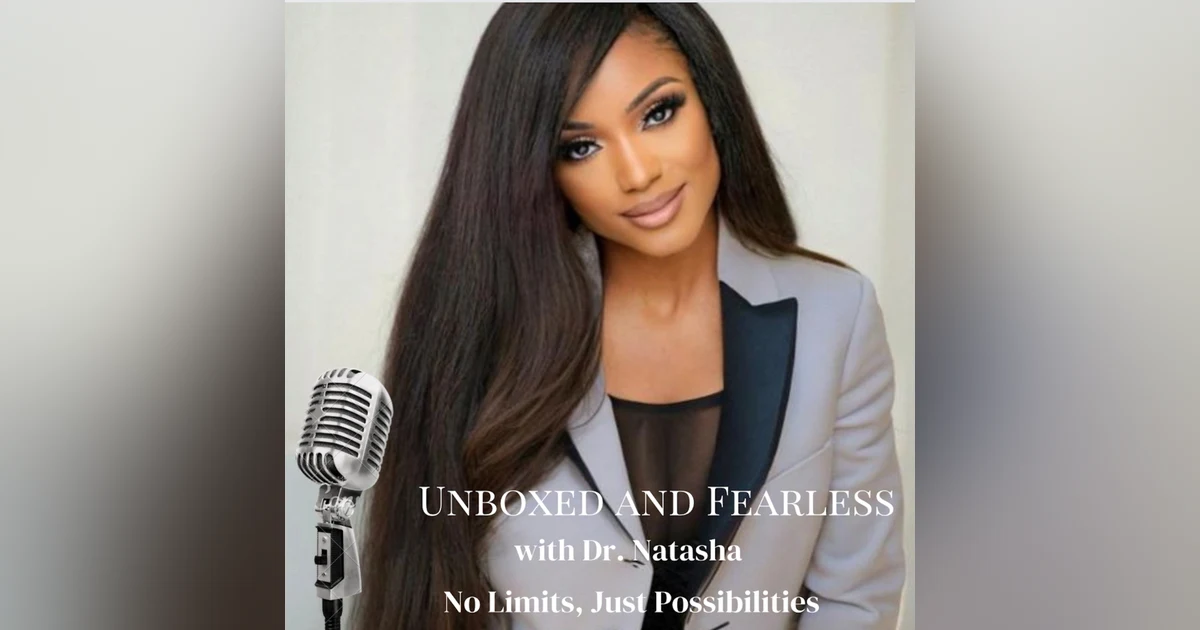


In Part 1 of this two-part Resilience Series conversation, Dr. Natasha Weems sits down with actor and producer Alimi Ballard for the kind of honest conversation that Hollywood rarely allows. Alimi has built a career defined by versatility, depth, and staying power — and in this episode, he pulls back the curtain on what that journey has actually required.This is the resilience that does not trend. The persistence that happens between roles. The mental and emotional work of building a career in entertainment while remaining grounded, whole, and purposeful. Dr. Natasha brings her fearless interview presence to a conversation that will resonate with creatives, professionals, and anyone who has ever had to keep going when the path was unclear.Still in the game. Still standing. Still building
Doctor Natasha (0:00): No is one of the most powerful words in any industry but definitely in my industry.
Unknown Speaker (0:04): In life.
Doctor Natasha (0:05): In life. People we would be greatly served at saying at stopping things and knowing when it's over. Sometimes you don't need to learn a whole lot of new things. You need to stop doing the things you need to stop doing. Like your life will change, it'd be like you'll stop eating that, doing that, seeing that, going there, smoking that, drinking that, you can change your life overnight.
Doctor Natasha (0:24): Learning to say no to roles that would have boxed me in. I'm here with doctor Natasha, and we are staying unboxed and fearless.
Ali Me Ballard (0:35): You know, when I started this journey, unboxed and fearless, I thought about times when I was on the journey of life feeling boxed as a nurse practitioner, as a mother, as a wife, always being told to stay in your lane. But at this season in life, I understand true success is walking in your purpose and also growing on that journey and performing and functioning in ways that is different from the opinions that others have set on you. Which leads us into my guest today. I am here to introduce mister Ali Me Ballard. So excited to have him here.
Ali Me Ballard (1:18): And I've watched him over the years, especially connecting with him with one of his movie premieres. It's been amazing to watch, but as we know, he has an amazing three decades on film. You've watched him bring depth and authenticity to every role, from being on Loving, Sabrina the Teenage Witch, Numbers, Queen Sugar, Queen of the South. So that's just to name a few of the things that he's been involved with the projects. But not only do I respect what he's done in the entertainment sector, I mostly respect the man that he is, the human being that he is, the father, the black love that he's displayed over the years.
Ali Me Ballard (2:05): It's been amazing to watch. But here's what the conversation is most important about. Behind every person's career, we have to understand there's been a journey. How did they get to the point they're at now? It can look like glitz and glamour, but what really happened to shape the person over the years, the journey, the resilience, and what has God given purpose for you?
Ali Me Ballard (2:33): So let's introduce, and I'll call you mister Ali.
Unknown Speaker (2:39): Thank you, doctor Natasha.
Ali Me Ballard (2:41): I am so excited to have you here. I mean, I think you're an amazing human being.
Doctor Natasha (2:46): Thank you very much. That's very kind.
Ali Me Ballard (2:48): And I appreciate entertainment, we need to start humanizing people more. Obviously, being in the on the television screen, you're held at a higher standard. But what has that journey been for you? You've been in the entertainment industry for over three decades.
Doctor Natasha (3:11): Frankly, it's an honor. New York City kid from the Bronx. Woo woo. And to at a young age, relatively, like, around 16, discover the arts, the arts as empowerment at a community art center called Mind Builders Creative Arts Center in the Bronx, still there. My alma mater and that place, I walked into the doors of that place at the age of 16, and it changed my life.
Doctor Natasha (3:35): It changed the trajectory of my life, and I discovered the arts. And I also discovered that there was a place outside of my own home that, you know, were adults that cared about young people. It was a New York City kid, you know, and it was a safe place. So I was most attracted to it being safe. And kids understand safety.
Doctor Natasha (3:55): You also understand when things are not safe. You're right. And I like the people that they would I thought they were like oatmeal people, they wanted to hug us, was like, stop touching me, man. But once we got over that, they were solid people, they just had a different vibe to them, they were trying to cultivate something in us. And I stayed because I felt safe, and it was a good place to be after school, and then I fell in love with acting.
Doctor Natasha (4:18): And I was on a stage, auditorium full of eighth graders in New York City, and I walked on stage one time and I was like, my line's like, yo, my name is Wise, the MC or something like that, and the whole auditorium of eighth graders went quiet. I was like, I had never had that many people pay attention to me for anything. Usually people pay attention when you do something bad, you know what I mean? Not for something good, you know? And I was like, and you could feel it was tangible.
Doctor Natasha (4:47): And I was like, I have never forgotten that feeling. And then the play went on and I realized that you could do something that people respond to that. You could feel the kids can and I was not I'm as you know, I was a few years older than them, but I could feel that there was a connection there, you know, and like, oh my god, they're receiving everything I'm saying and doing, and it it just it changed my life.
Ali Me Ballard (5:11): Oh, that's amazing. I'm always curious to know how did people get introduced to the entertainment because, obviously, we had some amazing shows growing up on television and just inspired by what were some of your television shows you were inspired by? For me, growing up, seeing the The Crosbys
Unknown Speaker (5:30): Right.
Ali Me Ballard (5:30): You know, I'm just, like, I'm watching A Different World, like,
Unknown Speaker (5:33): how could
Ali Me Ballard (5:33): you not be inspired by that and also see the greatness of people from the black community, what we can achieve, right, and accomplish?
Doctor Natasha (5:42): Yeah. I mean, first of all, yes. As a kid, I didn't see it like, you know, like the black community is doing great. Like, I was like, I didn't see it that way. It was so awkward.
Doctor Natasha (5:53): Like, I'm surprised that I'm an artist. Like, that that caught me off guard. Like, a lot of things caught me. Yeah, I like, I was never I'm from The Bronx, we're from the Northeast Bronx, know, I'm from Little Jamaica, you know what I'm saying? So there was no artist that I knew of, period.
Doctor Natasha (6:06): Nobody in my family that I knew of, you know, that people had talent but no one and you know, in that industry as a musician, you know, like that a way that I could touch, excuse me, so to speak, I could look at it and see ah. And so it hit me off guard. So I watched a lot of TV as a kid, and one of my favorite TV shows is gonna tell my age is called Spencer for Hire. Avery Brooks and Robert Ulrich, you know, I think it's ABC or something like that. And I remember when this young African American actor guest star on the show, because I didn't know that term guest star, what that means.
Doctor Natasha (6:36): I know what that means now, right? Like in one or two episodes. So this young guy that's one of the first people that looked just like me and felt like me did an episode on Spencer for Hire and that actor is Kadim Hardison, right? A Different World. And I was like, that's the first person that felt like me.
Doctor Natasha (6:54): You know, I was like, oh, because the Cosby Show was on already, and I'm and, you know, Malcolm Jamal Warner got got the rest of my brother's soul. Turned out, you know, to be a good a good close friend of mine in real life, you know, as as life will as as the fates will have it, that it's my brother in spirit, man, and love you. And, and I watched him too. Like, I couldn't relate to the world as much, but I always love how dignified that show was, how they carried, how they represented people of color, you know, working class people who have done well, you know? And, but I saw Kadeem on Spencer for Hire, and I was like, oh my god.
Unknown Speaker (7:36): Oh my god. That dude is good. He reminds me of me. I'm more edgy, you know? And then A Different World came on, of course, after the coffee show.
Doctor Natasha (7:43): Was like, oh, that was the kid from that one episode of Spencer for Hire. And so it was little bits like that that it was always performances that stuck out.
Unknown Speaker (7:54): Right.
Doctor Natasha (7:54): And it was another TV show, which will date me again, called Moonlighting with Cybill Shepherd and Bruce Willis. And I used to watch, and mom, I'm sorry for watching so much TV, but I just watched Miami Vice as a kid. And it was a dude that guest starred on Miami Vice called, it was Bruce Willis, he played an arms dealer. And he was so great, I remember like so I've always been moved by, I think, strong performances before I knew that art was a calling for me. And then when I saw Moonlighting come on, I was like, that's the guy that was on that one episode of Miami Vice.
Doctor Natasha (8:27): And then they just, you know, then I I found Mind Builders Creative Arts Center, and then I got enrolled in what it would be like to maybe have a life like that.
Ali Me Ballard (8:37): Wow. So you started in the 1990s?
Unknown Speaker (8:40): Oh, yes.
Ali Me Ballard (8:40): Was it around 1993?
Doctor Natasha (8:44): I I started in theater a couple of years before that in The Bronx, and then 1993 was my first big job Okay. On Loving on ABC, playing Frankie Hubbard, Angie and Jesse's son on Loving ABC, and that really was, you know, the beginning of gonna be a life in TV.
Ali Me Ballard (9:01): Wow. That's amazing. So I was gonna ask you, you played Frankie Hubbard Yes. Yeah. On daytime TV's most iconic super couples, Justin and Angie.
Ali Me Ballard (9:11): Yeah. What was it like stepping into a legacy role, right? Yeah.
Unknown Speaker (9:16): Did you
Unknown Speaker (9:17): say that?
Unknown Speaker (9:17): Yes.
Ali Me Ballard (9:17): As a young actor and what did that teach you about the weight of representation? The
Doctor Natasha (9:23): best way I can answer that is it was a humble ride, a humble initiation because I was working underneath Debbie Morgan who was like Bruce Lee. You talk about one of the baddest actors to ever lace up Converse and Gold. She is one of the most underrated actors I have ever. Remember, Mozel and Devil not Devil, what's what's the thing she did, with Sam Jackson Sam Jackson, Eve's Bayou. Mozel and Eve's Bayou played by Debbie Morgan.
Doctor Natasha (9:58): Phenomenal. But I got there and I I didn't watch soaps so much, of course, you know, grandma watched soaps, aunties watched soaps.
Unknown Speaker (10:05): I grew up.
Unknown Speaker (10:06): Yeah. Right. Yeah. Know, it's Days of Our Life. Right.
Unknown Speaker (10:08): Days of Our Life, you know, General Hospital, you know what I mean? All My Children, you know, which is in loving hands offshoot of All My Children. And so when you daytime television, you learn a script every day, every I'm coming from theater. So you you work on one script for three months till you get the show right. Every day, you come in in the morning, there's your script, you rehearse it, you learn your lines and you perform that day and each day is a new script.
Doctor Natasha (10:30): So I didn't know the workload of memorizing lines and that made me really good at memorizing a lot of lines fast because baby boy, you've been hired. You know what I mean? It's like it was like the biggest thing in my life. I I didn't have a lot of friends on TV. That's what I I met Dondre Whitfield for the first time.
Doctor Natasha (10:48): He was on All My Children and he was like, yo, what's up? He's like hanging out and we became friends back then. And it it it I had to step into a world of following. So I had to follow and to be better honest, try to keep up with the great Debbie Morgan.
Unknown Speaker (11:03): Wow.
Doctor Natasha (11:04): And so I watched her, I studied her, and I said, it may be one day if I apply myself, I can be maybe maybe that fluid. I'm still working on that.
Ali Me Ballard (11:15): You said it's a lifelong journey.
Doctor Natasha (11:18): Yeah, that to be that great, be that fluid, I'm still working on it.
Ali Me Ballard (11:21): So what was a moment where you felt like the industry was trying to box you in?
Unknown Speaker (11:28): Oh, you know
Unknown Speaker (11:31): And how did you fight against that?
Doctor Natasha (11:32): Yeah. Yeah. It's it's it's no. No is a powerful word and no is one of the most powerful words in any industry but definitely in my industry.
Unknown Speaker (11:41): In life.
Unknown Speaker (11:42): In life.
Unknown Speaker (11:43): In life.
Doctor Natasha (11:44): People like, you know, people are good at starting things. You know, people it would be good. We would be greatly served at saying at stopping things and knowing when it's over. Stop doing that. Sometimes you don't need to learn a whole lot of new things, you need to stop doing the things you need to stop doing, okay?
Doctor Natasha (12:03): Like your life will change. It'd be like, you'll stop eating that, doing that, seeing that, going there, smoking that, drinking that, you can change your life overnight. And so I stretch it a little bit but learning to say no to roles that would have boxed me in. So I said I said no to everything that I think would embarrass my mom and I'm a I'll get into that later and quote unquote but it's as hard as that, embarrass my people. And that's a personal thing.
Doctor Natasha (12:34): That's not a that's just that's just that's just Ollie Mee Ballard.
Unknown Speaker (12:39): Well, give me some examples. I'm a visual person.
Doctor Natasha (12:42): Oh god, like, you know, like if you play, you know, I never was in the script that called my character a bunch of n words, right? Like, like on a racial level, like unless there was a proper meaning for that. You know what I'm saying? If you're in the script, you know what I mean, you gotta make sure that, you know, you know, if you're the only person to call in the script, you know, please don't be the drug addict criminal. It has to serve a purpose Okay.
Doctor Natasha (13:08): You know, you're boxed into like perpetuating a stereotype. I mean you can be a criminal, I've played criminals before and that's great. I mean, I love The Godfather, they're all criminals, right? So that's an but you know, you have to make sure that what you're doing is not stereotyped, and that's going to be per script, per moment. And so, and then above that, I know my mom's sensibilities because I started as a teenager, so I knew I'm a mom.
Doctor Natasha (13:31): And a lot of people like, you know, you start early, your parents are like, what is that junior? What what role is that? You know, a lot of my friends in West Indians are like, no, women are like that, you know. So you have to make sure that, not make sure, you know, as I mature, it's a joy to have your parents proud of you. Exactly.
Doctor Natasha (13:51): It is a joy. My mom, single parent, you know, black woman, raised me and my sisters, you know. And I found and I still find great joy in her being proud of what I do.
Ali Me Ballard (14:03): And how do you feel about some of the television shows that are highlighting some of the, you know, crime in the inner cities? Do you feel like it's just art? It's just entertainment? What are your thoughts about it? I mean, you've played on several different shows as well.
Ali Me Ballard (14:22): Yeah. Do you what are your thoughts about it and the direction it's going into?
Doctor Natasha (14:26): So I the best way for me to answer that is, like, on a societal level, like, as an as a society, you know, as I and don't mean to be a big commentary on being an American, but I'm American from New York, you know, and so we love violence, you know, Americans, you know, we don't, you know, anything, you know, you know, someone gets stabbed in the chest on a show, you know, your kids go watch that, but if two people kiss, you know, you gotta hide the kid's eyes, you know, like Interesting, I know. Yeah. That's a propensity for violence. Yeah. And globally, we're known for that, you know.
Doctor Natasha (15:00): We we, you know, we don't mind fighting as a country, know, our sensibilities, you know, you know, five, you know, AK-forty seven whatever Rambo shooting, killing like, you know, one kiss too long, know, a pair of boobs, a butt cheek and then all of a sudden your sensors are on you. So, you know, you you look at that, you know, and you gotta know how your society is set up. What do you guys have an affinity for? What do you not have an affinity for? And for us as Americans, we, you know, we a one with violence, that don't bother us at all.
Doctor Natasha (15:32): And I watched a lot of violent things as a kid. Mike, you know, I have kids, right? And so, like, when you watch, I don't know what it is, a generational change, but they not about all that violence, You know what I mean? Like, you know, murder shows we people go into state, they did the joke like I
Unknown Speaker (15:46): think it's just different.
Unknown Speaker (15:48): You think it's different?
Ali Me Ballard (15:48): Yeah. I think they're all they're still about violence, but it's more reality show violence now. Okay.
Unknown Speaker (15:55): Alright. Mines didn't like that, you know, they they were like, you know, be getting beat up in the head, you know, slashing the girl's throat and ripping off her people my kids is like, yo, what's I was like, y'all don't like that. I had to like that as a parent, I was like, oh, it's too violent. Oh, okay. A baby girl, they don't like this.
Doctor Natasha (16:10): And I can, you know, we come up from like, you know, my generation it was just as kung fu fighting, know, killing and shooting and but you're conditioned a certain way and I couldn't tell if it was just a generational thing, you know. But what I find in American cinema and American, you know, aesthetics is that we don't mind violence.
Ali Me Ballard (16:30): That's interesting. That's a different perspective. I remember traveling to Dubai Mhmm. And just having conversation with one of the locals asking if they were excited to perhaps one day visit The States. And he was he was not impressed at all.
Unknown Speaker (16:46): Yeah. Was like,
Unknown Speaker (16:46): I don't wanna do this.
Unknown Speaker (16:48): Not Dubai. They're not gonna try to come over here.
Ali Me Ballard (16:51): It was like, you guys just walk up the street shooting each other. He really thought Yeah. Because of the television shows, because what else could he go by if he's never, know, physically been here himself to experience it, he thinks we just openly we openly shoot at each other.
Doctor Natasha (17:09): And there's a lot of evidence to support that which is wow, you know.
Ali Me Ballard (17:13): But it's not to that extent, like you don't when you traveled here today, you think you're gonna get a bullet to the head.
Unknown Speaker (17:19): I I really I really did not. Or you didn't think I was gonna attack. No. No.
Unknown Speaker (17:24): So it was just it was hyper
Unknown Speaker (17:27): Right.
Ali Me Ballard (17:27): You know, sensitive to the idea of the violence that happens here. Yeah. But I just think that it was And He conjured up other things to accompany. I'm not
Unknown Speaker (17:37): No. No. I know. I know. Violence.
Doctor Natasha (17:40): I'm just saying it's not don't have a graph in front of me, the numbers of mass shootings in our country, no other country on God's green, blue, brown earth experiences the number of mass shootings. That is not that's not the move. That ain't the look.
Unknown Speaker (18:00): It's not okay.
Doctor Natasha (18:01): And it's like double trip. It's obscene. We don't, we're so used to it. I just, I'm from New York, I grew up in a, you know, you know, violent area, whatever you want to call it in the city, you know, so it was tough. I'm not, I didn't grow up in the sticks where it was just like, you know, you can leave your door open.
Doctor Natasha (18:16): You could not leave your door open on White Plains Road in Gun Hill. You just couldn't do that.
Unknown Speaker (18:21): You're right. You know
Unknown Speaker (18:24): what I'm saying? Like you just couldn't do that.
Unknown Speaker (18:25): You like that to work?
Doctor Natasha (18:26): Then fam, I lock windows of like, you know, like, you know, like you is ingrained in you. But that's actually I wouldn't call normal. I don't know if that's how humans are supposed to come up. I think there's a different a different world that we could have. I didn't have it but it's a world that we can give to our our kids, to the future generation where, you know, our stats match maybe every other country on planet Earth.
Doctor Natasha (18:52): Well, that's not expected. We expected, you know, when's the next shooting? It's probably whatever.
Unknown Speaker (18:57): All right. We're desensitized Yes. In many ways.
Unknown Speaker (19:00): Very much. We're conditioned.
Ali Me Ballard (19:01): And alarming rates.
Doctor Natasha (19:03): You don't see it sometimes until you travel out and you hear movie posters I heard are that experience.
Ali Me Ballard (19:09): And I was just so, I was so appalled because it made me think about how I view where I live and how I grew up. I grew up in the inner city in Detroit and The so
Unknown Speaker (19:25): D.
Ali Me Ballard (19:26): You know, and that's true. And when you're an international traveler, you are also confronted with some of those conversations and it makes you realize how desensitized you are.
Doctor Natasha (19:40): Yeah. And I yes. And I only really, you know, doctor doc, I'm gonna call you doc, if you don't mind. Doc. When I had kids, that's the first time I was like, oh, wait a minute, maybe maybe I'm the pro.
Doctor Natasha (19:56): Not in the past, I'm a great dad, but like maybe some of my sensibilities or my conditionings are maybe not compatible with a brand new life. God's an angel comes through in human flesh, you know, and maybe the rough and tumble nature or I'm a put you in a hairlock, you know, we're wrestle it out. Kids be like, I don't wanna wrestle with you. You be like, oh, right, right, right, right. That's how, you know, you go, okay.
Doctor Natasha (20:21): They don't wanna be ingrained into that type of manhandling, which I felt was just customary, you know, and, you know, you know, prepare you for my kids are from Sherman Oaks, they're like, so what war are you preparing me for? Studio City, like There's nothing happening around me. What's happening? Like, man, when was the last like, you know what I'm saying? Like, I think I've lived in the valley for thirty years, like, last shooting, was thinking there was like one, like, in the areas that the kids are like, they don't need that, you know, ready for battlefield, warfare, psychological indoctrination, which if you are in that environment, you gotta get your head on a swivel.
Ali Me Ballard (20:58): Yeah, I think we have to prepare them differently.
Unknown Speaker (21:01): Yes.
Ali Me Ballard (21:01): What's happening politically.
Unknown Speaker (21:04): Yes.
Ali Me Ballard (21:04): We obviously have to prepare them differently now. So that's a different conversation for
Unknown Speaker (21:10): a Oh, yeah. I know. I went all the way down. I answered it. I went down the street to far aways.
Unknown Speaker (21:15): Pardon me.
Ali Me Ballard (21:15): So I wanna talk to you about something deeply personal that you and your wife have been incredibly brave about. I know you guys were on Black Love Yes. And I just have so much respect for you both because I know when you're transparent, that comes with a level of vulnerability. Right. And you two spoke about your child, a transgender Yes.
Ali Me Ballard (21:43): And you just spoke about that journey and evolving as parents because that's never ending as well. Even when your children are grow to be adults, we always call them children.
Doctor Natasha (21:54): Adult children. My mom used to call me kid. Fun. Yes. Yes, ma'am.
Ali Me Ballard (21:59): So tell me what that journey was for you. And I and I'm asking you that from a mother as well that have similar challenges.
Unknown Speaker (22:07): Yeah.
Ali Me Ballard (22:08): I have children, bonus children that I've taken in to care for because God placed that on my my journey. And so I have similar Mhmm. You know, situations within the family household. And I when I saw you, you know, discussing that, but prior to you even being on that show Yes. You highlighted that.
Ali Me Ballard (22:31): And I was just that resonated with me, and I thought, he's going through similar challenges, and he's going through this parenting journey where you have to pivot and you have to learn things over and and grace, but God gives us grace and we are far short of the grace of God. Yes. However Yes. We get that opportunity every day to try again and learn and and approach it differently. So tell me how that journey has been for you.
Doctor Natasha (23:02): We don't have enough time to go through, you know, the full of it. I will say this and I'll speak on it, of course. It has been beautiful. Sometimes the universe guy, you know, wherever your, you know, your spiritual background is, will stretch you in ways that you're not expecting. You know what I mean?
Doctor Natasha (23:23): And you'd be like, this can't this is part of my journey? Fam, yes, it is. I sent it to you. You know, this is for you to walk, you know, and it's so far out of, you know, my being prepared for, you know what I mean? And, you know, I'll start in a funny, like, you know, like, I didn't I wasn't even big on having kids.
Doctor Natasha (23:44): My wife was like, we having kids. I was like, I hope so. She was like, no, no, no, no. If we can't have them, we adopt. And she's like, oh, okay, fam, you like that.
Doctor Natasha (23:51): You gang gang with it. You know what I'm saying? It's just like, you know, we having kids. I'm like, all right, cool. So you have kids, you know, and then I say this to show how my life has been parts of it have been unexpected, you know what mean?
Doctor Natasha (24:03): I was raised, I've been an uncle since I was nine, so I was not unaccustomed to kids. I've been changing Pampers and, you know, bottling kids since I was nine. So kids weren't like, oh my god, Brandon. I'm like, nah, I've been doing it since I was nine. I'm straight.
Doctor Natasha (24:13): I'm the youngest. I got sisters. My nephew was born when I was nine, so I'm I'm good with kids. I can take your kid. I could change Pampers right now.
Doctor Natasha (24:21): I'm solid in this. So it wasn't like, oh, something I gotta discover, you know what I mean? Right. But my wife was like, we having some kids, fam. Alright, fam.
Doctor Natasha (24:28): You want them? And then the kids coming, I'm like, my heart chakra or whatever you wanna call it. It was like it changed me fundamentally, fundamentally in a way that was like to make an analogy is like, you know, you got the lights on in one room and then, you know, by a scale or by degree, it's like a stadium worth of light, worth of love and an expansion. I was like, what is this feeling in my heart? You know, and it gets it goes wide because you start caring about everyone once you open up that door for yourself.
Doctor Natasha (25:05): So you start caring about the bees, like, because you're gonna die and ain't gonna be no trees for your kid and other kids. Oh my God, we gotta get the whales. Okay, what's going on with the humpback whale? Like you you you you not even living for yourself no more. You into, you know, ancient teachings of being a custodian of God's earth because you passing it on.
Doctor Natasha (25:28): You can't even own nothing. It's the only possession God gave you and you dropping that when you leave here fam.
Unknown Speaker (25:34): You are.
Doctor Natasha (25:35): Ain't nobody taking it with them. So you're like, okay, it fundamentally changed me to open, you know, for me to see human life differently. And I was already a decent guy, but I like, it shifted me. And the second one was born, I was like, oh my God, it's over. The pimp is dead.
Unknown Speaker (25:52): I can't be a pimp no more. Like my dreams are like club life is dead. I'm like, oh man, I was gonna return to the streets. Yeah. That second kid you'd be like, you know, it's a lifestyle now, man.
Unknown Speaker (26:02): Like it's over, dang Negro. You forever a dad. Oh. You're be locked in. Because the second one comes just as lovely as the first one.
Unknown Speaker (26:11): I'm just like, oh, and then you just like, yo, you're or you're going out clothes, go away. I was so
Unknown Speaker (26:16): It's over.
Doctor Natasha (26:17): Yeah. You in the best kind of way. Cause one you're like, oh, you know, maybe there's some club is over there. That first, the second you you good, you're be in the house if you're gonna do that job.
Unknown Speaker (26:27): Yeah, that part.
Doctor Natasha (26:29): I met my dad when I was 20, so he wasn't present for But if you're do that job, and I mean, and if for any number of reasons, it's not a demarcation on anyone who can't be there. Some people can't be there, you know, life just changes that space for them. But if you are going to be there, if that's a space for your life, you want to show up And they came and it like my heart opened that I'm gonna show up. So the eldest, you know, one day is like, you know, wanted to have this talk with us back to what you were asking about. But I was sharing that as a precursor for how you open up, like, you know, from your limited way you were raised and it was good, but like there's more.
Doctor Natasha (27:04): There's more than just what you know. You don't know everything. You haven't learned everything yet, so stay a student. And my kid came to me, I thought they was gonna talk that it was gay. Was like, oh yeah, I was ready for that.
Doctor Natasha (27:13): I'm like, we good. I was like, I don't know, that's not gonna change your life in any significant way. You you love that person. Well, cool. Enjoy yourself.
Doctor Natasha (27:21): You know, my kid was like, hey, you know, listen, you know, trans, I'm such and such. And I was just like, I was shook because I didn't have a frame of reference. I just didn't know, you know, what that meant. And it set me on a journey, you know? And of course, like I've said it a million times, accepting my kids, you know, however they come.
Doctor Natasha (27:43): That's the way I understand parenthood is, you know, God gave them to me to watch over without me getting all emotional, to watch over as best I can until the last breath is out of me, period. And then I'm gonna hover over these fools like a bad habit, you know, until they leave this place because the job is not over until they're done. Like, you know, with a full heart with all of me. So I'm loving you. So just tell me what's going on.
Unknown Speaker (28:18): Know that,
Doctor Natasha (28:18): sir. Can't nobody get in the way of that. Nothing. I understand that. I don't need no intermediary to know that the great spirit brought you through me and your mother and I am here to assist you in any way I can and in every way I can.
Doctor Natasha (28:35): And so the journey was like, okay, so what's this transiting me homie? Talk talk to me dog. So I called up everybody I knew who knew about the subject, did a lot of research. As I was doing the research and trying to understand, you know, what was, you know, what my child, my son communicated to me, you know, I was, you know, doing research about what it means, know, and his background and everything was kind of like making clinical sense but I didn't I'm such a soul person, I just couldn't grasp it here like what it meant in here. I'm so what?
Doctor Natasha (29:08): I didn't notice about me, the artist, the energy person. Almost doesn't even matter what you're saying. It only matters how you feel. I'd be looking at people like, people be talking all day. What's going on?
Doctor Natasha (29:20): What's what's that energy? Listen to you. What's the spirit saying? You know? And I just couldn't grasp the concept of it like it was just a psychological thing.
Doctor Natasha (29:27): And then my man, my buddy in Atlanta, Mark Sterling, Mark, I appreciate you, brother. I'm a love you forever behind that. He had sent me this article a year ago about the Native Americans understanding about the human spirit. And it was called Two Spirits, you know what I mean? One, you know, I forgot the name of the article, but it's called Two.
Doctor Natasha (29:47): The terminology that the country that that we live in, the land here, the people who, you know, took who cared for this land for thousands of years. They, you know, they were here before their colonial visit. Pre colonial contact. You know what I mean? What did humans understand about the human spirit before colonial contact?
Doctor Natasha (30:13): And the Native Americans, and that's not even a proper terminology, the indigenous people of this place where America is has been established, they understand there was plural genders. And I was like, tell me about that, you know, and that is what really opened me up to be like, okay, you know, what you, you know, basically a lot of our background, you know, if you're American, I'm from New York, your background is Christian Judeo. That's how you understand the spiritual world. You you see God through the lens you were taught.
Unknown Speaker (30:44): There you go.
Doctor Natasha (30:44): And so there's human history that predates both of those faiths. And so what do the people of earth understand about the spirit, about the human soul? You know what I mean? Whether you know? And so I was like, okay.
Unknown Speaker (30:58): The Native Americans had, you know, five genders. You know what I mean? And they understood that most you know? You're male, most of the time your spirit is male. It matches up.
Doctor Natasha (31:06): Female, female. And then sometimes it was like, your your your energy, you know, spirit, your spirit was more male in that body that was female, you know, gender wise, you know, biologically. And then sometimes it was, you know, it would move around. So they didn't according and I'm not an expert on how their world worked, you know, but what the research you were assigned, you know what I mean? Your role in society based on your spirit.
Doctor Natasha (31:32): What is your soul? You know, because their identification wasn't outside in and that's what I love indigenous people. You're a soul first. You have a body. You don't have a soul, you are a soul.
Doctor Natasha (31:45): You have a body and you only have this temporarily.
Unknown Speaker (31:51): That's true.
Doctor Natasha (31:51): Oh, facts, big facts. And so they they did their best to understand what was the soul saying and they assigned your role based off that from the inside out, not the outside in. And I was like, I could dig that.
Ali Me Ballard (32:07): That's deep and I And I could imagine how important that was on your journey when you're trying to figure out how to support that transition or that process. And as a provider, I know whenever someone has something in life, even if it's mental health, if it's a gender identification, it affects the entire unit, the family unit, not just that person. Yes. The parents, the the marriage.
Unknown Speaker (32:42): Yes. Yes.
Ali Me Ballard (32:44): Right? It can. So, whew. No. Because I I could understand
Unknown Speaker (32:53): Yes.
Ali Me Ballard (32:53): How that could have been. How did you keep that support and also keep your own mental health because you have to process this. You have to mentally digest something first to be able to prepare yourself say, how to now be able to address this and be there for your Yes. Not only for your child but your spouse.
Unknown Speaker (33:23): Yes. And my my youngest son.
Unknown Speaker (33:26): The entire family My
Doctor Natasha (33:27): mom, my and my sisters, it's all you are you are a part of a tribe, you're part of a community and everyone is affected, that's tied in. People on on the outside just like, hey, I heard something happened with your kid, they don't know what's going But people that are part of your community, your intimate community, I got homies and like, fam, dog, Ollie, talk to me, what's going on? And you really share what you understand, you know. And it was like two years, like I said, and I'll say it forever. Acceptance, there's no question about acceptance.
Doctor Natasha (33:59): If you got superpowers, if you can fly, holler at your boy, let me know what's going on. You can turn water to wine, holler at me, I can't do that, tell me about that. If you got lupus, tell me about that. People come with all kind of things. If you, when you dream you go to another universe, you talk to angels, holler, I don't do none of that but talk to me about it.
Doctor Natasha (34:20): I'm here to support, I'm your coach, I'm like, it's the only way I can see it, Is I'm here to rock with you and love you beyond. And so once you get that, you understand that if you grew up in a world where a world where the earth is flat and the sun revolves around the earth. This is the established thinking of the day. Earth is flat and the sun orbits around the earth and so do the planets. And then you discover the ancient Egyptian tablets to be like, okay, so hold on, hold my beer, so it's not flat.
Doctor Natasha (35:02): And ain't nothing revolving around the earth. We revolve, we spin first of all, we revolve around the sun with a whole bunch of other planets and on top of that is when I really floop your noodle, the whole solar system is in a Milky Way galaxy. We need to send on nothing. And sometimes when you arrange, when you introduce a more comprehensive thought to the world, you are attacked most of the time. The little germs, what do you mean talking about?
Doctor Natasha (35:32): Every time a discovery like, what do you mean people get sick from little microscopic organisms? First, the first dude that did that got put in prison, Looney Bin.
Unknown Speaker (35:40): Yeah.
Doctor Natasha (35:41): Yeah. Because you are introducing a true concept, a bigger concept, more comprehensive to how it all works and is resistance. So once, you know, my, you know, once I got a hold of the Native American and then other indigenous peoples, you know, pre colonial contact, share like an understanding of people because humans have been around for a minute looking at other humans, building societies and figuring out how all the people fit into society harmoniously. We'll back it up. We'll back that one more.
Doctor Natasha (36:13): How all of the peoples fit into society harmoniously, how everyone has a place of value and they bring something to the table and they don't try to homogenize people and cut out, you know I'm saying? What doesn't fit, you know, a strict script. Oh. And that, you know, that opened me up to learn and maybe I didn't know everything just yet.
Ali Me Ballard (36:43): I must say, to hear you explain it that way and describe it that way is beautiful because it allows you to actually not be guarded. I think when people have these conversations, they enter the conversation guarded or what however they were raised, whatever beliefs, thoughts, all of those things because it helps you, you know, shape your perception of what whatever topic. But it is just a beautiful way of acceptance and and showing the love that you have for your child.
Unknown Speaker (37:19): Oh, yeah. Big time.
Ali Me Ballard (37:21): Parents. Yeah. You know, I think it's important, especially I feel like parents like us where we would try to move heaven or earth.
Unknown Speaker (37:28): Yeah. Like real real, like bleed for real. Not even people not even metaphorical. Give your whole human life to protect. And And mean it.
Unknown Speaker (37:38): It's
Unknown Speaker (37:39): Yeah.
Ali Me Ballard (37:39): It's scary. And the way you also explain the transition of parenthood, because when I met my husband, he had no children Yes. And he was okay with that.
Unknown Speaker (37:51): Yeah.
Unknown Speaker (37:52): I knew I had a child.
Unknown Speaker (37:54): Right.
Ali Me Ballard (37:55): I knew that I never wanted to be the person
Unknown Speaker (38:00): Mhmm.
Ali Me Ballard (38:00): That would rob him of that Right. Experience.
Unknown Speaker (38:03): Okay.
Ali Me Ballard (38:05): Because I knew, based on conversations, it was something that he desired. Yeah. Got it. And he was gonna take that off the table because he wanted to pursue a life with me.
Unknown Speaker (38:15): Alright.
Ali Me Ballard (38:16): But that transition
Unknown Speaker (38:18): Mhmm.
Ali Me Ballard (38:18): That you explained were the words I tried to convey to him. It's a different type of love when you become a parent. The words that you gather still does not do it any justice. And that you gathered some very powerful powerful words and I think you did a great job with your paintbrush to convey Yeah. The emotions and the processes that you go through
Unknown Speaker (38:44): Yes.
Unknown Speaker (38:46): That love is
Doctor Natasha (38:48): Biggest force in the universe. The biggest force in the universe. It I'm I'm Deep. It moves the stars. I'm sure it puts them in orbit.
Doctor Natasha (38:56): It's what we can speak as humans is probably one children's trillions percent of how powerful it is, you you know, and what it does.


